
Key takeaways
- Wet, lint-covered laundry floors are a standing condition that eats crew time between shifts.
- A floor cleaning robot scrubs the wash room and aisles off-shift, so the morning crew starts on dry floors.
- Savings come from hours, and your own number comes from a site assessment, not from a case study.
- The robot needs a clear route and a small crew on site, and it cannot sort, fold or repair machines.
How can cleaning robots for commercial laundries help?
Cleaning robots for commercial laundries take over the floor work that usually piles up after the last shift. A floor cleaning robot runs scrubbing passes through the wash room, the dryer aisles and the sorting area while the building is quiet, so the morning crew starts on dry floors instead of a bucket and a mop.
The fit is practical. Laundry floors stay wet from leaking machines, overflowing washers and spilled detergent, and lint settles onto the same surfaces. A machine that follows the same mapped route every night, with the same scrub and dry pass, handles that steady wear better than a tired crew working against the clock. The main benefits are cleaner floors at the start of each shift, fewer crew hours spent on the scrub pass, and a route that does not depend on who is working that night. According to the US Bureau of Labor Statistics, about 185,000 laundry and dry-cleaning workers were employed in May 2023, so the floor work described here is shared across a large workforce.
The rest of this page covers the problem at a laundry today, how a shift runs, which areas the robot works, how staff share the work, where the savings come from, what the robot cannot do and how to get started. Service Robot Co. is a US commercial robot integrator. We choose the right robot for the site, lease it through financing, deploy and integrate it, train the staff and service it nationwide.
What problem do wet, lint-covered floors create at a laundry today?
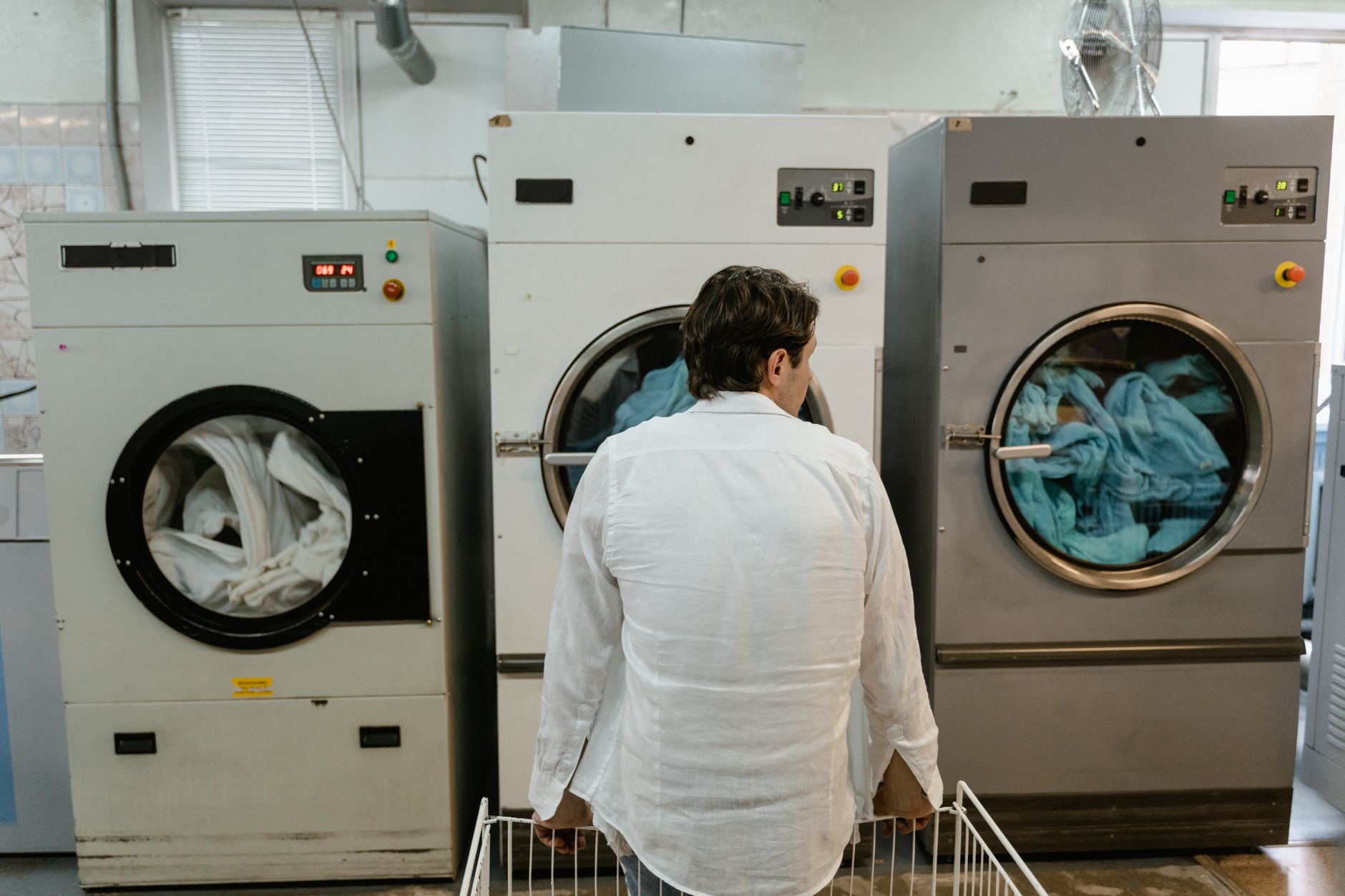
A commercial laundry is wet by design. Washers, extractors and dryers move water, soap and heat across the same floor, and it is rarely dry for long. A hotel back-of-house flooring vendor says laundry floors are consistently wet for 12 to 16 hours a day and that detergent residue can be slippery even when it does not show on inspection. That is a vendor claim, but it describes the condition most managers already live with: wet floors are a standing state, not an occasional spill.
Lint is the second problem. It settles on floors, equipment and ledges, and when it mixes with water and soap it becomes a film that is hard to sweep up. Trade guidance for laundromats and laundries names leaking machines, overflowing washers and spilled soap as the usual water sources, and it lists lint as a fire hazard, because a small spark can start a flash fire in heavy lint.
Cleaning usually lands between shifts. The crew is tired, the machines are still running, and the floor needs a real scrub, not a quick sweep. Many sites end up with a long mopping job at close, or with corners that go unscrubbed for days when the crew is short-handed.
The number of sites with this problem is large. According to a third-party industry aggregate, industrial launderers (NAICS 812332) report 1,488 establishments and 67,652 employees, with the year not stated. A separate third-party site, citing Census County Business Patterns, reports about 10,890 coin-operated laundries and drycleaners (NAICS 812310) in 2023. Each of those sites has the same wet, lint-heavy floor, so the problem repeats across the country.
Where in the building does the robot work?
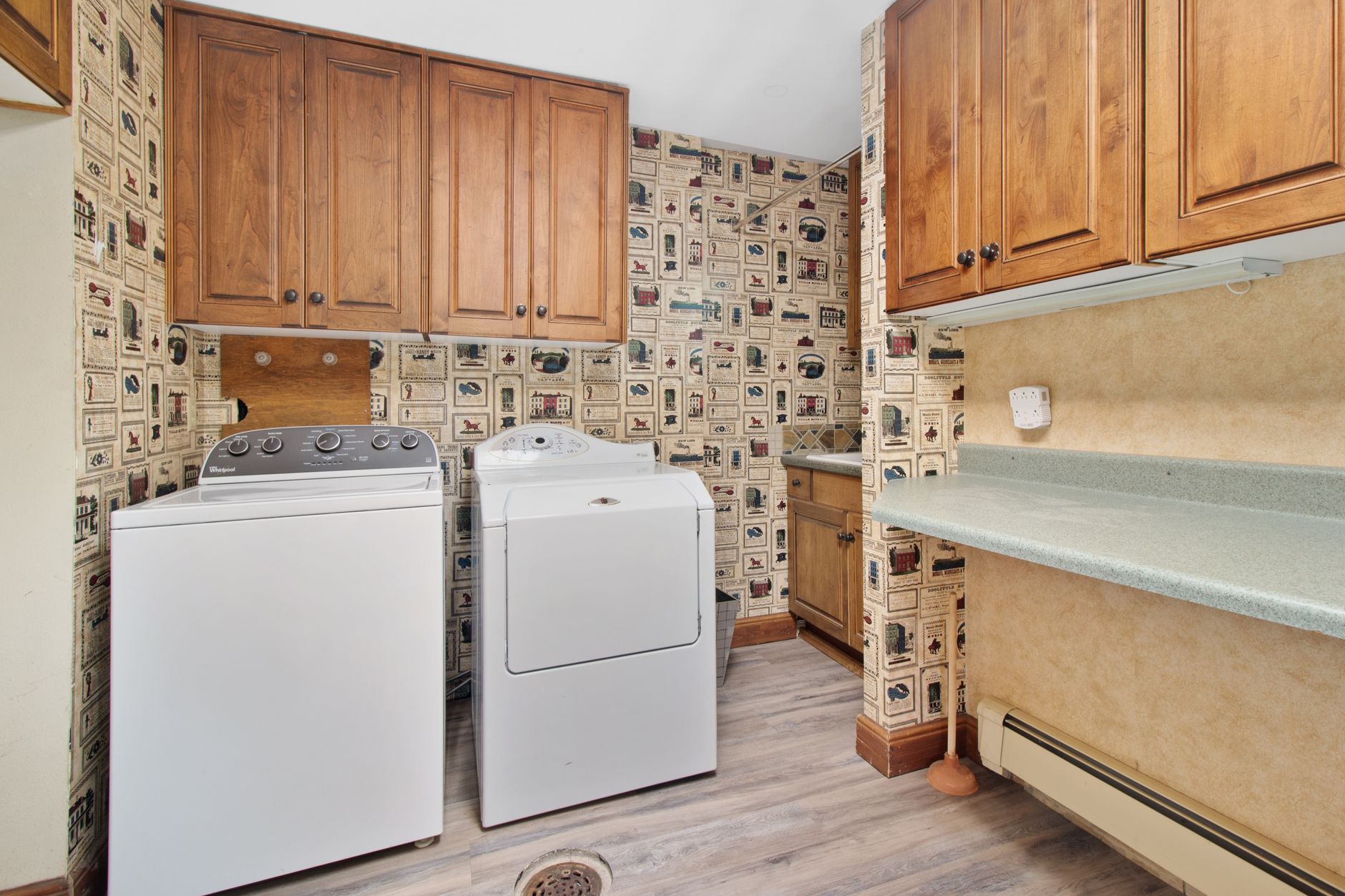
The robot works where the water and lint are, and it skips the areas that need hands. The six areas below are the ones we would look at during a site assessment. They are a map to check against your floor, not a promise for every building.
Routes depend on the room. Aisles between machines need a clear width, and carts need to park out of the path. Raised drains, thresholds and loading dock edges need a mapping pass before the first run, so the route does not stop at the first step up.
Some work stays with people. The inside of machines, the lint traps, the filters, the walls and the corners behind equipment are outside the robot's reach, and they need a crew with tools. Keeping those tasks with the crew is what makes the robot's route a clean fit.
How does a floor cleaning robot run a shift?
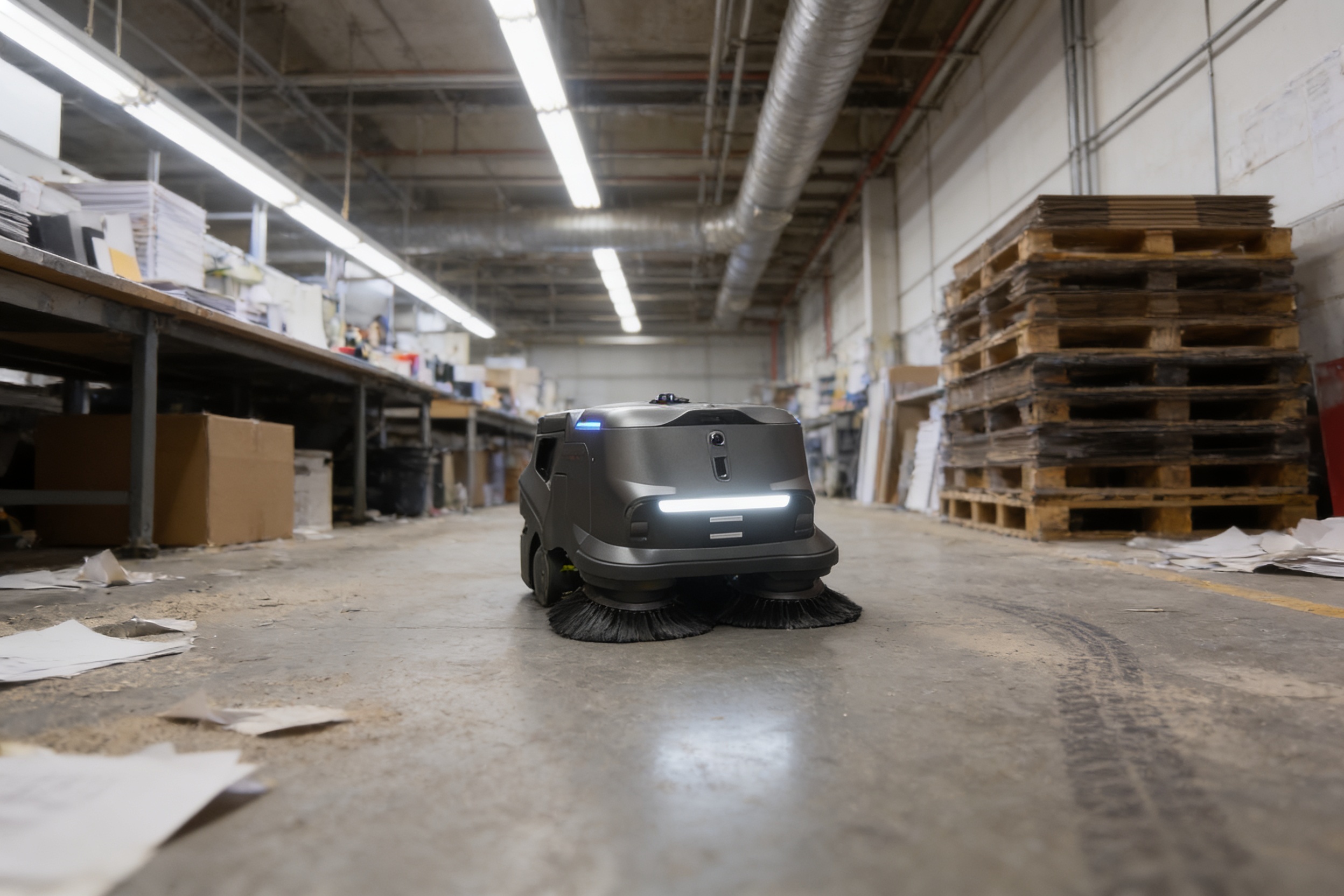
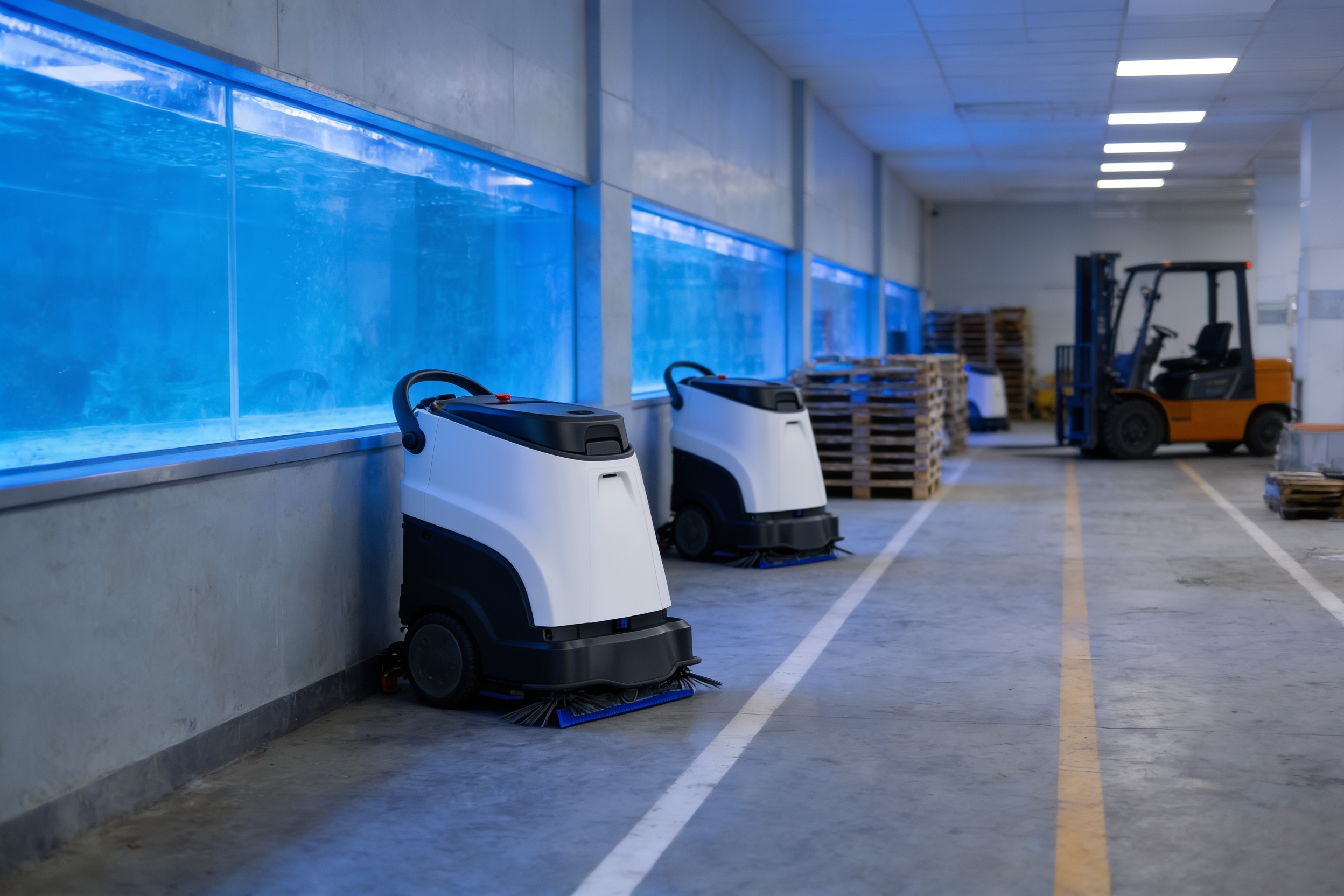
The robot follows a route that was mapped during the site assessment and set up during integration. It scrubs in passes, detects obstacles, and slows or stops when a person or a cart enters its path. When the route is done, it returns to its charging dock on its own.
Day to day the work is routine. At the start of the night the lead checks that the route is clear, confirms the charge and starts the unit. In the morning the lead reviews the route record and notes any spot the robot could not reach or any spill that needed a person.
A robot that depends on a clean route will fail on a messy one. Hoses, loose linen and carts parked on the route at close are a common reason for missed passes, and a short shift-end walk prevents most of them. The crew's habit at close often matters as much as the route itself.
Where do the savings come from?
The savings come from hours. Floor care takes crew time, and that time is measured in hours per night and per week. The examples below come from vendor case studies and a trade report about a warehouse. Treat them as what operators reported, not as a forecast for your floor.
In the hospital case, the EVS lead said the team could reallocate 8 hours to other tasks. That is the point for a laundry operator. The hours that come back are the hours your crew spends on linen, machines and finishing, which is where the shift's output is.
Your own number depends on floor area, how long the floor stays wet, how much lint reaches it, how clean the route is, and how many hours the crew spends on floor care today. A site assessment measures those inputs. The payment comes in the quote after that assessment.
- Hospital network, about 50,000 square feet, 2023 vendor case study: nightly floor-care labor fell from 16 hours with three staff to 5 hours with two, and time to a finished clean fell from 8 hours to 5. A hospital is not a laundry, but the floor work is similar.
- Building cleaning operator, about 880,000 square feet over three levels, vendor case study: the autonomous scrubber logged about 20 hours of cleaning a week, sometimes above 30, and the company reports more than 2.5 hours a day of autonomous cleaning on average.
- Warehouse in Milton, Ontario, trade publication: robots covered just over 3.5 million square feet from summer 2020 to April 2021 and saved more than 300 labor hours versus conventional cleaning. That is a cumulative figure, not a weekly one.
What can a floor cleaning robot not do?
A floor cleaning robot is a floor tool, and it has limits. It does not sort or fold, lift carts, clean inside machines, change lint traps or clear a jammed drain. It does not clean ceilings, walls or the tops of equipment either.
It needs a clear path. Blocked aisles, parked carts, loose cords and uneven thresholds stop the route. Each stop needs a person to clear it, and a site that leaves the route full at close will see missed passes the next morning.
It does not replace a maintenance program. A leaking machine still needs repair, and a detergent spill that the robot pushes around still needs a person to find the source. The robot is one part of the floor plan, not the whole plan.
How do you judge whether the fit is right?
Start with what you can measure: floor area and layout, the hours per night your crew spends on wet floors, how long the floor stays wet, and how much lint reaches it each shift. These set the route and show how many hours a unit could cover.
Ask for the route record from the first weeks. A useful record shows what was scrubbed, what was blocked and what needed a person. Use it to set the crew's shift-end checklist, since most missed passes trace back to the same few blocked spots.
Keep the first deployment small. One unit on one route, with backup coverage confirmed during the quote, lets you judge the fit on your floor before you expand. A narrow start also shows the crew how the work changes before the whole building depends on it.
How do you get started?
Service Robot Co. is a US commercial robot integrator. For cleaning robots for commercial laundries, we pick the right robot for the site, lease it through financing, deploy and integrate it, train the staff and service it nationwide. Robots are only leased, through financing, and the payment comes in a quote after a free site assessment.
The first step is the assessment. We map the floor, measure the route, note the blocked spots and talk with the lead about the shift. From that we recommend a unit, a route and a training plan, then return a quote for the lease with the terms written out.
After go-live, our team provides go-live support, remote triage and on-site dispatch when a unit needs service. The aim is to keep the floor clean and keep the crew out of troubleshooting. If your building has a wet, lint-heavy floor, start with the assessment and let the figures from your own site decide the rest.
Frequently asked questions
Want a cleaning robot at your commercial laundry?
Tell us about your site. We will recommend the robot, quote the lease, and keep it serviced.
Sources
- Third-party industry aggregate, industrial launderers (NAICS 812332)
- US Bureau of Labor Statistics, occupational employment data, May 2023
- Third-party industry site, coin-operated laundries and drycleaners (NAICS 812310)
- Vendor claim, hotel back-of-house flooring and slip resistance
- Vendor case study, hospital floor care, 2023
- Vendor case study, building cleaning operator
- Trade press, warehouse floor scrubbing deployment in Milton, Ontario