
Key takeaways
- Repetitive placement and case-packing stations are the best first place for a cobot on a packing line.
- By 2023, 46% of growers reported adequate labor, down from 54% in 2019, according to Produce Processing.
- A robot plus a smaller crew keeps inspection, changeovers and fault response with people.
- Savings are measured on your own line during a free site assessment, not taken from averages.
- The robot is leased through financing, and the payment comes in the quote after the assessment.
Can cobots help a produce packing house fill its lines?
Yes, in most packing houses the answer starts at the repetitive end of the line. Cobots for produce packing houses are collaborative robot arms that take over steady pick, place and case-packing steps while people handle the work that still needs judgment. For an operator who cannot keep every station staffed, that split matters more than the machine itself.
The main benefit is that a line no longer stops every time one position goes unfilled. A cobot can hold its station's pace through a shift, keep case counts and tray placement consistent, and free the people who remain to grade, inspect and troubleshoot. It does not solve the labor market, but it reduces how many open roles can halt a run.
The rest of this page covers the problem in detail, how the robot works in a packing shed day to day, which areas it covers, and what it cannot do. We are a US commercial robot integrator, so we also cover how the robot is leased, installed, trained on and serviced.
What makes produce packing lines hard to staff?
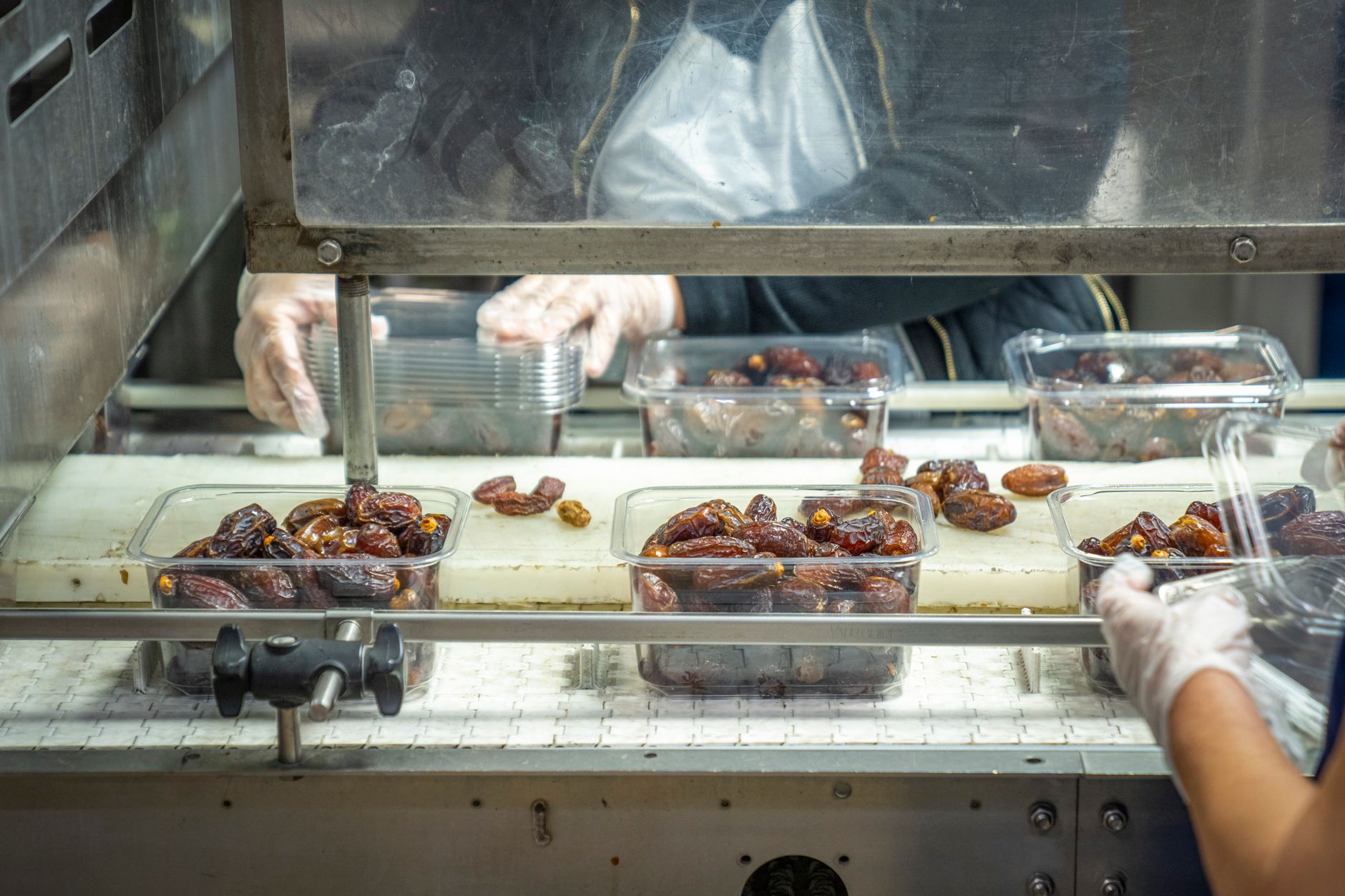
Packing sheds run on schedules set by harvest and by trucks, and they need people at specific stations at specific times. Fruit and vegetable packing includes many repetitive tasks, such as placing product into trays or clamshells and building and closing cases. These steps are hard to fill because the work is physical, repetitive and tied to shift timing.
The labor picture is tight. According to the 2026 Specialty Ag Labor Survey, as reported by Fruit Growers News, rising labor costs were a bigger concern than worker availability itself, and packing ranked at 23% among investment priorities, alongside H-2A guest workers and automation. A labor survey reported by Produce Processing found that the share of growers reporting adequate labor dropped to 46% by 2023, down from 54% in 2019.
Survey numbers matter less than what a supervisor sees each morning, which is a station that cannot open on time because a position is empty. A single open position can slow a whole station, and that is where a cobot earns its place first.
Why are more packing operations looking at automation?
Automation is spreading through food manufacturing. According to the International Federation of Robotics as reported in trade press, U.S. industrial robot installations rose 11% in 2025 to 38,000 units. Food-industry installations in the U.S. rose about 30% in 2025, to roughly 3,000 units, according to preliminary IFR figures reported the same way.
These figures are national and cover industrial installations in general. We did not find installation counts for produce packing houses specifically, so treat the trend as context rather than proof for your site. What it suggests is that food operators are adding robots at a steady pace, and the open question for a packing manager is which station to start with.
What are the main benefits of cobots for produce packing houses?
Benefits show up most clearly where the line depends on people who are hard to keep in place. Operators usually see four gains:
These gains matter most at stations that already have an open position most weeks. A cobot placed on a station that is always full adds less than one placed where the schedule keeps breaking down. The site assessment is how we tell which case applies to you.
- A station that keeps its pace through the full shift instead of depending on who showed up that day.
- Case counts and tray placement that stay consistent, which makes downstream palletizing and receiving easier.
- Fewer people repeating the same motion at the hardest stations, so staff can rotate into inspection and troubleshooting.
- A line that can be partly covered on a short shift, so the whole run does not stop for one missing person.
How does the robot work there day to day?
A cobot at a packing station is a robot arm mounted at the line, fitted with a gripper suited to the product and its tray or case. It works beside the conveyor and the people who load, inspect and close the cases. Its program is set during the site assessment and deployment, based on your product sizes and the pack pattern you run.
Day to day, the crew starts the line, the robot runs its station, and operators handle changeovers, quality checks and jams. A changeover to a new pack size or tray style is the moment that needs a trained person at the controls, so those times belong in the shift plan.
Our integration team trains the staff who will run the station and sets the routine checks, so supervisors know what the robot does at each point in the shift. The illustrative shift below shows how that looks in practice.
Which areas of the packing house does the robot work in?
The robot works where product already sits in trays, clamshells, bins or cases and the motion repeats. That usually means the packing stations and the case-building area, along with the supply points that feed them. It is not a field tool, and it does not take over receiving or cold storage work that depends on moving through a whole building.
Some operations also use a cobot at the end of the line, where cases are stacked for the pallet. Full pallet building is heavier work, so its scope depends on the load and the layout, which we measure during the site assessment. The areas below are the ones we most often see.
How does the robot work alongside the existing crew?
Cobots for produce packing houses are built to share a station with people, but a packing house still needs people. Our plan is a robot plus a smaller crew, never a robot in place of a whole team. The people who remain take on inspection, changeovers, quality checks and maintenance support, which the robot cannot do alone.
Crews usually move from repetitive placement toward checking the line. That shift takes planning, because a supervisor needs to decide who runs changeovers, who logs faults and who covers the station during a service visit.
Our deployment includes training for each of these roles, so the people on the line know what the robot will do and where they stay in charge. The comparison below shows how the job changes.
What drives the savings?
Savings come from fewer hours lost to open positions, less overtime used to cover gaps, and steadier output from each station. Those are the drivers we measure on your line. We did not find a verified, published figure for hours spent on packing tasks per shift, so we will not quote one here.
A site assessment measures your shift hours by station, the open positions you actually carry and the throughput you need. The savings view is built from those numbers, not from averages taken from other plants. The payment comes in the quote after that assessment.
For context, the occupation is large nationally, and that large pool is the one many operators compete for when a position opens.
What can a cobot not do in a packing house?
A cobot does not judge fruit quality the way an experienced grader does, so inspection stays with people. It also does not suit every product. Soft, irregular or very delicate items may need another gripper or may not suit the station, and we check your product mix during the site assessment.
Changeovers take a trained person. A new pack size, tray style or case pattern means a program change and often a gripper change, and those tasks belong to the crew or to our team during deployment. A cobot is also limited by its reach and payload, so heavy pallet building usually sits outside its scope.
Sanitation and washdown needs depend on the zone and the product, and we confirm them before we recommend a unit. A cobot does not replace your food safety plan, and it does not remove the need for supervision on the line.
How do you get started?
Start with a free site assessment. We map the station, the product and the pack pattern, check space and power, and identify where a cobot would hold the most value. Then we pick the right robot for that site rather than offering one model for every floor.
The robot is leased through financing, and the lease is quoted after the site assessment, so the operation does not need to pay for the robot upfront. The payment comes in the quote, which covers the station, the scope of work and the service plan. Ask for the service terms in writing before you commit.
We deploy and integrate the robot, train the staff who will run it and service it nationwide, so the packing house works with one partner from the first visit through the lease term. Many operators begin with one station on one shift, then widen the plan once the crew has run it for a while.

Frequently asked questions
Want a cobot at your produce packing house?
Tell us about your site. We will recommend the robot, quote the lease, and keep it serviced.