
Key takeaways
- Repetitive tray packing and instrument sorting are where staffing strain shows up most.
- A cobot can place instruments into trays while a technician inspects every finished tray.
- Independent hour savings for this task are not yet published, so each site needs its own baseline.
- Staff stay in charge of soiled instruments, inspection and sterilizer decisions.
How can cobots for sterile processing departments help?
Cobots for sterile processing departments take on the most repetitive part of the clean side: placing instruments into trays and sorting sets, so technicians spend more of the shift on inspection and exceptions. A cobot is a collaborative robot arm built to work near people, so it can sit at a packing bench beside the staff who use it every day.
The benefit is consistency and capacity, not replacement. In the research we reviewed, a robot arm placed instruments into trays while a technician inspected the result, and the finished trays showed fewer tool-to-tool collisions than trays assembled by hand. Collisions matter because they can damage instruments and add rework at inspection.
The published work does not yet measure hours saved, so this page makes no promise about time. It explains where the time goes, what the robot does and does not do, and how we measure your own baseline before any quote is written.
Why is tray packing and instrument sorting hard to staff?
The Bureau of Labor Statistics has no separate category for sterile processing technicians, so the closest match is Medical Equipment Preparers. According to the BLS, 63,890 people were employed in that category in May 2022. A third-party summary of BLS data reports 77,420 jobs nationally for May 2025, and projects 10.0% growth from 2023 to 2033, which it describes as faster than average.
Those figures describe the whole category, not the clean side of one building, so treat them as context. The more useful signal for a department manager is the shift you cannot fill. A manufacturer that surveyed its own customers reported that over 90% of them say they are not staffed to budgeted levels. That is a vendor-reported figure from an internal survey, so read it as a warning sign rather than an independent count.
For the person running the room, the effect is simple. Repetitive placement and sorting are the tasks that get handed to whoever is free, and they are often the first work squeezed when a shift runs short. That can pull experienced staff away from the inspection work that only they can do.
What does a cobot actually do on the clean side?
The day to day is narrow on purpose. Sorted instrument sets are staged within reach of the arm, which picks each item and places it into the tray according to the set layout. A technician checks the finished tray, handles any item that does not match the layout, and releases the tray to packing.
A February 2026 arXiv preprint by Sankaranarayanan and colleagues describes this kind of setup, with a robot arm placing instruments while a technician inspects. It reports high perception accuracy and a statistically significant reduction in tool-to-tool collisions compared with human-assembled trays. The paper reports no hours saved, so it supports a process benefit, not a labor claim.
We set the layout during integration, using your instrument sets, your tray standards and your count sheets, so the robot follows your method rather than a generic template. When a set changes, the layout is reprogrammed and a staff member checks the first trays before the station returns to full output.

Which areas of the department does the robot work in?
The robot earns its place in a few bounded areas, not the whole suite. Most of the value sits on the clean side, after instruments have been decontaminated, dried and cleared for assembly. The zones shown below cover the path a tray takes from the sorting table to sterile storage.
In most sites we plan, the robot stays on the clean side. Soiled instruments, decontamination and loading the sterilizer stay with staff, and the robot's work starts only once items are ready to be placed. Sterile storage is a staff handoff, not a robot task.
What do early pilots and vendor claims show?
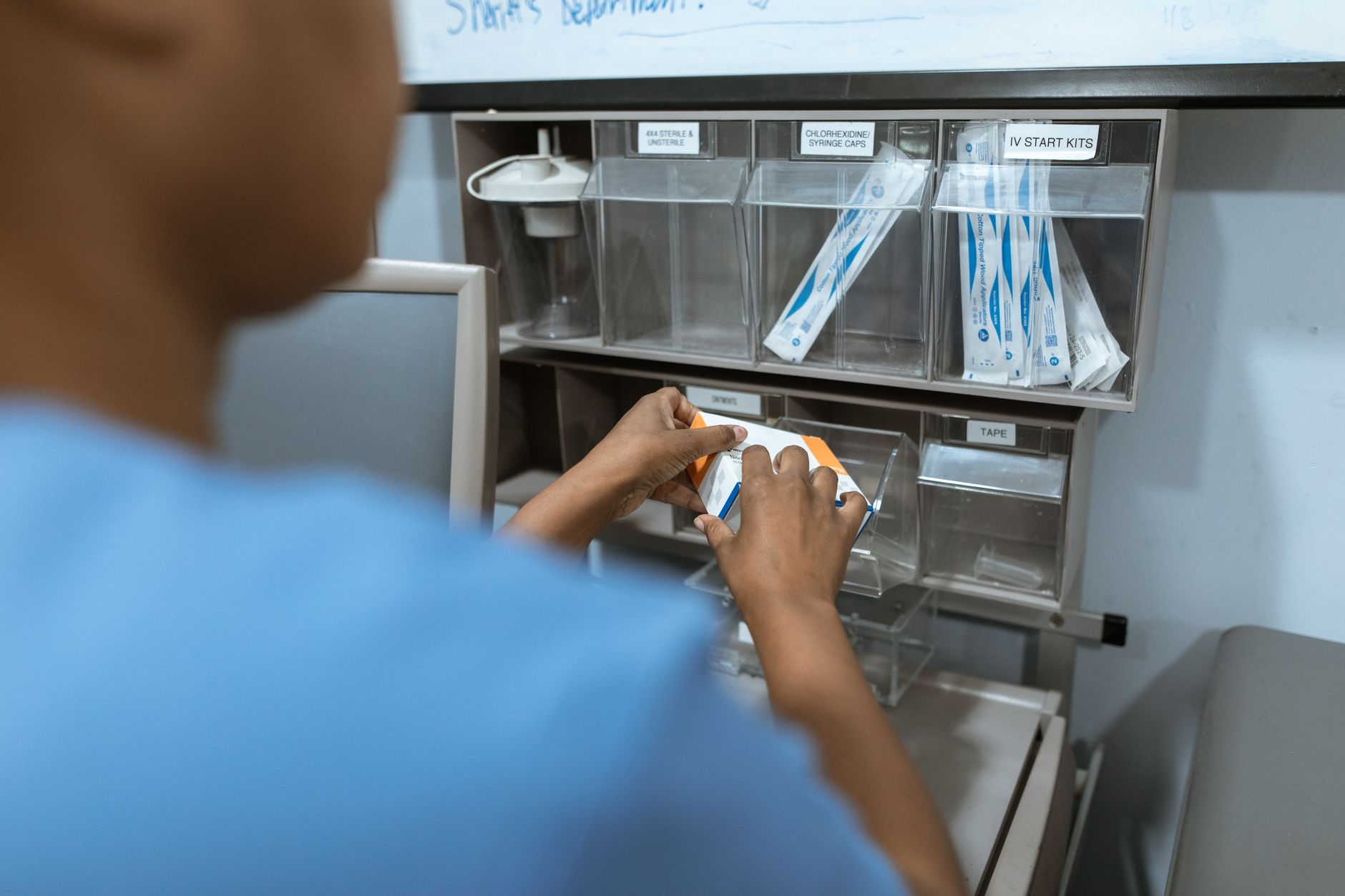
A 2011 pilot in a clean-side workflow described a machine handling counting, sorting and inspecting. Its developer predicted a 23% reduction in the cost of processing instrument trays. That is a vendor prediction from 2011, not a measured result, so treat it as a question to test against your own baseline rather than an answer.
A Joint Commission document on tray standardization reports that sterile processing time per robotic case dropped from about 45 minutes to 15 to 20 minutes. The excerpt does not make the scope of that comparison clear, so we use it only as a lead to check during a site assessment, not as a figure to plan on.
One large health system reported that its SPD overall turnover fell from 32% to 25% between August 2024 and July 2025, after task forces targeted SPD and environmental services turnover. That result came from staffing work, not from a robot, and it reflects one system rather than the national picture.
Where do the savings come from, and how big can they be?
Savings come from three places: technician time that placement and sorting consume, rework from misplaced or damaged instruments, and shifts that would otherwise go unfilled. Each depends on your volume, your instrument mix, and how many hours today's steps really take on a normal shift.
The sources we reviewed do not publish an independent hour range for this task, so we will not give you one. During the free site assessment we time today's placement and sorting steps across a normal shift, count trays by set, and note where rework begins. Your quote then reflects your baseline, not a national average.
Rework is the easiest thing to count and the hardest to ignore. Every tray that comes back from inspection for a misplaced item uses inspection time twice, so a steady, consistent layout is worth tracking from the first week.
What can a cobot not do?
The limits matter as much as the gains, and they are the reason staff stay in the loop. A cobot in this setting should not be asked to do the following.
- Handle soiled, unprocessed or unsorted instruments
- Judge cleanliness, wear or damage on its own
- Decide that a set is complete or release a load
- Make sterilization decisions or load the sterilizer
- Switch to a new instrument set without reprogramming and a staff check

How do we get started with cobots for sterile processing departments?
Start with a free site assessment. We map your clean-side flow, time today's placement and sorting steps, and choose the robot that fits your floor and tray standards. The quote comes after that assessment, and the payment comes in the quote itself.
The robot is leased through financing. We handle deployment and integration, staff training and service nationwide, so the department works with one partner for the station. Many departments begin with a single unit and a phased rollout that keeps the room running while staff learn the new station.
Ask for the site assessment with your tray list and your busiest shift in hand. Bring the people who will run the station, and the assessment will show whether the layout, power and floor space fit your room.
Frequently asked questions
Want a cobot at your sterile processing department?
Tell us about your site. We will recommend the robot, quote the lease, and keep it serviced.
Sources
- U.S. Bureau of Labor Statistics, Medical Equipment Preparers (May 2022)
- Third-party summary of BLS data, Medical Equipment Preparers jobs
- Third-party summary of BLS projections, Medical Equipment Preparers outlook
- Health system SPD turnover report
- Vendor customer staffing survey
- HFM Magazine, 2011 clean-side pilot
- The Joint Commission, tray standardization document
- arXiv preprint 2602.01679, collaborative tray assembly