
Key takeaways
- Skilled labor shortages rank as the top concern in a USGA Green Section survey, which makes labor hours the main lever for mowing.
- A commercial robot mows rough and hillside banks on a schedule, often before play begins, and frees crew hours.
- Fragmented turf and distance from the charging station slow a robot, so boundary and charger placement need careful planning.
- Staff still set schedules, check the cut, and handle greens, bunkers, irrigation and repairs.
- Start with a free site assessment, then review a lease quote through financing.
How can robotic lawn mowers for golf courses cut labor on rough and hills?
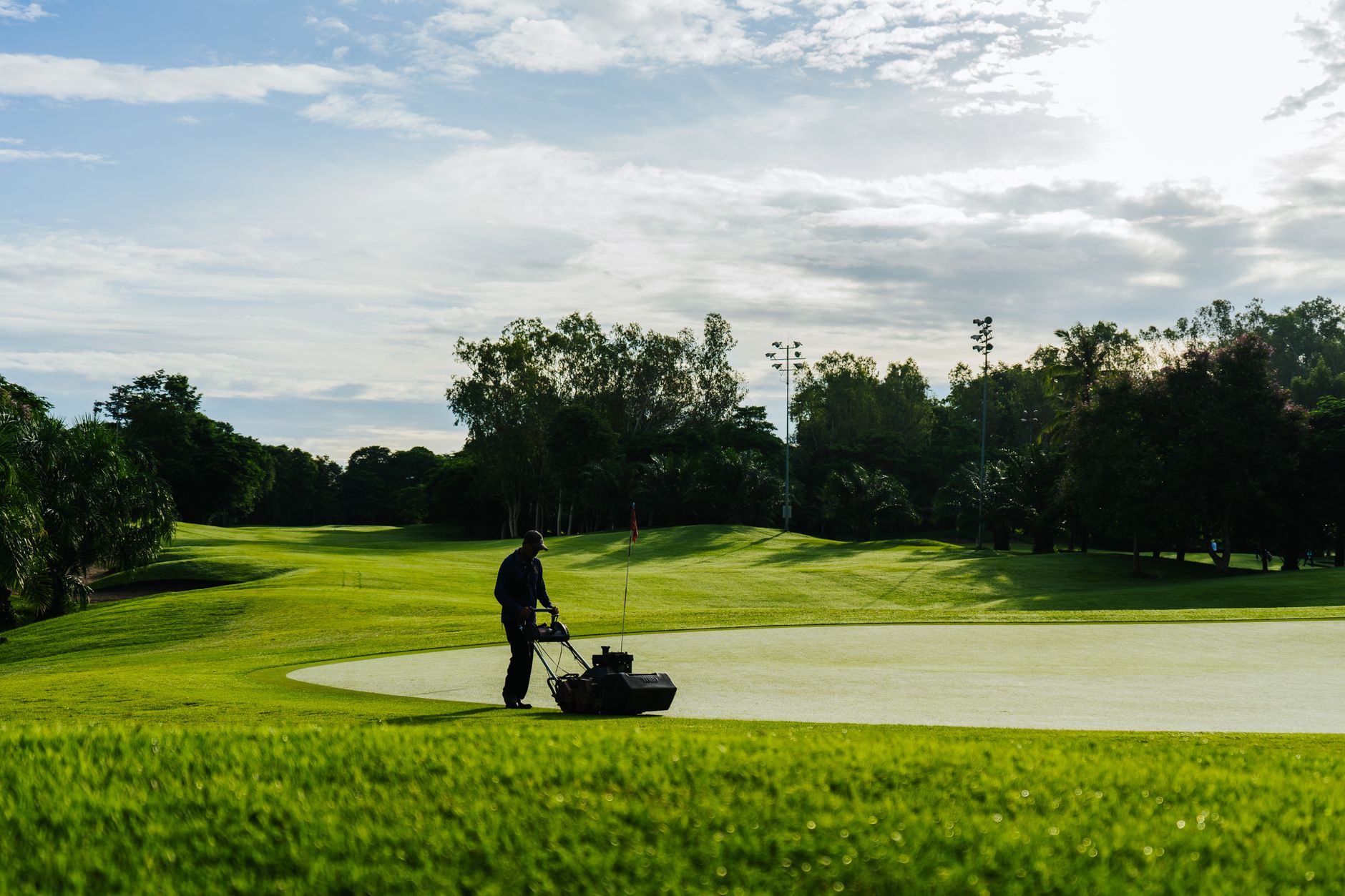
Robotic lawn mowers for golf courses take over the repetitive part of mowing, the long passes across rough and fairway banks that eat crew hours every week. A commercial unit runs on a schedule, often before the first group tees off or after the last one finishes, and it returns to its charging station without an operator at the controls. For a superintendent short on people, that means large areas get cut more often while the crew spends its hours on work that needs a person.
The strongest case is labor. Published trials and course reports describe mowing hours moving from staff to machines. A peer-reviewed study of one course in Italy estimated the robot's weekly total cost 40 percent lower than a reel mower, mostly because of labor cost. That is one course and one set of conditions, so use it as a starting point for your own numbers rather than a promise.
The machines are also designed for the ground golf courses actually have. Commercial models are built for rough, slopes and uneven terrain, and they run unattended for long stretches. Vendor specifications give the limits, so confirm them on your own banks and tree lines during a site assessment.
What problem are golf courses trying to solve with mowing?
Many courses are short-staffed. The USGA Green Section survey of 117 respondents in 35 states ranked lack of qualified or skilled labor as the top current concern. Golfdom, citing the 2022 GCSAA Capital and Labor Survey, reported that 63 percent of superintendents described the labor market as bad or very bad. Those are the people deciding where the mowers go.
The crew math is tight. In a Golf Course Industry crew survey from the 2021 season, the average course had 7.80 full-time, 3.48 part-time and 6.99 seasonal employees. Golfdom's reporting adds that many courses are down on average three to five people. Mowing competes with bunkers, irrigation, pest work and greens for the same hands.
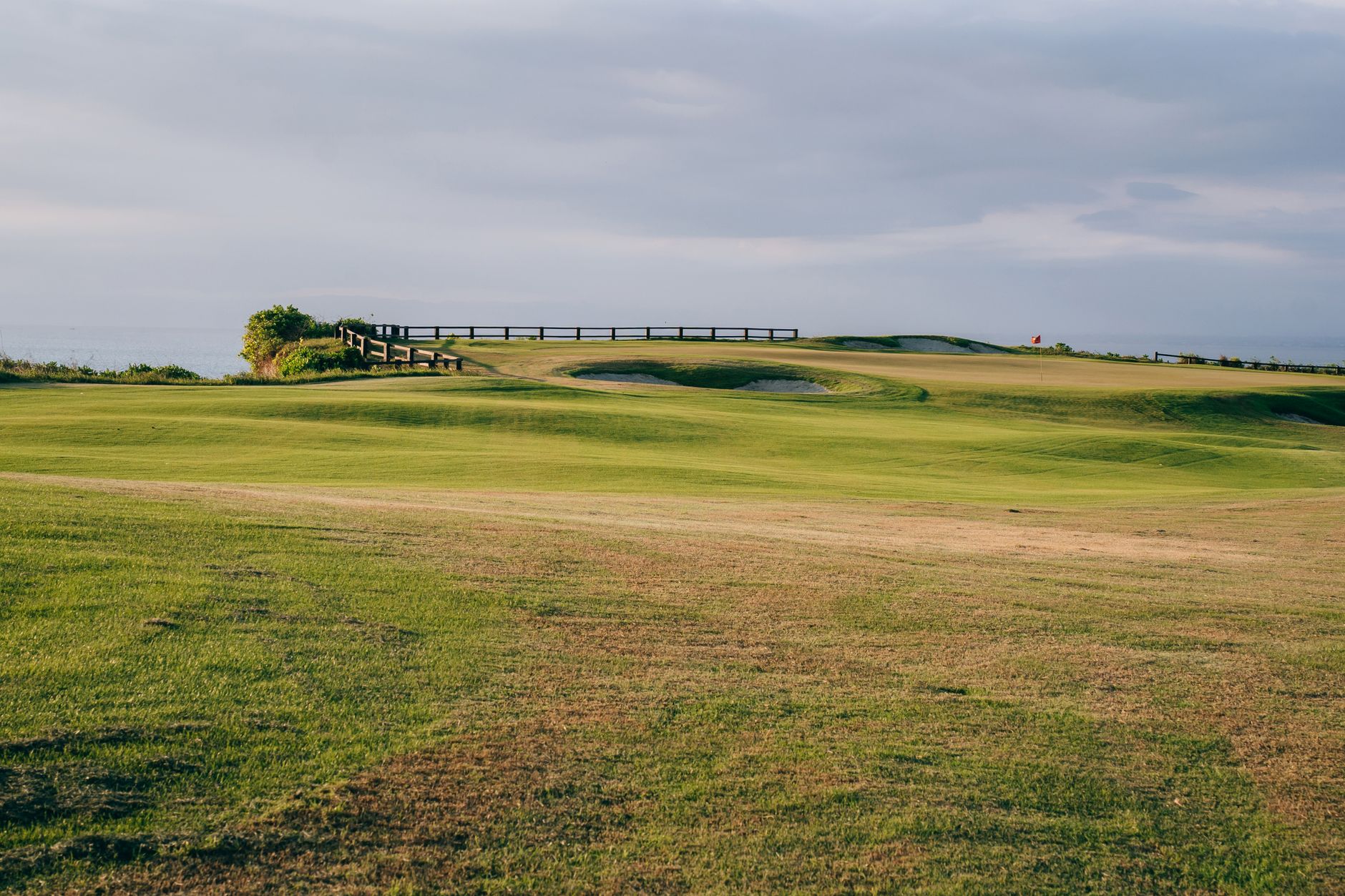
Rough and hillside banks are where the squeeze shows. They need frequent cuts to look right and stay playable, yet they are slow and tiring to mow by hand or with riding equipment. A course that cuts fairways several times a week may not reach every acre of rough as often as the superintendent would like.
Which areas of the course does the robot work in?
A commercial unit suits large, open turf with predictable edges. Work is planned by zone, with boundaries set around hazards, cart paths, ponds and trees. The areas below are where courses most often send the machines.
Notice that greens and tees are not on the list. Most courses keep those with people, and the robot's job is the ground around them.
How does the robot work on the course day to day?
Setup is where real planning happens. Crews define boundaries, mark no-go areas such as ponds, bunkers and cart paths, and place the charging station where the robot can return to it easily. Positioning and path planning matter, so ask any vendor for independent field results before you accept a demonstration as proof.
Once set up, the day runs on a schedule. Cycles are usually planned around tee times, so a unit can work early and late. The sequence below shows a typical day on a course that runs one or more units.
How does it work alongside existing staff?
The robot does not replace the crew. It takes the repetitive cutting so people can spend hours on the work that needs judgment. The BIGGA round table included a UK course manager whose team spends four hours cutting fairways, three times a week, with two staff. The manager estimated that autonomous mowing would free 24 hours per week for other tasks.
Staff still set cut heights, plan the cycle, check quality, handle edges and greens, and respond when something goes wrong. The USGA ROBO-GOLF trial programmed robots to mow for four hours a day, with fairways getting three hours and rough getting two. Schedules like that are set by people who know the course.
This is where a robot integrator earns its place. We are a US commercial robot integrator. We pick the right robot for your ground, lease it through financing, deploy and integrate it with your schedule, train your staff to run and check it, and service it nationwide. Your team keeps the course, and the robot carries the repetitive hours.
Where do the savings come from?
The savings come mostly from labor hours, not from machine cost. A peer-reviewed case study, published in Agrosystems, Geosciences and Environment in 2025, tested a robot from April to September 2023 on a 1,296 square meter area at a golf course in Italy. The robot ran 10 hours per day, 7 days per week, for 4.80 kWh per week. A rotary mower cut once a week in 1.02 hours plus labor used 12.60 kWh per week. The authors estimated the robot's weekly total cost 40 percent lower than the reel mower, mostly due to labor cost.
Hours are the number to model. The BIGGA panel's fairway example points the same way: two staff, four hours, three times a week, and 24 hours a week returned to other work if the mowing is automated. Your own figures will differ with acreage, slope and cut frequency.
Use your crew logs. Count the hours your team spends on rough and banks now, the number of cuts per cycle, and the supervision the robot still needs. Then compare those hours with the lease payment in the quote, keeping the study's own caveat in mind: the authors note that economic viability assumes a service life over 8 years.
What can the robot not do?
A robot covers ground well, but it is not a full crew. Its cut width is narrow. An older USGA Green Section review describes a cutting width of about 10 inches, so large areas need multiple units. Blades also wear, and that review says they last three days to two weeks, so blade checks belong on the crew schedule.
Fragmented areas slow it down. The 2025 Wiley study notes that fragmented areas and distance from the charging station reduce working capacity. In that trial, the mown share reached 54.64 percent after one hour and 80.15 percent after two hours with random path planning, so a unit does not finish a patchwork space in one pass.
It also needs setup and supervision. Boundaries, charging and cutting time settings affect energy use, and someone must check them. It does not handle greens, bunkers, trimming around hazards, irrigation repair or the judgment calls a superintendent makes on a given morning.
What are the common worries, and what is true?
Operators raise the same concerns again and again. The answers below reflect what course managers and the published cases report, and where a claim comes from a vendor, the item says so.
How do you get started?
Start with a free site assessment. We map the course, measure the rough, banks and fairway areas, check slopes and tree lines, and identify a charging station site. We then recommend a model that fits that ground. Nothing is installed at this stage.
We lease robots through financing. The payment comes in the quote after the site assessment, once the model, number of units and service terms are set. Review the quote against your crew logs, and ask how the blade and service plan works before you sign.
After the quote, we deploy and integrate the robot with your schedule, train your staff, and provide nationwide service. Many courses begin with a phased pilot on one zone, so the crew can learn the setup and check the results before the whole course is covered.
Frequently asked questions
Sources
- USGA Green Section Record: biggest challenges facing the golf course maintenance industry
- Golfdom: Superintendents share their solutions to labor woes
- Golf Course Industry: Who works on a golf course
- Golfdom: Double the golf, half the workers
- Agrosystems, Geosciences and Environment (Wiley), robot mower study at an Italian golf course
- BIGGA: Your course robotics round table
- USGA Green Section Record: How do robot mowers affect turf management and the golfer experience
- USGA Green Section Record: Rise of the machines, autonomous mowers on golf courses