
The question, in the buyer's words
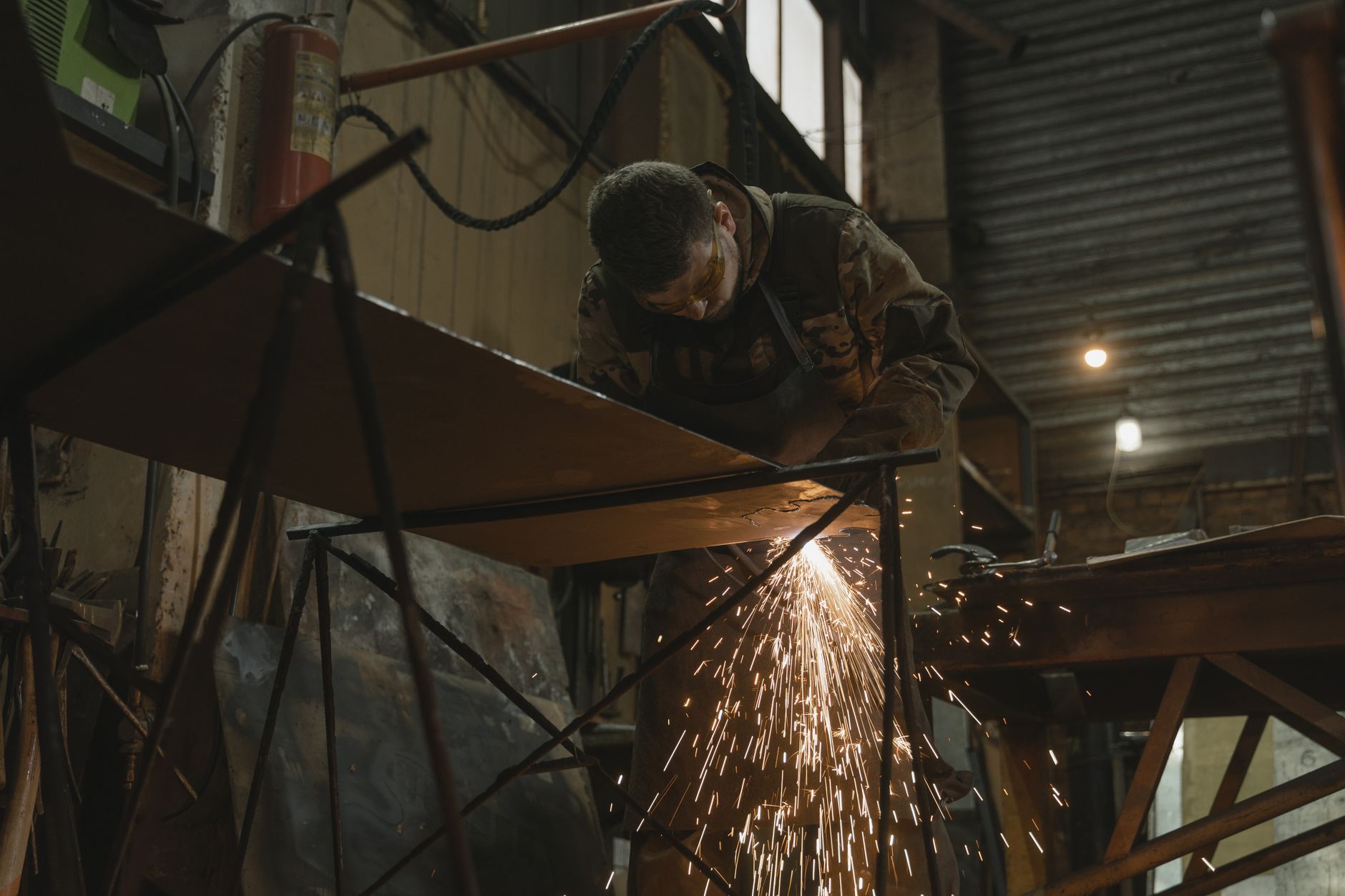
I run a 60-person boat trailer frame shop in Baton Rouge, LA where welders lift and fit heavy members all shift and lose arc time to handling; could a cobot hold and position frame members so welders stay on the torch?
Key takeaways
- A cobot's main job in a trailer frame bay is holding and positioning members, so the welder keeps the torch on the joint.
- Vendor benchmarks put arc-on time near 10% of working time, which makes handling the number to measure first.
- Light to medium members at fit-up are the strongest candidates, while heavy long rails still need a crane and a fixture.
- Baton Rouge metro employment reached an all-time high of about 440,800 in April 2026, so shops compete for workers in a growing market.
- Pilot one bay, log arc time and waits for two shifts, then decide on more units.
Can a cobot take positioning work from Baton Rouge trailer frame welders?
Yes, for the right members. A cobot, which is a collaborative robot arm built to work near people, can hold a trailer frame member at the right height and angle while the welder tacks it and runs the bead. The gain comes from fewer minutes spent on hoists, squaring and waiting, so the welder's time on the metal becomes a larger share of the shift. The arm does not weld faster, and that distinction shapes every decision that follows.
A Baton Rouge trailer frame shop earns on finished frames, so every minute a welder spends waiting on a lift or re-squaring a member is a minute the job does not move toward completion. Measure how much of each shift moves from handling to the bead, and whether the hold is repeatable enough to cut rework. Those two numbers decide whether positioning is worth automating.
Keep two limits in view from the start. The arm's payload must cover the heaviest member plus its gripper, and its reach must cover every joint the welder needs. When a member is heavier or longer than either limit, a cobot becomes one part of a fixture plan rather than the whole answer.
How much arc time do welders lose to handling?
Arc-on time is the share of a shift when the torch is actually making a weld, and it is usually a small share. According to a welding equipment maker's figure cited in an industry article, arc-on time in semi-automatic welding is about 10% of working time, roughly six minutes per hour. At that rate a welder holds the arc for about 48 minutes of an eight-hour shift. That is arithmetic on a vendor benchmark, so treat it as a hypothesis to test in your bays, not a finding about them.
The same vendor-reported benchmark says efficient shops reach an operator factor of 20 to 30 percent, meaning arc time divided by total labor time, while one case study shows 10 to 15 percent. The gap between those figures is the room a handling fix has to close. Measure your own operator factor for each bay before you assume a gain.
A welding trade press article, citing an expert secondhand, calls idle welders waiting on a crane to move a component a common hidden cause of lost arc time. That loss is easy to see in a time log: the torch is cold while someone waits on a hoist. Log those waits for two shifts, and the pattern can show which members to target first.
Which trailer frame members can a cobot hold, and which still need a crane?
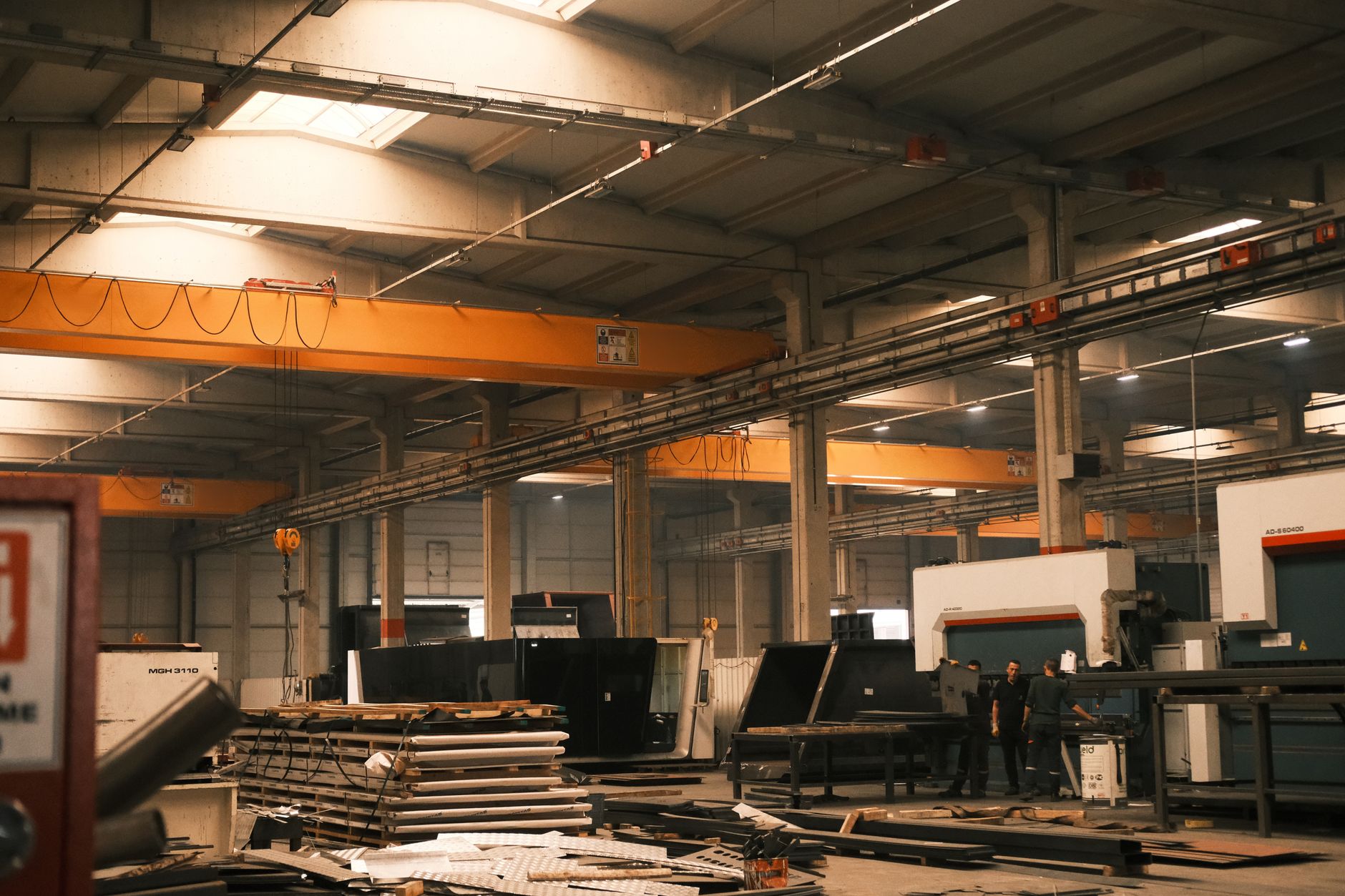
Sort members by three things before you talk to anyone: weight, length and how each sits in the fixture. Light to medium members, such as cross members, gussets and short side rail sections, are usually the strongest candidates for a cobot hold. Long rails and heavy sub-assemblies often still need an overhead crane for transfer and a positioner for rotation, with the arm doing only the final hold on the joint.
Payload is the first gate. The rating must cover the member, the gripper and any fixture clamped to the arm, with margin for the loads that come from motion. Reach is the second gate. If a joint sits farther from the arm base than the arm can extend, the cobot cannot hold that joint in one position, and a rail or second station is needed. Check both gates against your heaviest member, not your average one.
Fixture access matters as much as either number. A held member needs clear space around the joint for the torch angle, and the operator needs room to clamp and release. Sketch each joint and torch angle on the fit-up table before measuring, because a hold that blocks the torch saves no arc time.
Where does the cobot sit in a trailer frame welding bay?
Plan the bay around the arc, not the arm. The cobot needs a fixed base, a clear path for members from staging to fixture, and a welder position where the torch reaches the joint without the cable snagging. Anchor the base to the floor and set repeatable stops, so every member lands in the same place every time.
Baton Rouge weather belongs in the plan. Summer is the wettest season, with the maximum rainfall in July, according to a climate summary of NOAA records, and typical July highs sit near 91°F with lows near 73°F. Humidity is noticeable year round because of the Gulf of Mexico. Confirm the arm and controller operating environment on the data sheets, and place the controller in conditioned space where you can.
Ventilation and power are easy to forget. Weld fume extraction has to reach the joint without pulling on the cable or blocking the arm's sensors, and the controller needs stable power and a network connection your IT contact can support. Put grinding on a separate bench, so dust and sparks stay away from the arm and its cables.
What does the Baton Rouge job market mean for welder staffing?
Baton Rouge's labor market is growing. According to Leaders for a Better Louisiana, in a July 2026 report covered by regional news, the metro added about 7,900 nonfarm jobs from May 2025 to May 2026, a 1.8% gain, and employment reached about 440,800 in April 2026, an all-time high. A growing base is a reason to plan for steady demand for skilled trades, though the report does not break out welding.
Manufacturing is a large piece of that base. According to the Federal Reserve Bank of St. Louis, seasonally adjusted manufacturing employment in the Baton Rouge metro was about 31,434 jobs in December 2025. That series covers all manufacturing, not welders alone, so treat it as context rather than a staffing plan.
Nationally, the Bureau of Labor Statistics projects an employment change of 9,900 for welders, cutters, solderers and brazers from 2024 to 2034. A positive projection means the trade is not shrinking. A cobot does not replace a welder. It moves the welder's hours back toward the arc, which is where a skilled welder adds the most value.
How do injury rates and cobot adoption shape the decision?
Lifting and fit-up work carries real injury risk. According to a summary of BLS Table 1 data, manufacturing's total recordable case rate was 2.7 in 2024, against 2.3 for all private industry, and cases with days away from work were 0.8 per 100 full-time equivalent workers, the same as all private industry that year. Those rates cover all incidents, not lifting alone, so they show the stakes rather than the cause.
Cobot use is growing in units but not in share. According to a summary of the International Federation of Robotics president's report, 2025 collaborative robot installations reached about 66,000 units, 11% of industrial robot installations, compared with more than 64,500 units and 12% of new installations in 2024. Total industrial robot installations were 603,000 in 2025, up 11%. The share slipped slightly while units rose.
For a shop manager, the reading is that the category is established, while the payoff depends on your members and bays. Pull injury and rework records for the bays you plan to change, so you can see whether the case rests on people, on parts or on both.
How do you pilot a cobot in one bay without stopping the frame line?
Start with one bay, one member family and one welder team. Record arc time and waits for two shifts before any change, then run the same measures after the arm is in place. Set the target before the pilot starts, such as a higher operator factor on the chosen joints and fewer crane waits, measured the same way on both sides.
Phase the deployment so the line keeps running. Install the arm and fixture during a planned gap or a weekend, train the welders on the hold sequence, and keep the existing fixture as a fallback until the cell has run a full week. Plan for a stopped arm as well, because a pilot without a fallback turns one fault into lost production.
Plan training beyond the welders. Supervisors need to clear faults, change a member program and call for service, and at least one person should be the day-to-day contact. A pilot that depends on one trained person is exposed the first time that person is off shift.
What would change the answer for your shop?
The answer shifts with a few facts you can gather before anyone quotes a unit. Use the checklist below as your pre-decision list and bring the results to the free site assessment. The lease quote comes after that assessment, so no lease figure appears on this page.
If the heaviest member is beyond payload or a joint is beyond reach, the honest result is a changed plan: a positioner, a second station or a fixture redesign. A cobot can still hold the final joint in that plan. We would say so during the assessment rather than place an arm on a job it cannot hold.
Decide on evidence, not on the category. A clean two-shift baseline, a member list sorted by weight and reach, and a clear view of crane traffic will tell you more than any national share figure.
Frequently asked questions
Upcoming manufacturing events
- Trade showBrats & RobotsNov 10, 2026Alliant Energy Center Exhibition Hall, Madison, WI
- Trade showMATE Farm & Ranch ShowFeb 11 to 13, 2027MetraPark, Billings, MT
- ExpoPFMA Expo 2027Feb 17 to 18, 2027Washington County Fair Park, West Bend, WI
- ExpoLouisville Facilities Maintenance ExpoApr 15, 2027Mellwood Art Center, Louisville, KY
Put a robot to work in Baton Rouge.
We walk your site, learn the job, and recommend the unit that fits. Then we quote the lease, deploy it, and keep it serviced.
Sources
- Bureau of Labor Statistics, Occupational Outlook Handbook, welders, cutters, solderers and brazers
- Federal Reserve Bank of St. Louis, FRED, Baton Rouge manufacturing employment
- Leaders for a Better Louisiana, July 2026 jobs report, regional news coverage
- International Federation of Robotics, president's report summary 2026
- Manufacturing safety statistics summary citing BLS Table 1
- Industry article on average manual welding arc-on time
- Trade press article, more arc on less arc off
- Climate summary of NOAA data, average summer weather in Baton Rouge