
The question, in the buyer's words
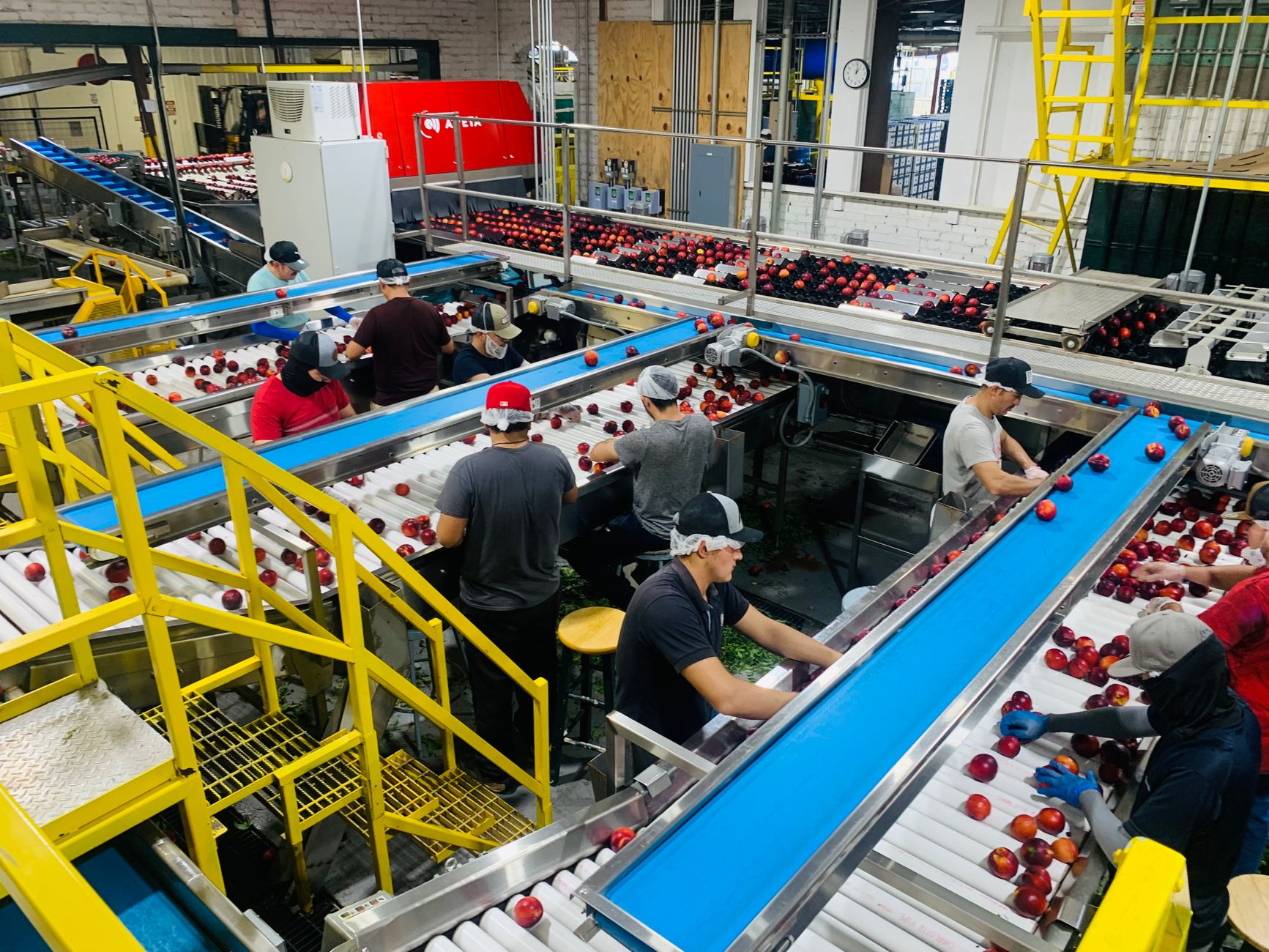
Our frozen pizza line in Fargo, North Dakota runs through winter shifts, and sauce-station workers keep leaving with wrist pain faster than we can train replacements; could a cobot take the sauce spreading without slowing the belt?
Key takeaways
- Wrist strain at a sauce station comes from repetitive motion, and a cobot can take over that motion if the spreading pattern is fixed.
- No sauce spreading cycle time was found, so belt speed stays unproven until a site assessment times the arm against your line.
- A cobot does not remove loading, trimming or changeover work, so a wrist plan usually needs tooling and task changes as well.
- Fargo's metro unemployment rate was 2.6% in August 2026, so filling sauce station openings may stay slow.
- A lease is quoted only after a free site assessment, and service is covered under our service plan for every leased unit.
Can a cobot take sauce spreading at a Fargo frozen pizza plant?
If your Fargo frozen pizza line is losing sauce station workers to wrist pain, a cobot is worth testing, but it is not a sure fix. A collaborative robot arm can take over the spreading motion at the sauce station, which is the repeated grip and reach that tends to load the wrist. Whether it keeps pace with the belt is the question the rest of this page works through.
The honest answer depends on three things you can measure on the floor: how fast the belt moves, how each base is placed for sauce, and how much of the wrist load comes from spreading compared with loading, trimming and tray handling. Our research did not find published sauce spreading cycle times or staffing counts for frozen pizza plants, so the figures below describe the national and Fargo context, not your line.
Treat the wrist problem as an ergonomics problem first. The cause sits on the line, and a cobot is one of several fixes you can weigh against the others.
How common is wrist strain as a workplace injury?
The National Safety Council, analyzing Bureau of Labor Statistics data, counted 937,620 musculoskeletal disorder cases in the private sector across 2023 and 2024 combined. Of those, 484,620 were days-away-from-work cases. These are two-year totals, and the council's grouping is its own, so they will not match a single BLS table line for line.
The Bureau of Labor Statistics describes musculoskeletal disorders as injuries to muscles, tendons and ligaments, and says overexertion and repetitive motion are primary causes. A sauce station fits that pattern: the same motion, many times per shift, paced by a belt. That makes the motion itself the target, not the worker.
The research did not find a single-year figure for food manufacturing or the frozen food industry. Your own injury log and the sauce station's recordable history will show whether the problem is local, and that is the number to bring into the site assessment.
What does a cobot do at a sauce station, and what does it leave to people?
A cobot is a small arm built to work near people. At a sauce station it can hold a sauce applicator or spreader tool and cover each base in a programmed pattern, which removes the repeated grip and reach that load the wrist. The arm does not judge the base. People still see uneven crust, a torn base or a crooked placement, and people still handle changeovers.
Think of the split as two lists. The arm is strong at repeatable motion. Your workers are strong at reading each base, adjusting for variation and catching exceptions. Most stations need both, so the question is how much of the station's work falls on the repeatable side.
A fixed tray or fixture that holds each base in the same spot is often the most useful step before any arm goes in. It removes most of the searching the arm would otherwise do, and it cuts the number of bases a person has to correct by hand.
- Repeatable spreading pattern
Cobot
Repeats the same path on every base once taught and calibrated
Staff
Varies the pattern by eye and adjusts for crust shape and base position
- Wrist load from spreading
Cobot
No repeated grip or reach for the spreading motion itself
Staff
Repeated grip and reach, the likely source of the strain in the report
- Uneven or damaged bases
Cobot
Needs bases presented in a known position, so off-position bases must be caught first
Staff
Spots and reroutes bases that are off, torn or misfed
- Changeovers and cleaning
Cobot
Needs program changes and a layout that allows washdown for each new spread
Staff
Switches product and cleans without a program change
- Pace on the belt
Cobot
Speed depends on arm reach and cycle time, which must be timed on your line
Staff
Keeps pace through experience, but tires over a long shift
- Learning the station
Cobot
Programmed and integrated by our team, so staff learn to supervise rather than program
Staff
Takes time to learn, and each new hire starts that learning again
Will a cobot slow the frozen pizza belt?
The answer depends on the arm's cycle time for your spread, and that figure was not in our research. A cobot covers a base in a sequence of moves. The sum of those moves, plus the time to present and remove each base, must fit inside the interval the belt allows. If the arm cannot finish in that interval, the line slows, a second station is added, or the spread is split across arms.
Three things set the result: the belt interval per base, the length of the spread path, and how each base is presented. Base position matters most. A tray or fixture that holds each base in the same spot cuts the time the arm spends searching and the number of exceptions a person must catch.
Ask for the timing before anything else. A site assessment records the belt speed, the sauce amount per base and the number of spreads per shift, then tests the cycle on your equipment. If the arm cannot keep pace, we will say so before any lease is proposed.
- Belt interval per base, measured at running speed
- Spread path length and sauce amount per base
- Spreads per shift and total hours at the sauce station
- Changeovers and cleanup steps per shift
- Base positioning and rate of bases needing a person to correct them
What does Fargo's labor market mean for filling a sauce station?
Fargo's labor market is tight. According to USAFacts, the Fargo metro unemployment rate was 2.6% in August 2026, not seasonally adjusted, and the area ranked 3rd lowest among metros with a labor force of 100,000 to 250,000. The seasonally adjusted rate in the Federal Reserve Bank of St. Louis series (FRED) was 2.8% for each month from December 2025 through March 2026, then 2.7% for April 2026. A low rate usually means fewer people looking for line work, so each departure takes longer to fill.
National turnover shows the same pressure. The Bureau of Labor Statistics JOLTS 2025 annual average put the total separations rate at 3.3%, unchanged from 2024, with quits at 2.0% and layoffs at 1.1%. An industry summary of the same survey put manufacturing separations at about 2.4% a month in 2025 and quits at 1.4%. Those figures cover all industries and all of manufacturing, and the research did not find a food manufacturing rate.
Read the sauce station problem against those rates. A line that loses workers faster than it can train replacements runs an endless onboarding loop, and each new person starts the most repeated task with full strain exposure. A cobot does not replace the crew, but it can take the most repeated motion off the station, so the people you do hire can work on the parts that need judgment.
How do Fargo winters change the plan?

Fargo winters are long and cold, and the climate matters more to people than to the arm. According to climate-zone.com, using 1991 to 2020 normals, January's average low is about 0°F and December's average high is about 24°F. A cold commute can thin a crew on a bad morning, so a station that depends on a fixed number of hands has less slack in winter. A station with no trained cover has the least room when a winter shift loses people.
Winter also shapes the service side. Plan for the snow season when you think about response times, spare parts and on-site visits. Ask how dispatch works in bad weather and what happens to a station that faults on a Friday night in January. We will put those answers in writing with the quote.
Cold does not usually change what the arm does, since the spreading motion and the sauce are the same in February as in July. What changes is the building: dock doors, drafts and cold air reaching hands at a station near an entrance. Check station temperatures and drafts with your food safety team before the controls and the arm are placed.
What else should you weigh before choosing a cobot?
A cobot is one option among several for wrist strain. Tooling changes, a height-adjustable station, lighter spreader tools and a rotation between spreading and loading may bring the load down quickly and with less disruption to the line. These fixes do not remove the repetition, but they can lower the load while you test the arm.
According to a 2025 trade press roundup of North American robot orders, 7,212 cobot units were ordered that year, and cobots made up 19.6% of total robot units ordered. That points to growing adoption. Orders are not installations, though, and a growing market does not tell you whether an arm will hold pace on your belt.
The strongest case for a cobot is a station with a fixed motion, a stable base presentation and a labor gap you can measure. The weakest case is a station where most of the strain comes from lifting trays, trimming or handling exceptions. There, the arm may take the least strenuous part of the job while the injury keeps happening in the rest of it.
How does getting a cobot work with us?
We start with a free site assessment. Our team times the sauce spread on your belt, maps the station and the base presentation, and records the sauce amount and the changeovers. We pick the arm and the tooling from across manufacturers, so the choice fits your station rather than one catalog, and we say plainly if a cobot is the wrong fit.
If the fit holds, you receive a quote for a lease through financing, with the lease payment shown in that quote after the assessment. We then deploy and integrate the cell, train your staff to run and supervise it, and service every unit under our service plan, backed by regional service engineers in the states we service. One team covers the arm, the controls and the service.
A sensible first step is one leased unit on a single sauce station. Run it on real shifts, measure the belt, the exception rate and the wrist complaints, and decide on a second station with your own data. That keeps the decision on the line where the strain actually happens.

Frequently asked questions
Put a robot to work in Fargo.
We walk your site, learn the job, and recommend the unit that fits. Then we quote the lease, deploy it, and keep it serviced.
Sources
- National Safety Council analysis of Bureau of Labor Statistics data
- Bureau of Labor Statistics, musculoskeletal disorders fact sheet
- Bureau of Labor Statistics, JOLTS news release
- Manufacturing Dive, summary of BLS JOLTS data
- Federal Reserve Bank of St. Louis (FRED), Fargo MSA unemployment rate
- USAFacts, Fargo metro unemployment rate
- Climate-zone.com, Fargo climate normals 1991 to 2020
- Trade press roundup of 2025 North American robot orders