
The question, in the buyer's words
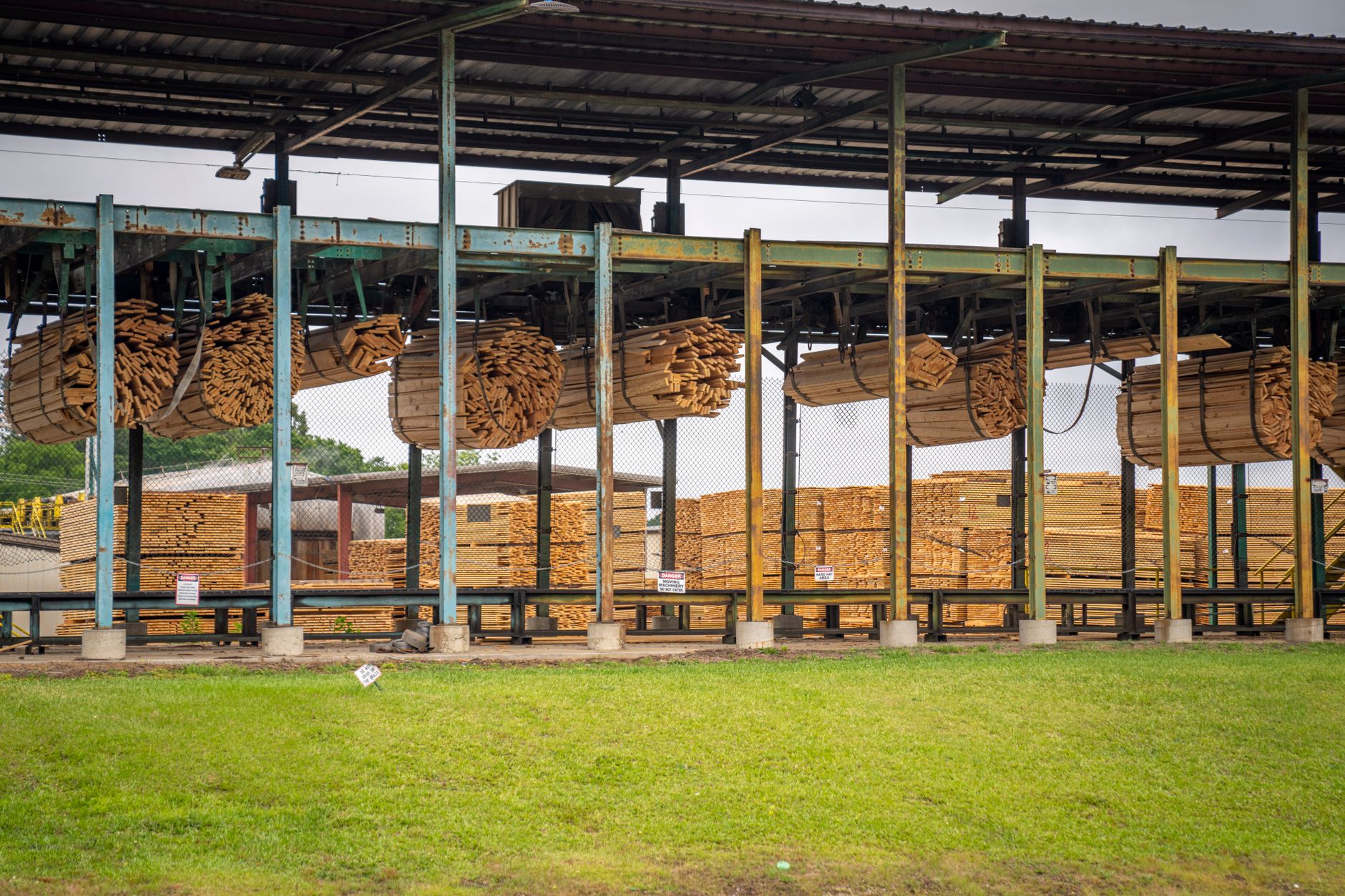
I run a 30-person sawmill grading station where graders lift and stack green boards all shift and the line slows at every shift change; could a cobot stack boards at the grading station without slowing the saw?
Key takeaways
- A cobot can take hand stacking off a grading station only when board weight, stack height and cycle time fit its payload and reach.
- The saw keeps cutting when a buffer of boards sits ahead of the robot, sized to cover its slowest stretch.
- Shift change is where a robot helps most, because it keeps stacking through the handover, though people still clear faults and reset patterns.
- Pilot one grading station on measured data before you commit to the whole mill.
- Grading or sorting automation may recover more labor than stacking, so compare the options before you choose.
Can a cobot stack boards at a sawmill grading station without slowing the saw?
Yes, a cobot can take the lifting and stacking off a sawmill grading station, but only under conditions most mills have to check before they can say yes. The robot does not change how fast the saw cuts. It changes how fast finished stacks leave the grading station, and that is where the slowdown at shift change usually starts. A cobot board stacking cell works when it keeps pace with the grader and the saw keeps feeding the grader.
We did not find a published case of a cobot stacking green lumber at a sawmill grading station in our research. The closest wood industry case was a cobot palletizing wood pellet bales, a bale load with its own stacking pattern. That gap matters, because the answer for your mill rests on your board weights, your stack pattern and your cycle times, not on a headline from somewhere else.
In short, a cobot is a plausible fit for one grading station with steady board sizes, a buffer ahead of the robot and floor space to spare. It is a poor first step if your stock varies widely in wet weight, if the grader cannot pause without jamming the saw, or if you have not timed your shift changes.
Start by writing down what the station looks like on a bad shift, with the number of stacks waiting, the people present and the minutes the grader sits idle. That baseline shows whether the problem is handover, peak output or stack quality, and each one points to a separate fix.
Why does hand stacking slow the whole mill at shift change?
Hand stacking ties your output to the number of people standing at the grading station. When a shift ends, the handover pulls people off the station for minutes at a time, and stacks back up behind them. The underlying problem is labor. According to a trade publication report, U.S. sawmill employment was 85,400 in Q3 2025, the lowest since Q1 2013, and it had fallen for ten consecutive quarters.
Shortages make shift coverage harder to hold. An Oregon forest workforce study from January 2026, based on 106 employer and self-employed survey responses, 28 interviews and 5 focus groups, found that competition from other industries, skill shortages and retirements hinder hiring and retention. Entry-level woods workers and equipment operators were among the hardest roles to fill. If your stacking roles are entry-level, they sit close to that group.
Treat the handover gap as a staffing question first. If you cannot fill the station with trained people for every shift, the gap is lost output, and a robot belongs in the comparison alongside overtime, a dedicated crew or moving people between stations.
How heavy is the lift and what do the injury records show?
Lifting and bending are the core physical tasks at a grading station. According to OSHA's timber ergonomics training materials, bending beyond 30 degrees, with a four-hour daily limit, is listed as a sawmill hazard. The listed controls include raising chains to reduce bending, sizing up the load, keeping a clear path, and using carts or dollies.
Injury rates in wood processing are a reason to measure the lift rather than guess at it. A magazine summary of Bureau of Labor Statistics data gives a wood product manufacturing injury rate of 5.9 per 100 workers, but the summary does not state the year, so treat it as a rough reference. Ontario's provincial workplace safety body reports a sawmill injury rate of 7.55 per 100 workers and 369 total injuries in 2025. That is Canadian data, so use it as context rather than a US benchmark.
A cobot takes the repetitive bending and lifting out of the stacking cycle, which is the part OSHA's controls point toward. It does not remove the need for trained people to clear jams, handle split or damaged boards and check stack quality. Ask your safety team to log lift counts per shift before any comparison, so you can measure the change afterward.

What does a cobot need to stack green boards?
The first test is payload and reach against your heaviest common board, not an average. Green boards vary with species and moisture, and a wet board can weigh far more than a dry one of the same size. Weigh a sample of your heaviest and most common boards, and note the stack height you need, before you read any spec sheet.
The closest evidence we found is a wood pellet producer in Slovakia where a palletizing cobot has run for about a year, relieving seven employees from lifting hundreds of 10 kg bales, according to an integrator case note. That is an integrator and vendor report, not an independent audit, and bales are not boards. It still shows the kind of work a cobot can take over in a wood plant: repetitive lifting into a fixed pattern.
Lay out pick and place heights on your own station before you choose a robot. A stack that reaches overhead, or a pick point set too low for the operator, changes the reach and the cycle time. Check the gripper against the shape of your boards, including sticker placement, warp and bark edges, because a gripper that works on clean dry stock may fail on wet green lumber.
Stack quality matters as much as speed. A cobot places boards where the program says, so a board with heavy warp or a loose sticker can shift the stack and cause a fault. Plan a short check that catches those boards before they reach the robot, or the cell will stop more often than the spec sheet suggests.
- Lifting and bending
Cobot
Repeats the same lift and bend on every cycle with no fatigue from the shift
Staff
Adapts to odd boards, but repeated bending and lifting load the back over a shift
- Shift change
Cobot
Keeps stacking through the handover if the buffer holds
Staff
Needs a briefing and a handover gap at the station
- Odd boards, splits and wet stock
Cobot
Needs the gripper and program set up for each board type
Staff
Judges warp, split and sticker problems by eye and adjusts on the spot
- Hiring and turnover
Cobot
Does not need recruiting or training each time someone leaves
Staff
Hard to recruit for entry-level roles, according to the Oregon workforce study
- Changeover to a new board mix
Cobot
Needs programming and a pattern check for each new mix
Staff
Adapts to a new mix within a shift once trained
- A fault during the shift
Cobot
Stops until a trained person clears the fault and restarts it
Staff
Clears a jam and keeps working without a restart
Will the saw slow down if the robot sits behind the grading station?
The robot should not be the reason the saw slows, and a buffer is how you protect the saw. The grading station sits between the saw and the stack, so if the stacker falls behind the grader, boards pile up at the grader and the saw has to wait. A small buffer of boards ahead of the robot, sized to cover its slowest stretch, lets the saw keep cutting while the stacker catches up.
A vendor in Austria reports a robotic sorting line for green and dry sawn timber that needs about 1,500 square meters and can be run by one operator, with delivery slated for the end of 2025. Those are vendor claims, and sorting is not stacking, but the floor figure is a reminder that automated handling takes room. Ask for the floor plan early, because a cell that does not fit between the grader and the stack exit will fail regardless of its speed.
Measure the grader's output over a full shift, then compare it with the robot's cycle time for the stack pattern you actually need. If the robot cannot match the grader at peak, you can add a second cobot, add buffer capacity or keep a person on the stack during peak hours. Do not accept a projection that assumes the saw runs at its best rate all day.
Keep the saw's output setpoint in view as well. If the saw is set to run faster than the grading and stacking chain can carry, no robot will prevent a backlog. Agree the target rate with your saw operator before the pilot starts.
How does a robot handle the shift change itself?
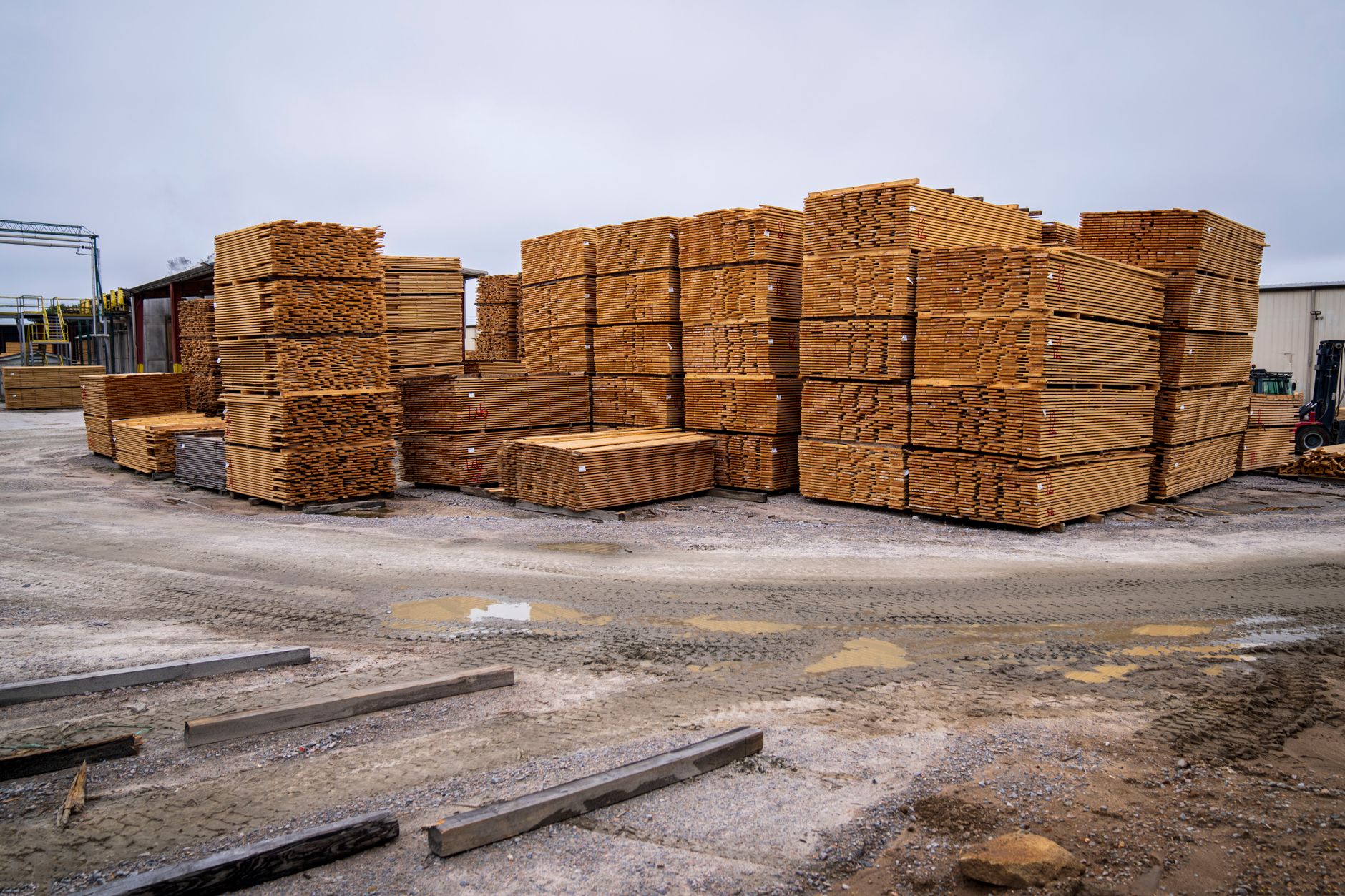
Shift change is where a robot earns its place, because a cobot does not need a handover briefing or a break. If the buffer is full and the cell is stocked, it keeps stacking through the handover, and the grading station keeps moving. That removes the dip in output that comes from people leaving the station for minutes at once.
The robot does not run the station alone. Someone still refills strapping and sticker supplies, resets the stack pattern when the board mix changes, clears jams and checks that stacks are square. Plan those tasks into the handover window instead of assuming the robot removes the handover.
Night and weekend crews matter too. A cobot runs the same pattern each time, which helps consistency, but an unfamiliar board mix still needs a trained operator at the controls. Write down who restarts the cell after a fault and who has authority to stop it before the first shift runs.
Is stacking the right first step, or should grading be automated first?
Stacking is not the only option. Vendors offer automated board grading for green lumber and planer mills, and at least one European project targets green lumber producers that need to automate manual graders. Those performance claims are not verified, so ask for trial results on your own species and grade mix rather than brochure figures.
Vision-based sorting is another route. One vendor describes a system that measures reclaimed boards and sorts them into bins, which removes hand stacking for that stream. Those are also vendor descriptions. If most of your hand stacking comes from one product stream, a sorting unit may cover more labor than a stacking cobot, while a stacking cobot may fit better where sorting is already in place.
The wider market is moving toward cobots. According to the International Federation of Robotics, cobot installations reached 66,000 units in 2025, which was 11% of all industrial robot installations. The same report says cobot growth of 7% was below the overall robot market, the first time that has happened since the federation began tracking cobots. Adoption is not proof of fit for your grading station, but it does mean more integrators and service options exist to compare.
Compare the two options on the same measures: labor hours recovered per shift, floor space, changeover time and the number of people needed to clear faults. A stacking cobot and a sorting unit can look alike in a brochure and differ sharply on those measures.

What would a pilot and lease look like with us?
We are a single integrator for US businesses. We pick the right robot across manufacturers, then lease it through financing, deploy and integrate it, train your staff and service it nationwide, so you deal with one partner instead of several. For a mill, that means starting with the site and the stack, not with the robot.
A pilot on one grading station is the sensible test. We would measure your board weights, stack patterns, grader output and shift-change gaps, then map the floor and the buffer. From that work we quote a lease after a free site assessment, so you can see what fits your line before you agree to anything wider. Robot lease options are easier to compare once those measurements are in hand.
If the site assessment shows that stacking is the wrong first step, we will say so and point you toward the grading or sorting question first. A pilot on one station, measured against your present shift change, is the cleanest way to learn whether a robot fits your mill.
Frequently asked questions
Upcoming manufacturing events
- Trade showBrats & RobotsNov 10, 2026Alliant Energy Center Exhibition Hall, Madison, WI
- Trade showMATE Farm & Ranch ShowFeb 11 to 13, 2027MetraPark, Billings, MT
- ExpoPFMA Expo 2027Feb 17 to 18, 2027Washington County Fair Park, West Bend, WI
- ExpoLouisville Facilities Maintenance ExpoApr 15, 2027Mellwood Art Center, Louisville, KY
Want a cobot at your sawmill grading stations?
Tell us about your site. We will recommend the robot, quote the lease, and keep it serviced.
Sources
- Trade publication report on U.S. sawmill employment, Q3 2025
- Oregon forest workforce study, January 2026
- Magazine summary of Bureau of Labor Statistics injury data
- Ontario provincial sawmill health and safety infographic, 2025
- OSHA timber ergonomics training materials
- International Federation of Robotics president's report, 2026
- Vendor report on robotic sawn timber sorting line
- Integrator case note on pellet bale palletizing cobot