
The question, in the buyer's words
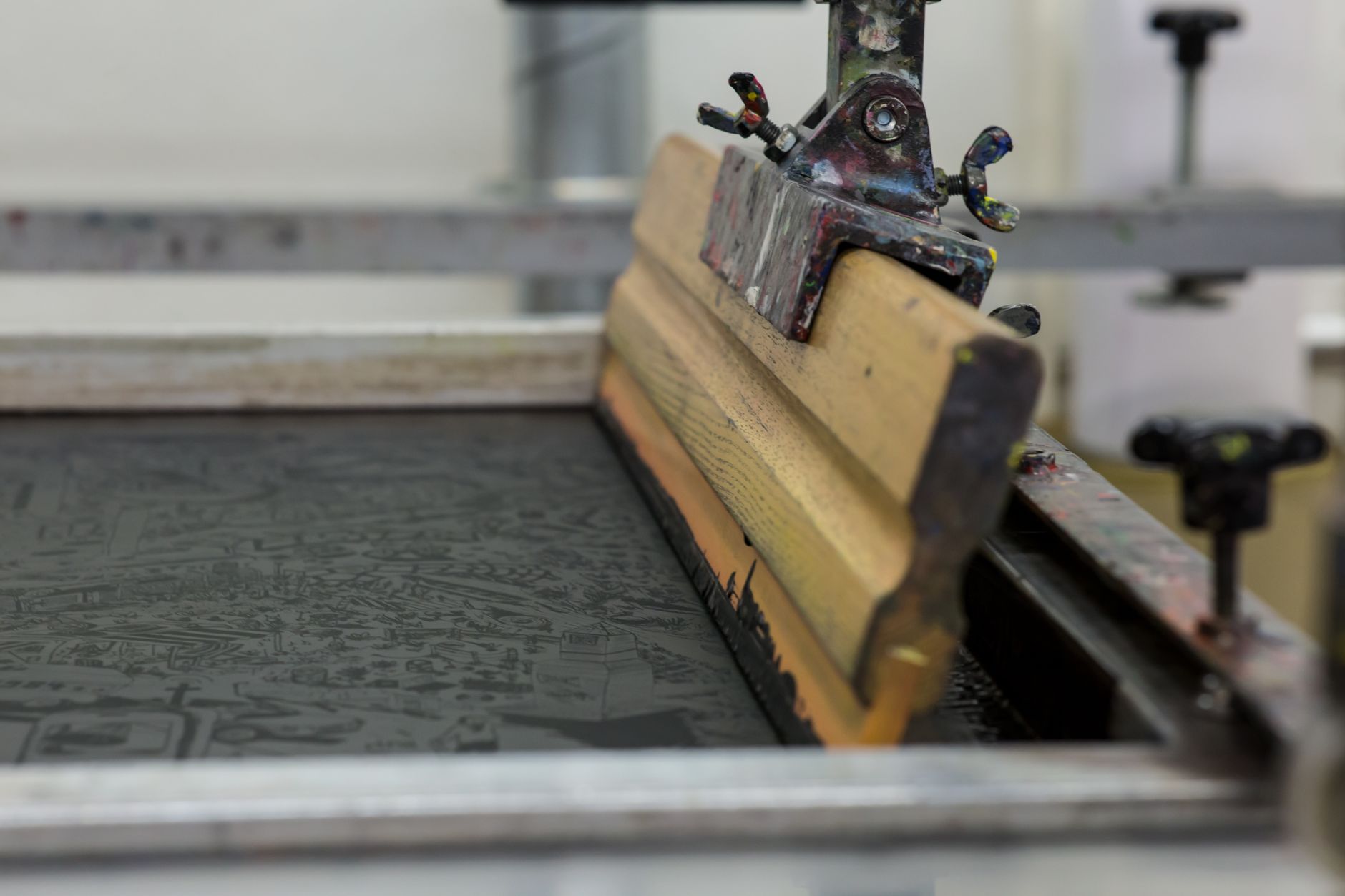
Our 30-person screen printing shop has a carousel press where operators pull hot platens off by hand all shift, and rush orders keep piling up behind them; could a cobot take the platen removal without slowing the press?
Key takeaways
- A cobot can take platen pulls off operators, but only at a planned pause or open station on the press.
- Time your own swaps on each press before accepting any vendor claim, because no published baseline was found.
- Heat is a separate hazard from contact force and needs its own line in the risk assessment.
- Start with one leased unit on one press and measure it against your baseline before expanding.
- If the press cannot give the robot a window, the robot is the wrong fit for the job as asked.
Can a cobot pull screen print carousel platens without slowing the press?
Often yes, but only at a specific point in the cycle. A cobot can take platen removal off your operators on a screen print carousel press, which frees them for rush orders waiting at the bench. The hard part is the press itself. A carousel moves its platens through stations, and a robot reaching into a turning carousel is a collision risk, so the robot needs a moment when the platen sits still.
Whether that moment exists is the whole question. Some presses can hold a station briefly, some can be set to pause at a swap point, and others never stop between prints. We would not promise zero slowdown from a general demo. Ask for the specific station, the length of the pause, and whether the press keeps rotating while the robot moves.
How does a hand platen swap work on a carousel press today?
According to a screen printing trade blog describing the mechanism, a manual platen slides into position on clips at the back of its station and then locks with a clamp on the print arm. A swap is a fixed sequence: release the clamp, lift the platen off the clips, carry it away, seat the next one, and lock it. Each step is short, but a shop that swaps platens across a full shift loses a lot of operator time to them.
Heat changes the job. Platens coming off a press that has been running are hot, so operators wait, use a glove or tool, or pull fast. A robot has no glove. Any gripper it uses must suit the surface temperature it meets and the time it spends in contact, so ask your operators how they handle hot platens today, because that practice sets the gripper spec.
We did not find a published study of platen swap times on carousel presses, so the first real number has to come from your floor. Time ten swaps on each press across two shifts, and note which of them fall during rush orders. That baseline is what a leased unit must beat, and it shows whether one robot covers enough swaps to matter.
What would a cobot need to pull a platen?
A cobot needs three things: a gripping method that engages the platen reliably, a reach that gets to each platen position on the carousel, and a path that clears the press arms and frame. Platen designs vary. One patent describes platens with recessed areas so that an automated unloader's gripping means can engage them. If your platens lack a recess or handle the gripper can use, the gripper becomes a fixture project, and that adds time before go live.
Automated unloaders for printed garments use a related idea. A textile unloader patent describes an open station just after the last print station, so the carousel keeps rotating while garments are removed. The concept carries over to platens only if your press has a comparable open station, and that is a question for the press layout, not for the robot's brochure.
The handoff matters as much as the robot. If the cobot places the removed platen on a cart or rack, the cart location and staging rules become part of the design. A swap that only removes platens still leaves the next one to be seated, so plan how the new platen gets back into the carousel and who does it when the robot is busy.
Will the press slow down, and where does the time get saved?
The press slows only when the robot needs a pause the press does not already have. A carousel that runs continuously needs a planned hold at the swap station, or an open station like the one described in unloader patents, for the robot to reach in. Some presses hold position only briefly, and that window sets the longest time the robot may spend on one pull. If the robot needs more time than the window allows, the press waits.
The time saved is mostly the operator's, not the press's. A person who pulls platens by hand is out of the rush queue for the whole swap. A cobot that handles the pull lets that person load, finish, or pack rush work while the press keeps getting fed. For a 30-person shop, that is the gain to measure, not a general claim about press speed.
Keep a manual backup in the plan. If the robot faults or a platen seats wrong, a person must finish the swap without stopping the line for long. Write the backup procedure, train on it, and test it before go live. The backup is part of the design, not an afterthought.
How common are cobots on factory floors?
Cobots are established, but they remain a small share of industrial robot installations. According to the IFR summary of its 2026 president's report, 66,000 new collaborative robot installations were recorded in 2025, which is 11% of 603,000 total industrial robot installations. We reviewed the summary, not the full report, so confirm the exact figures before quoting them internally.
The same summary says cobot growth was 7% in 2025, below the overall market. For a shop manager, that suggests cobots are proven on many tasks but are not yet the default for every press. Choose an integrator who can show references on machine tending or press work, and ask whether those references run in a shop like yours.
We found no published adoption figure for cobots on screen print carousel presses. The research for this page turned up industry context and safety references, not a survey of print shops. That gap is one reason we recommend starting with a trial on a single press rather than a plan for the whole floor.
What safety rules apply to a cobot near hot platens?
The main reference for collaborative operation is ISO/TS 15066. According to Automate, the specification describes four collaborative modes: safety-rated monitored stop, hand guiding, speed and separation monitoring, and power and force limiting. It also gives body-region pain and force thresholds. Which modes apply at each station is decided by the risk assessment for that cell.
Those thresholds address contact force and pressure on people, not the temperature of a part the gripper touches. A hot platen is a separate hazard. The assessment must cover gripper contact, the drop zone for a platen that has not cooled, and what operators do when the cycle stops with a platen in hand. Treat heat as its own line in the assessment, not a footnote to collision limits.
Ask any integrator for the written risk assessment for your specific cell. A demo video does not show where the operator stands, what the robot does when a light curtain trips, or how the press and the robot stop together. Your safety lead and your insurer will both want those answers on paper.
What do injury and labor figures say about manual platen work?
The sources we found do not measure turnover for screen printing alone, so national figures frame the pressure without settling it. According to the BLS JOLTS release, the all-industry total separations rate for 2025 was 3.3%, unchanged from 2024, with 62.8 million annual separations. In manufacturing, NAM, citing the same JOLTS data, reported total separations of 2.2% for May 2025, unchanged from the prior month, against 3.2% economy-wide that month.
Manufacturing separations were lower than the economy overall that month, so turnover alone may not explain a shortage on your floor. The stronger case for a cobot on a carousel is the handling load itself: the same hot, repeated pull across a shift, which your own incident and near-miss log can count.
A CDC document states that 22 to 29% of burns were work-related. That document is older, and its year was not confirmed in the source we reviewed, so treat it as a directional reference and check current figures for your own shop. Use the burn figure to frame your hazard review, not to predict a rate for your plant.
When is a cobot the wrong answer for platen removal?
A cobot is the wrong answer when the press has no pause or open station the robot can use and the shop will not add one. It is also the wrong answer when swaps are rare, because the integration work will not pay back in time saved. If the bottleneck is screen burning, curing, or ink flash rather than platen handling, the robot will not clear the rush queue.
The platen can rule out a robot too. Platens without a recess or handle the gripper can engage, or platens too hot for the gripper's rated contact, may need a fixture or another process first. A shop that changes platen sizes often needs a grip plan for each size, and the setup time may outweigh the swap time saved.
A sign of a bad fit is a vendor who cannot name the station, the pause length, and the gripper for your press before the site assessment. Press those questions early. A good fit can answer them on paper before anyone signs a lease.
How do we move from a trial to a leased unit?
We start with a free site assessment on your press, not a sales call. The assessment maps the carousel, the swap station, the platen layout, the staging area, and the operator path. The lease quote follows that assessment, so nothing is quoted before we have seen the press.
The unit is leased through financing, which keeps upfront capital out of the decision and turns the commitment into a fixed robot lease payment. We deploy and integrate it on the press, train the operators on the normal cycle and the manual backup, and then service it under our service plan, with regional service engineers in every state we service.
We recommend one leased unit on one press first. Measure its swap times against your baseline for several weeks, and decide on a second press only after that. Ask in writing how a spare unit or backup coverage is handled if the robot goes down during a rush.
Frequently asked questions
Upcoming manufacturing events
- Trade showBrats & RobotsNov 10, 2026Alliant Energy Center Exhibition Hall, Madison, WI
- Trade showMATE Farm & Ranch ShowFeb 11 to 13, 2027MetraPark, Billings, MT
- ExpoPFMA Expo 2027Feb 17 to 18, 2027Washington County Fair Park, West Bend, WI
- ExpoLouisville Facilities Maintenance ExpoApr 15, 2027Mellwood Art Center, Louisville, KY
Want a cobot at your screen printing shops?
Tell us about your site. We will recommend the robot, quote the lease, and keep it serviced.