
The question, in the buyer's words
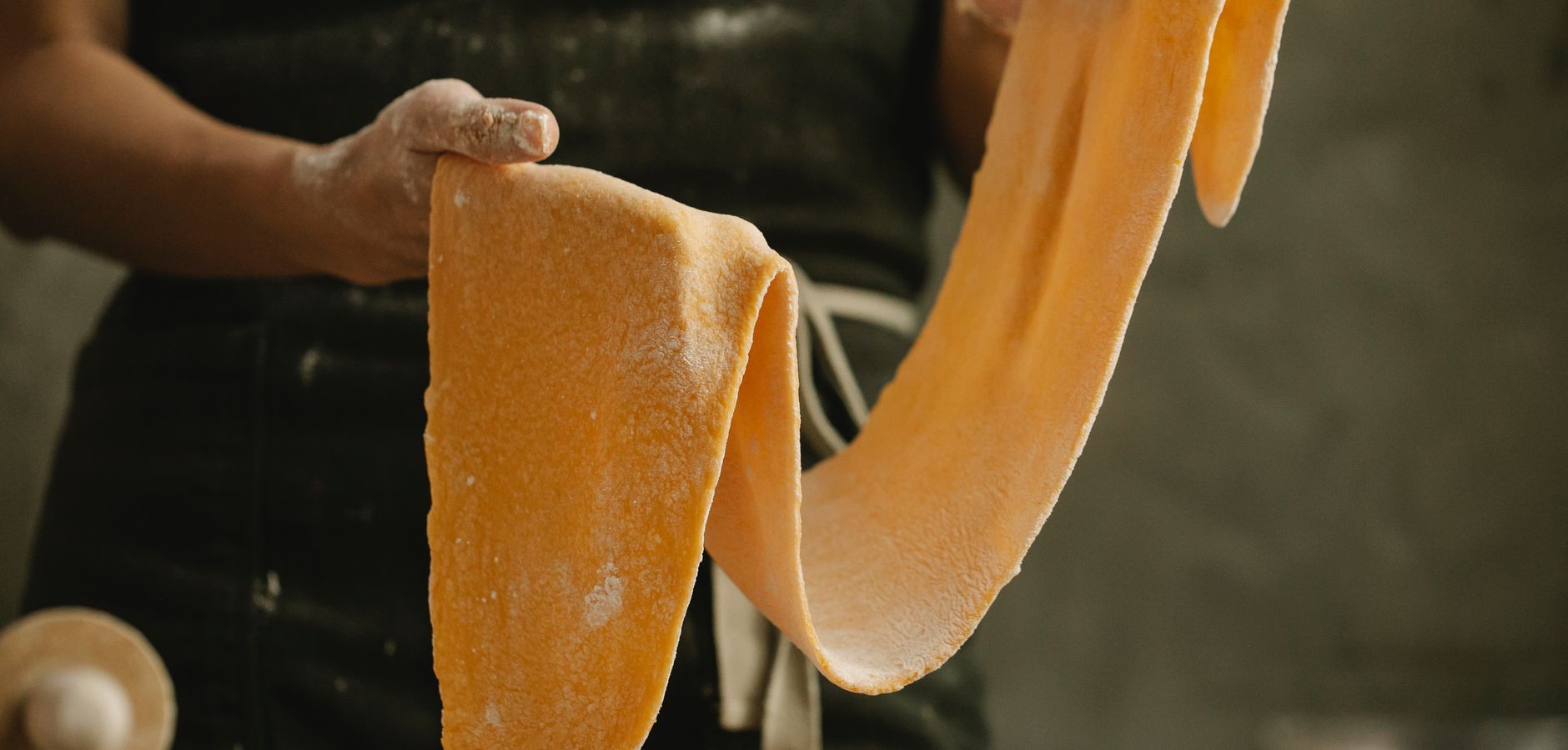
Our 45-person fresh pasta plant in Columbus, Ohio turns down weekend grocery orders because bagging cut pasta by hand can't keep up with the slicer, and our packers are burning out; how soon could a cobot take the bagging so packers only seal and check?
Key takeaways
- A cobot can take cut pasta bagging, but packers still seal and check every pack.
- Whether one cell clears weekend orders depends on slicer output measured across a full shift.
- Only power and force limiting allows planned contact with a person under ISO/TS 15066.
- Columbus metro food manufacturing employment held near 8,000 from February to June 2026, per Federal Reserve Bank of St. Louis data.
- Timing comes from a free site assessment and a lease quote, not a date promised in advance.
Can a fresh pasta bagging cobot take the work off packers?
For the bagging step, yes, if bagging is a repeatable task you can measure. A cobot is a collaborative robot arm built to share a workspace with people. In a fresh pasta cell it picks an empty bag, opens it, fills it with cut pasta from a tray or chute fed by the slicer, and presents the filled bag to the sealer. Each motion is fixed, so the arm repeats it all shift without fatigue.
What stays with packers is the work that needs judgment: sealing, checking seals and weights, labeling, pulling off spec packs, and boxing orders. That is the split your question describes, and it is the right split for a cobot. The cobot takes the repetitive handling your packers are tired of, while people keep the checks that protect product and customers.
Be clear about what a cobot is not. It does not run unattended for a full weekend the way a floor cleaner might, so someone still loads bag stock, clears faults, and watches the cell. The gain is fewer hands on the same repeated motion, which is what keeps weekend orders moving, not a cell with no people in it.
How much of cut pasta bagging can a cobot take over?
Breaking the job into tasks shows how much a cobot can carry. Bag supply, opening, filling, and placing on the sealer infeed are candidates. Sealing, weight and seal checks, and rework are not, at least not in a first install. Cut pasta is less uniform than rigid trays: strands, shapes, and moisture change how product flows, and soft film is harder to grip and open than a stiff pouch. A trial with your exact product and bags is the only reliable test.
Pace decides fit. Cobot cycle time depends on payload, reach, and motion path, and dedicated high speed bagging machines generally outrun a cobot on long single product runs. A cobot earns its place where you run many pack sizes, change over often, and need a small footprint beside the slicer. If your slicer makes more packs per hour than one cell can hold, a single cobot will not clear weekend backlog.
Measure before you accept any pace claim. Count slicer output in packs per hour across a full shift, then compare it with the rate one cell holds with your bags at your product temperature. If the gap is wide, the honest answer is two cells or a different machine for the fastest sizes. A good site assessment says that plainly before anything is installed.
Why are packers burning out, and what do the figures show?
National figures give context, not a local forecast. The Bureau of Labor Statistics counted 645,210 people employed as hand packers and packagers in the United States in May 2023. That occupation spans every industry, so it shows how many people do this kind of work nationwide, not how many work in food plants or in Columbus.
Injury data points the same way. According to a trade press report on BLS figures, the food manufacturing injury rate fell from 4.6 cases per 100 full time workers in 2022 to 3.6 in 2023. The rate fell, but food manufacturing remains a sector where repetitive reaching, lifting, and gripping add up. Hand bagging is that kind of motion, repeated all shift, so moving it to a cobot is an ergonomic case as well as a throughput one.
This page does not include verified packer turnover or bagging hours per shift for food plants, so measure your own before you decide. Count the weekend orders you turn away, overtime hours on bagging, minutes per order, and packers who left in the last year. Those four numbers will tell you more about your plant than any national average.
Is it safe to put a cobot next to packers?
The main safety reference for collaborative robots is the ISO/TS 15066 technical specification, which supplements the ISO 10218 parts 1 and 2 standards for industrial robots. It defines four collaborative operation modes: safety rated monitored stop, hand guiding, speed and separation monitoring, and power and force limiting. According to ISO's 2016 news item on the specification, it was first published that year. Whether it was folded into the ISO 10218 revision was not verified for this page.
Only power and force limiting allows planned contact with a person. In that mode the specification limits contact below biomechanical limits for each body region. A bagging cell where packers reach in to seal may combine modes, with stops or slowing when someone enters the work area. Which modes apply is a cell design decision made at the site assessment, not a product choice.
Food plants add a second layer. The arm, gripper, and any guarding must be cleanable and fit your washdown routine, and changes to food contact surfaces need review under your food safety program before go live. Start that review early, since it sets the cleaning schedule and the cell layout.
What does a Columbus location change for weekend orders and staffing?
The Columbus labor pool for food manufacturing looks steady. Federal Reserve Bank of St. Louis data put food manufacturing employment in the Columbus metro area at about 8,000 in June 2026, with readings of roughly 7,900 to 8,000 since February 2026. The series is not seasonally adjusted, so read the level, not a seasonal swing. A steady pool still competes with other plants and distribution jobs for the same packers.
Columbus Region economic development reports that more than 12,000 people work in its food and beverage industry. That count includes beverage and a wider geography, so it is not comparable with the metro food manufacturing figure. Use the metro series when you judge your own hiring pool, and read the regional count as a sense of the wider cluster around you.
Columbus weather matters for the cell itself. Third-party averages put the January average high near 36 degrees Fahrenheit and the low near 21, so winter mornings near loading doors and cold rooms can sit below freezing. Cold can change how film bags slide and how sealed packs behave on a conveyor, so test at the temperatures your room actually runs. Check with the city before any floor, power, or structural work, since local permits can apply.
How soon could a fresh pasta bagging cobot go live?
No timeline can be promised honestly before the site is seen. Install speed depends on the cell location, the slicer outfeed connection, fixtures for your bag format, food contact review, and packer training. We do not give a date from the desk. The first step is a free site assessment with mapping, and the timeline follows from what that visit finds.
The usual way to start is one cell on one line, not the whole plant. A pilot lets you see how the cell holds on several weekends before you decide on a second cell. One unit is easier to validate, train, and service, and it shows real pace with your product rather than a generic figure.
Service matters as much as installation for weekend orders. Our service plan covers maintenance, backed by regional service engineers in every state we service, with on-site dispatch when a fault needs hands and remote triage first where it can resolve the issue. Ask about spare unit coverage, because a cell that stops on a Saturday is the failure that costs you a weekend.
When is a cobot the wrong fit for weekend orders?
A cobot is the wrong fit when your slicer outruns one cell and you cannot add a second. It is also the wrong fit when sealing, not bagging, is the real bottleneck, because a faster bagging step only piles packs in front of the sealer. Find which step your line actually waits on before you commit.
Product and bag format can rule it out. Very irregular cut shapes that present poorly to a gripper, bags too soft to open reliably, or pack weights that swing widely can each push you toward a different machine or a manual step kept at the line. Payload and reach also cap the bag sizes a cobot can handle, so your standard pack range matters.
If the weekend problem is supply, meaning bag stock, pasta feed, or staff to run checks, a cobot will not solve it alone. It can still lighten packers' load in that case, but it will not clear the backlog by itself. Be willing to hear that at the site assessment, because it is the easiest place to hear it.
What should you check before you sign off?
Before signing off, verify the four things that decide fit: slicer output, bag and product variation, cold room temperatures, and packer roles on weekends. Each can move the answer from yes to partly to no. The checklist below is the short version to take to your production lead and your food safety lead.
Then agree how you will judge success. Pick measures you already track, such as weekend orders shipped, overtime hours on bagging, and seal or weight rejects. Set the test window before installation so the result is not argued after go live. A pilot with clear measures is the fastest honest way to decide whether a second cell is worth it.
If the checks pass, the next step is the site assessment. If they do not, you learn it early and can look at another machine or a narrower use of the cobot, which is far better than an unpleasant surprise after install.
Frequently asked questions
Upcoming events in Columbus, OH
Put a robot to work in Columbus.
We walk your site, learn the job, and recommend the unit that fits. Then we quote the lease, deploy it, and keep it serviced.
Sources
- A3 full-year 2025 North American robot orders release
- BLS OEWS May 2023 packers and packagers, hand
- Federal Reserve Bank of St. Louis: Columbus metro food manufacturing employment
- Columbus Region food and beverage industry takeaways
- Trade press report on BLS food manufacturing injury rates
- Trade association explainer on ISO/TS 15066
- ISO news on ISO/TS 15066 publication, 2016
- Columbus, Ohio temperature averages by month