Key takeaways
- Vision-equipped collaborative robots (cobots) detect subtle bottling defects like skewed labels, improper seals, and incorrect fill levels that human inspectors often miss.
- Automated quality control operates tirelessly at speeds exceeding thousands of bottles per minute, enabling plants to maximize throughput without sacrificing quality.
- Beyond simple pass/fail checks, vision systems collect valuable data that can help diagnose upstream equipment problems before they cause large-scale waste.
- A vendor-neutral, full-service integrator is critical for selecting the right robotics and vision components and ensuring they work with your existing production line.
- Automating QC reduces the risk of costly product recalls, protects brand reputation, and allows human workers to focus on more complex, value-adding tasks.
How Can You Guarantee Quality on a High-Speed Bottling Line?
In a modern bottling plant, production lines move at incredible speeds. Thousands of bottles can be filled, capped, and labeled every hour. Amid this high-velocity environment, ensuring every single bottle is perfect is a monumental but non-negotiable task. A crooked label, an improperly sealed cap, or an incorrect fill level can lead to waste, consumer complaints, and damage to a carefully built brand reputation.
For decades, the answer was human inspection. But even the most diligent workers experience fatigue, and their effectiveness wanes over a long shift on a fast-moving line. The repetitive nature of the task makes it difficult to maintain focus, and subtle defects can easily slip through. This manual approach is no longer sufficient to meet modern production demands and quality standards.
The definitive answer is automating quality control inspections with vision-equipped collaborative robots, or cobots. These systems combine the flexibility of a robotic arm with the precision of high-speed cameras and intelligent software. They perform hyper-specific quality checks on every bottle, identifying flaws in milliseconds with a level of consistency that is physically impossible for human inspectors to achieve.
What Specific Defects Can a Vision System Detect?
Automated vision inspection goes far beyond a simple glance. Paired with proper lighting and high-resolution cameras, these systems can identify a vast range of common bottling defects with remarkable accuracy. They build a complete quality profile of every container that passes.
Key inspection capabilities typically fall into three critical categories:
* Cap and Seal Integrity: A faulty seal can compromise the product, leading to leaks or contamination. Vision systems verify that caps are present, correctly tightened, and not cross-threaded or crooked. They can also inspect for damaged threads or missing tamper-evident bands.
* Fill Level Verification: Inconsistent fill volume is a frequent issue that leads to product giveaway or customer complaints. Automated inspection confirms that each bottle is filled to the correct level, flagging both under-filled and over-filled containers for rejection.
* Label and Code Accuracy: The system checks for label presence, position, and alignment. It can instantly detect skewed, wrinkled, or torn labels. Furthermore, it can use Optical Character Recognition (OCR) to verify that date and lot codes are present, correct, and legible.
How Does a Cobot Inspection System Work?
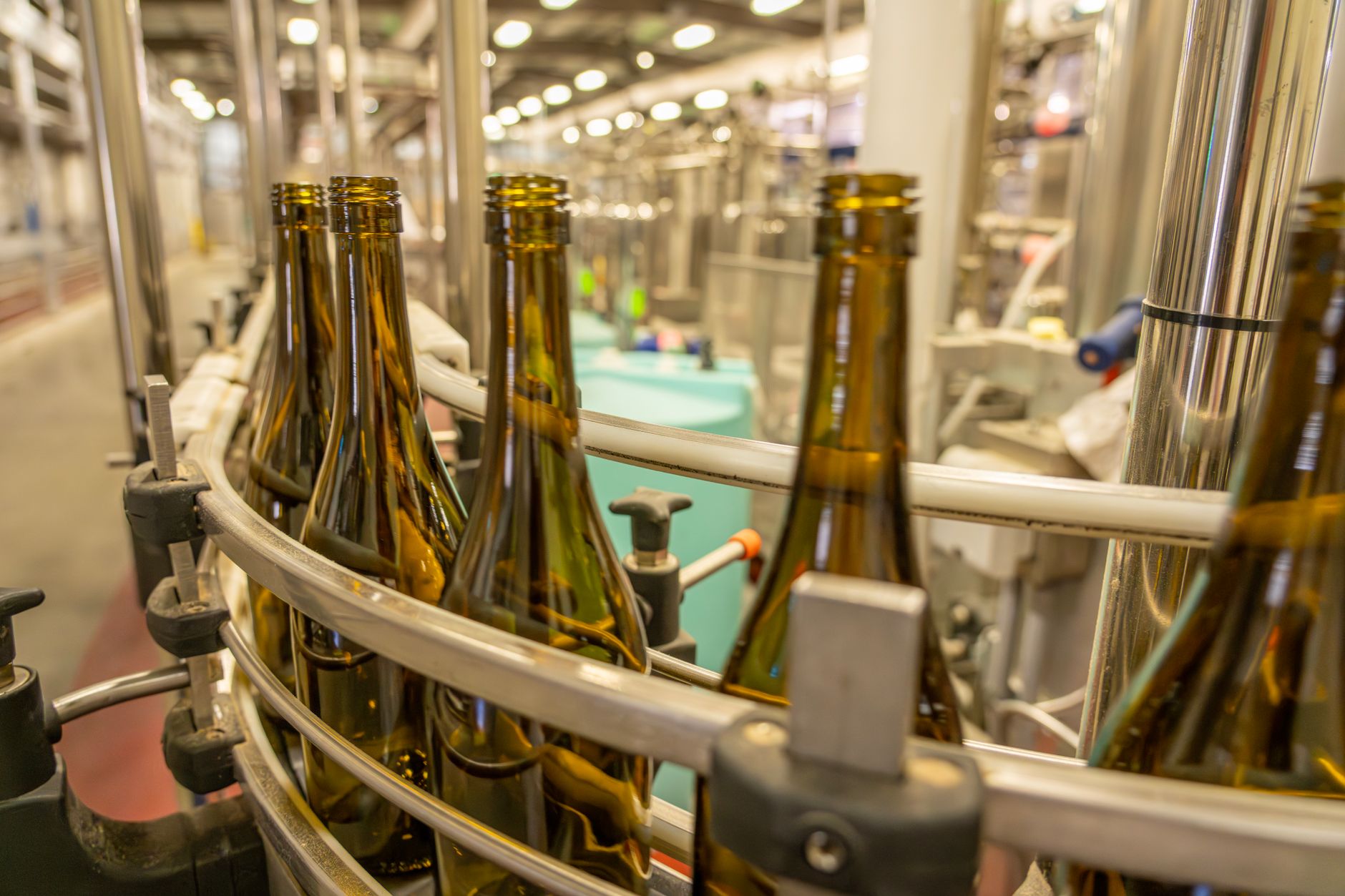
The process is a high-speed blend of robotics and artificial intelligence. As a bottle travels down the conveyor, it enters the inspection cell. Multiple cameras, often positioned at different angles, capture a series of images in a fraction of a second.
Specialized lighting illuminates the bottle to highlight key features and potential flaws. This is critical for measuring transparent liquids or spotting subtle cracks in the glass or plastic. The images are then instantly analyzed by software that compares them against a pre-defined 'golden standard' of a perfect bottle.
If the software detects any deviation from the standard, such as a skewed label or low fill level, it sends a signal. This signal can trigger a collaborative robot arm to gently divert the defective bottle to a rejection bin or a separate conveyor for review. This entire process happens without slowing down the production line, with modern systems capable of inspecting over 2,000 containers per minute.
Why Are Cobots a Better Fit Than Traditional Automation?
While fixed industrial robots can also perform inspection tasks, collaborative robots offer distinct advantages for the dynamic environment of a bottling plant. Cobots are designed to work safely in close proximity to human employees without the need for large, fixed safety cages, which saves valuable floor space.
Their lightweight design and user-friendly programming make them far more flexible. A cobot can be retasked or moved to a different production line with minimal downtime. This is a major benefit for plants that handle seasonal products or frequent changeovers between different bottle shapes and sizes.
This adaptability allows a facility to introduce automation incrementally. Instead of a massive, line-halting overhaul, a single cobot inspection station can be deployed to address the most critical quality bottleneck first, delivering a faster return on investment.
Beyond Rejection: Using QC Data for Process Improvement
A truly advanced robotic inspection system does more than just sort good products from bad. It functions as a data collection engine that provides deep insights into the health of the entire production line. Every defect it catches is a data point.
Imagine the system detects a sudden increase in crooked caps. The software can flag this trend on a dashboard in real time, alerting an operator to a potential issue with a specific capping head upstream. This transforms quality control from a purely reactive measure into a proactive tool for predictive maintenance.
By analyzing trends, plant managers can identify recurring problems with fillers, labelers, or blow-molding equipment and address the root cause. This reduces overall material waste, minimizes rework, and improves the plant's overall equipment effectiveness (OEE).
What Is the Financial Case for Automating Quality Control?
The investment in robotic quality control pays dividends in several ways. The most significant is the avoidance of product recalls. According to the Grocery Manufacturing Association, the average cost for a single food and beverage recall is around $10 million, with some events costing vastly more in direct expenses, legal fees, and lost sales.
Many recalls are caused by operational mistakes like mislabeling, which automated vision systems are specifically designed to prevent. By catching defects before they leave the plant, automation serves as a powerful insurance policy against catastrophic brand damage.
On the operational side, the ROI is driven by reduced waste, higher throughput, and optimized labor. Robotic systems eliminate the inconsistencies of manual inspection, ensuring only quality products are packaged and shipped. This allows companies to reallocate their skilled human inspectors to more valuable roles, such as analyzing the data from the automated system to drive process improvements.
How Do You Integrate a Vision System Into an Existing Line?
Successfully deploying an automated inspection system is more complex than simply buying a robot and a camera. The components must be expertly integrated with your existing conveyors, control systems, and plant network. This is where a full-service, vendor-neutral robot integrator becomes essential.
At Service Robot Co., we specialize in turnkey robot deployment. Our process begins with a free site assessment to understand your specific products, line speeds, and quality challenges. Because we are OEM-neutral, we are not locked into a single manufacturer. We select the best cobot, vision system, and lighting components from across the industry to build the right system for your exact needs.
Our nationwide network of engineers handles the entire lifecycle. We manage the financing, physical integration, programming, and go-live support. After deployment, we provide a single point of contact for all maintenance, service, and repairs through our comprehensive robot maintenance service plans. One partner and one number is all you need for the robot's entire operational life.
Finding the Right Automation Partner
Automating your quality control is a strategic investment in your brand's future. It requires a partner who understands both the technology and the realities of a food and beverage environment. The right partner provides more than just hardware; they deliver a complete program designed for maximum uptime and a clear return on investment.
Service Robot Co. offers flexible financing models, including robot leasing for business and RaaS (Robot as a Service) monthly subscriptions, which eliminate large upfront capital expenditures. These programs often include maintenance, backup units, and emergency response to ensure your production lines keep moving.
By handling the entire process from initial assessment to lifelong service, we allow you to focus on your core business: producing the highest quality beverages. We manage the robots, so you can manage your plant.