
The short answer
For most clinical labs, the autonomous mobile robot vs specimen courier question comes down to route fixity. A robot makes sense when specimen and supply runs repeat along the same few stops and techs are losing bench time to hallway trips, and it does not fit when runs are irregular, when specimens need a person to walk them through unmapped or non-integrated areas, or when volume is too low to justify a lease. In most hospital and reference labs the practical answer is a robot plus existing couriers, not a robot in place of them.
Key takeaways
- A robot fits repeat runs on a fixed route between set stops, the same trips a courier makes between departments.
- Couriers still handle irregular, urgent and unmapped runs, so plan for a robot plus staff, never zero staff.
- Published hour savings for lab robots are mostly vendor-reported, so measure your own runs first.
- Verified overtime and turnover data for lab couriers was not found, so pull your own shift records.
- Lease terms are quoted after a free site assessment, through financing.
Autonomous mobile robot vs specimen courier: which fits a clinical lab?
The short version: a clinical lab is a good candidate for an autonomous mobile robot when the same transport trips repeat every shift between the same stops, such as the core lab, specimen receiving, the chemistry and microbiology benches, and satellite draw stations. Those trips are what a specimen courier makes, so the robot takes over a predictable share of the walking and techs stay at the bench.
It does not fit well when most runs are unscheduled, when the lab is a single small room with short walks, or when the building's doors and elevators cannot be reached by a mapped route. It also does not fit when the real problem is staffing rather than walking, because a robot moves racks but does not run the bench. Expect a robot plus the existing courier team, not a robot in place of them.
Before any vendor conversation, decide which case you are in. Map the route, count the trips, and compare the results with the site assessment, so the decision rests on your floor plan and your run log rather than a generic claim.
What does a specimen courier actually do in a shift?
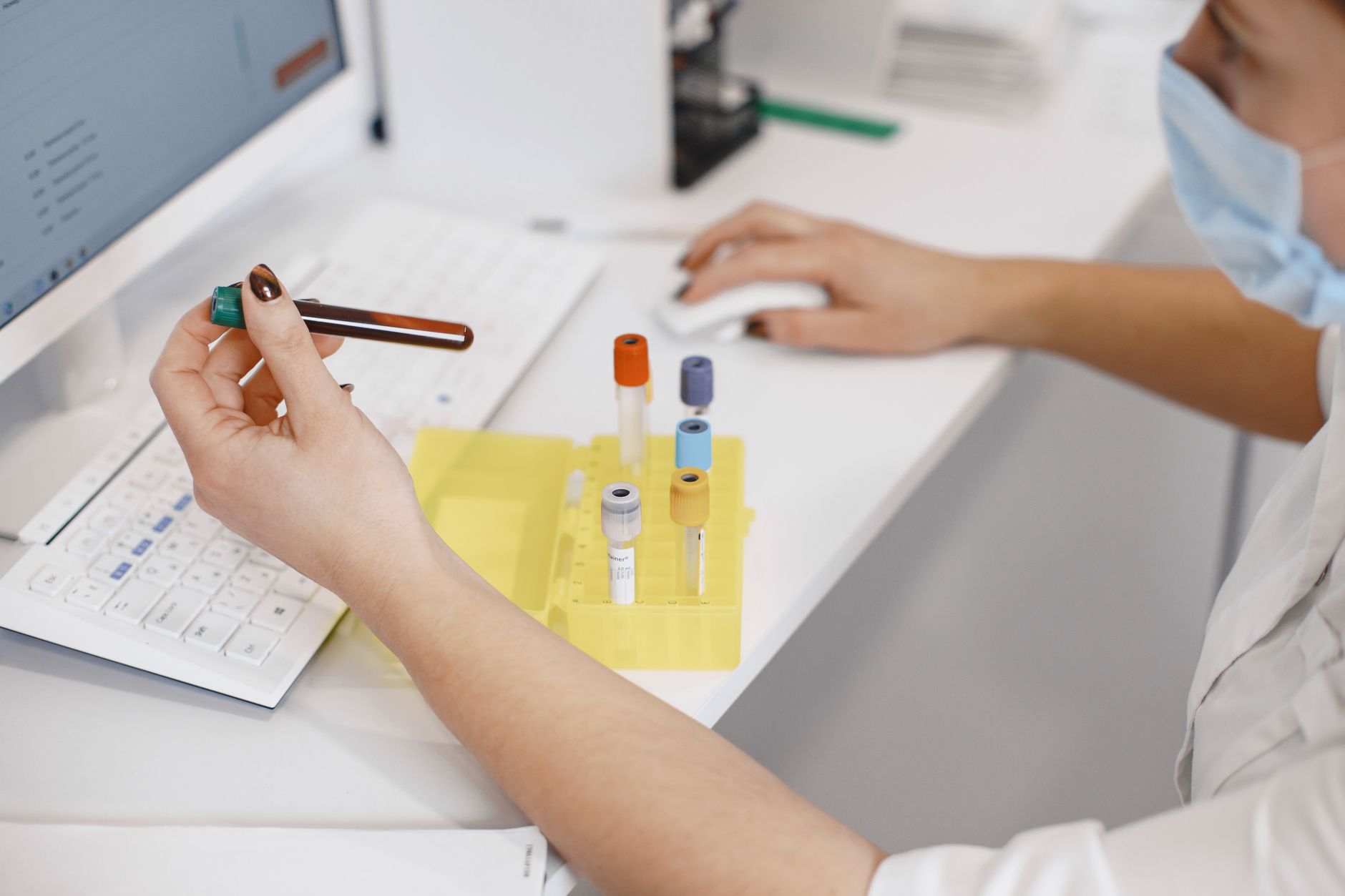
A courier in a clinical lab moves specimens, reagent totes and supplies between areas: from collection points and receiving to the testing sections, and back out with empty racks and paperwork. Many runs are short, but the hallway time adds up because each one pulls someone off a bench, a centrifuge or an analyzer loading task. Runs also bunch up at shift changes and at the morning draw peak.
Couriers also do work that is not in any route log. They check temperature-sensitive boxes, sign for handoffs, respond to STAT requests and cover for a colleague who is out. A run that looks simple on paper can take much longer when a door is locked or an elevator is busy.
The useful number for your site is not the average run. It is how many trips per shift leave the bench, how many of those follow the same path, and how long each one takes from door to door. Write those counts down before you talk to anyone about robots, because your own numbers are the ones that will settle the question.

Which parts can an autonomous mobile robot take, and which can't it?
A robot is good at moving loaded racks, bins and totes along a mapped route between set stops, on a schedule or when called. The work is repetitive and the path is known, which is the profile where an autonomous mobile robot is practical. Loads have to fit the unit's weight and size limits, and the lab has to confirm that racks and containers can be secured on the deck.
A robot cannot take the parts of the courier job that need judgment or hands. It does not check a cooler log, decide which of two STAT specimens goes first, receive a leaking container, or open a restricted door it has no access to. It also cannot load or unload at either end of a run, so a person is still needed at each stop.
- Can take: loaded racks, bins and totes on a fixed mapped route between set stops
- Can take: scheduled runs and called runs on the same map
- Cannot take: prioritizing urgent specimens, signing for handoffs, or checking temperature logs
- Cannot take: loading and unloading at stops, or responding to a spill or broken container
- Repeat rack runs on a fixed route
Autonomous Mobile Robot
Runs the same mapped route between set stops on schedule, the same way each time
Specimen Courier
Makes the trip, but pulls a tech off the bench each time unless a courier is assigned
- Urgent STAT requests
Autonomous Mobile Robot
Needs the request sent through a system and does not judge urgency
Specimen Courier
Judges priority and acts at once
- Night and off-hours coverage
Autonomous Mobile Robot
Runs as scheduled, without breaks or call-outs
Specimen Courier
Covers only when staffed, so overtime and call-outs apply
- Loading and unloading at stops
Autonomous Mobile Robot
Cannot load or unload, so a person is needed at each stop
Specimen Courier
Loads, unloads and checks the contents
- Spills and broken containers
Autonomous Mobile Robot
Stops and alerts staff
Specimen Courier
Responds with training and protective equipment
- Locked doors and badge areas
Autonomous Mobile Robot
Only through doors that are mapped and integrated for access
Specimen Courier
Opens doors with a badge and walks through
- Adapting to changes
Autonomous Mobile Robot
Needs a map update after construction or a change in traffic
Specimen Courier
Adjusts on the spot when a hallway changes
How many clinical labs are there in the US, and how tight is lab staffing?
According to CMS laboratory statistics, 301,284 laboratories are registered under the Clinical Laboratory Improvement Amendments, and 285,940 of them are non-exempt. Of the total, 233,448 are waiver labs that perform CLIA-waived tests, which are not the hospital and reference type that moves specimens between departments. A CDC slide deck from November 2024 cites about 314,895 labs from an October 2024 CMS database pull, so the count moves with the date and with whether exempt labs are included. Use the count for your region and lab type, not the national headline.
Staffing is the pressure behind the hallway problem. According to the Bureau of Labor Statistics Occupational Outlook Handbook, there were about 351,200 clinical laboratory technologist and technician jobs in 2024, with projected growth of 2% from 2024 to 2034, which BLS calls slower than average. BLS projects about 22,600 openings a year, mostly from replacement needs, and hospitals employ 37% of these workers.
The ASCP 2024 Vacancy Survey, published in the American Journal of Clinical Pathology, found that vacancy rates fell from 2022 but remain above pre-pandemic levels. Anatomic pathology had the highest department vacancy rate at 28.5%, while cytogenetics was lowest at 7.7%. The survey drew on 1,027 laboratory leaders and HR professionals, with staffing data for 18,626 laboratory employees. No clinical lab turnover rate was found in these results, so do not treat any turnover percentage as settled.
What do the hours and labor look like for lab couriers?
This is where the public data is thinnest. The search for this page did not find verified figures for overtime, night-shift share, sick-day rates or turnover specific to lab courier work. It also did not find an injury or incident rate for courier runs, or a typical floor area or distance per shift for a hospital lab route. Treat any site-specific hour claim as something to measure, not something to copy from a brochure.
The best published hour figures are vendor-reported. One vendor case study for a Florida health system reported more than 600 hours saved each month across four robots, more than 150 deliveries a day and a 99.8% reliability rate. The vendor did not present these as independent measurements, and the deliveries covered more than lab specimens. No peer-reviewed study measuring staff hours saved by lab specimen robots was found in this search.
Other reports describe the benefit in plain terms. A Minnesota health system told local news that its robot had added time back to the day for lab staff, but gave no hour figure. Pull your own records for overtime hours, call-outs and shift coverage on courier and tech roles over the last year. Those numbers, not a case study, show how much bench time a robot can plausibly return.
How does a team work with a robot in the lab?
The working model is always a robot plus fewer hallway trips for staff, never a robot with zero staff. Someone still loads racks at each stop, clears a blocked door or jam, answers the alert when a route stops, and handles the urgent run the robot is not set up to take. The reduction is in the walking, not in the people on the bench, and the schedule should say so in writing.
Staffing changes should follow the route, not run ahead of it. If the robot covers the scheduled runs that used to pull a tech off the bench every hour, the tech gets that time back for analyzer work, but a courier still covers STAT calls, off-hours requests and the robot's stoppages. A lab that removes the courier entirely on day one usually discovers the gap at the first blocked corridor.
Plan training before go live, while the floor plan and run schedule are still being adjusted. Staff need to know how to load a rack, what the stop procedure is, and who to call when the unit is blocked.
What can't an autonomous mobile robot do in a clinical lab?
A robot cannot replace the judgment in a courier shift. It does not know a specimen is urgent unless a system tells it so, it cannot decide which request matters, and it cannot respond to a spill, a broken container or a biohazard exposure. Those events need trained people, and the robot's stop procedure has to hand the situation to them quickly.
Routes have limits too. A mapped route is only as good as the doors, elevators and corridors it can actually use, and it must be rechecked after construction or a change in traffic. Crowded hallways at shift change and at the morning draw peak can slow a unit, so a lab that counts on an exact clock time will be disappointed. Build slack into the schedule.
The robot also does not fix the bench problem on its own. If the analyzer queue is the real bottleneck, faster hallway trips help less than people expect. Measure where the minutes go before deciding that transport is the constraint.

How do you decide, and what should a site assessment check?
Start with your own run log. List each trip a courier makes in a typical shift, mark which trips follow the same path between the same stops, and note how many happen during peak hours. If most of the walking is repeat trips on a few routes, a robot is a reasonable test. If most trips are unique, the case is weak.
Then check the physical site. The route has to be mapped through every door, elevator and gated area, and the lab has to confirm where the robot will charge, where it will wait, and how it will be stopped in an emergency. Ask the integrator for the unit's documented safety and incident history on similar deployments, and ask for it in writing.
How do you get started with an autonomous mobile robot for a lab?
Start with one route, not the whole lab. Pick the highest-volume repeat run, measure it for a week, and set a target for the bench time you expect to recover. A single route gives a clean read on reliability, staff acceptance and where the stops need work before you add a second.
We are a US commercial robot integrator. We assess the site, select the robot that fits the floor, lease it through financing, deploy and integrate it, train the staff and service it nationwide. The lease is quoted after a free site assessment, and the stop plan, staffing plan and service terms go into the same written document, so nothing is left for later.
Ask for the service response times and the backup arrangements for when a unit is down, then compare them with the route data from your shift records. A one-route pilot is the lowest-risk way to learn whether the robot fits your lab.
Frequently asked questions
Want a warehouse robot at your clinical laboratory?
Tell us about your site. We will recommend the robot, quote the lease, and keep it serviced.