
The short answer
For most pharmacy distribution centers, the autonomous mobile robot vs tote hauler choice comes down to repetition: a robot makes sense when the same tote legs run between pick zones and staging lanes on fixed routes all shift, while a tote hauler operated by a person keeps the edge when routes change often, totes need hand checks at transfer, or the building is too crowded for a mapped path. Many sites end up using both, with the robot on the repeated legs and people on exceptions and every decision that needs judgment.
Key takeaways
- A robot fits fixed, repeated tote routes between pick zones and staging lanes.
- A tote hauler still wins when routes change often or a tote needs a hand check.
- No published pharmacy hour or turnover figures were found, so measure your own tote trips first.
- Warehousing and storage recorded a 4.8 total recordable case rate per 100 full-time workers in 2024, according to BLS.
- A lease is quoted after a free site assessment, so the first step carries no lease commitment.
Autonomous mobile robot vs tote hauler: which fits a pharmacy distribution center?
An autonomous mobile robot makes sense at a pharmacy distribution center when the same tote moves repeat through the shift: full totes from pick zones to staging lanes, empty totes back to the zone, on routes that stay the same week after week. A tote hauler, a person moving carts or powered tote carriers, is the better choice when routes change often, when a tote needs a hand check at transfer, or when aisles are too crowded or irregular to hold a mapped path.
Many buildings end up with both. The robot takes the long, predictable legs, while people handle exceptions, temperature hold decisions, and staging judgment. That split is the practical answer to the autonomous mobile robot vs tote hauler question, and the rest of this page shows where the line falls in a real building.
How many pharmacy sites are there, and does the market size matter?
The count depends on the source, and the sources do not agree. According to the NCPA 2025 Digest, released October 19, 2025, independent community pharmacies numbered 18,960 as of July 2025, down from 18,984 in June 2024, and independents were nearly 36% of U.S. retail pharmacies. According to the NCPA 2026 Digest, as reported by Pharmacy Times, the estimated count for 2026 is 18,988, with independents at nearly 37% of retail pharmacies.
Chains add a much larger group. According to NACDS, chains operate over 40,000 pharmacies, although that statement on the NACDS site is undated. Chain stores are supplied through the chain's own distribution network, so the distribution center is usually the decision point, not any single store.
Do not add independent and chain counts together. PCMA publishes its own figures from NCPDP data, including 23,046 independent pharmacies and 33,081 chain pharmacies for 2026, and states that its counts differ greatly from NCPA counts because the definitions differ. Pick one source for your planning and say which one you used.
Median hourly wage, Laborers and Freight, Stock, and Material Movers, Hand
$4,380
Monthly cost of one full-time worker, at the median wage plus payroll costs (an estimate, not a quote).
What does a tote hauler actually do in a pharmacy shift?
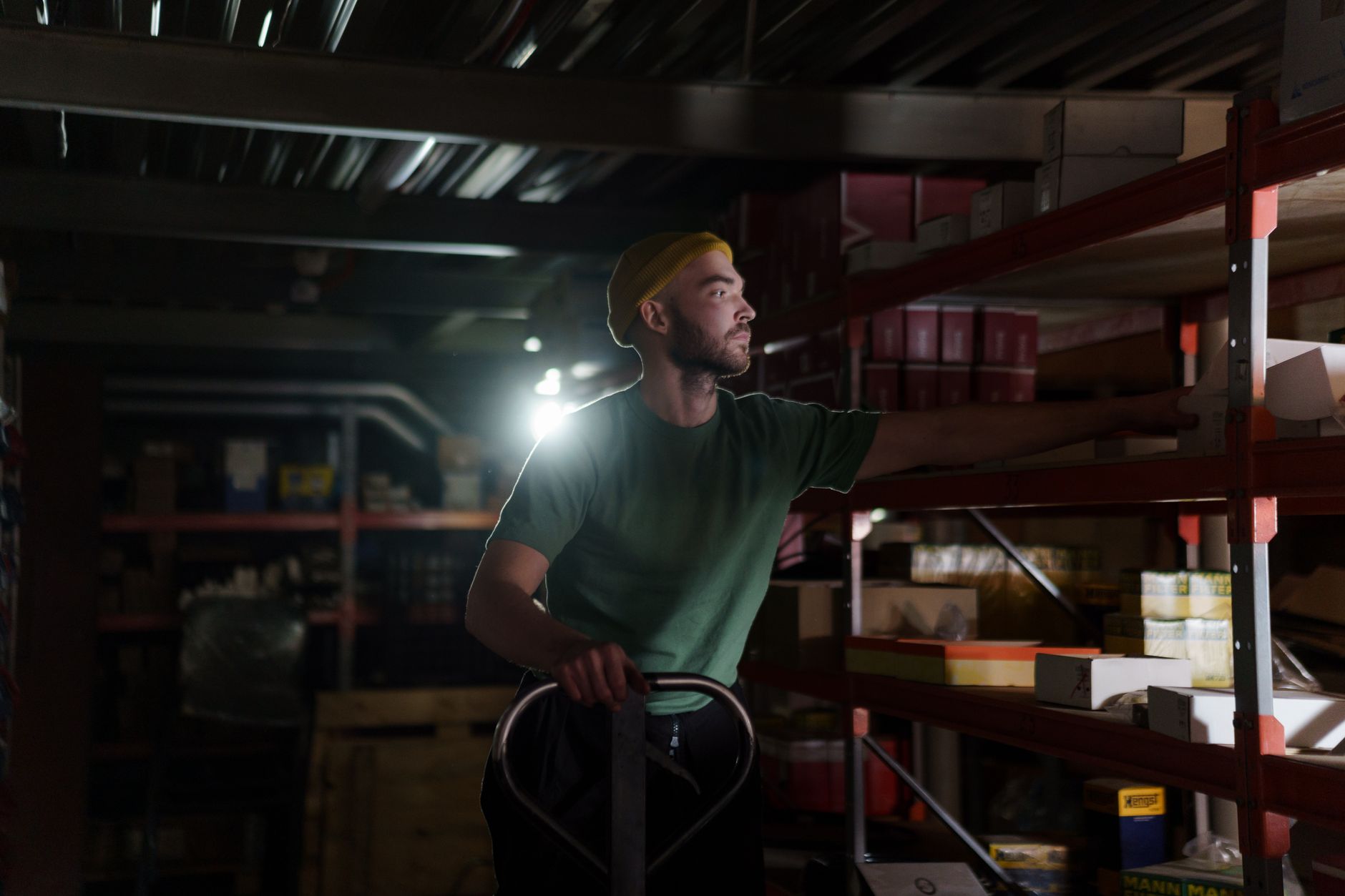
A tote hauler works a loop of short trips for most of the shift. Picked totes leave the pick zone for a staging lane, empty totes come back, and the hauler waits at staging for a free lane or a loaded cart. Much of the day goes to walking, stopping, and reloading, with pauses for radio calls, door scans, and questions from pickers about where a tote belongs.
Injury exposure follows the same pattern. According to the BLS industry page for warehousing and storage (NAICS 493), the 2024 total recordable case rate was 4.8 per 100 full-time workers, cases involving days away, job restriction, or transfer were 4.1, and days-away cases alone were 1.5. That page covers the whole subindustry, not tote haulers alone, so treat it as context for your own incident log.
Pharmacy totes add a handling layer that a trip count does not show. Labels are checked, holds are recorded, and temperature exceptions are escalated under the site's procedure, and each of those steps adds time that the route study has to capture.
Which tote moves can an autonomous mobile robot take, and which can't it?
The robot is strong on the legs that never change. It can run pick zone to staging lane transfers, return empty totes on a loop, and move carts between zones on a mapped route, repeating the same path across the shift without a person walking it.
It cannot make the judgment calls. It does not decide whether a tote is on hold, does not fix a mis-slotted tote, does not check a label by hand, and should not be sent into any step that needs a controlled-substance count or a signature under your own procedures. Those steps stay with a person.
Adoption is rising in this part of the market. According to IFR as quoted by Forklift Action, transportation and logistics robots saw 102,900 units (+14%) sold in 2024. According to Supply Chain 24/7, transportation and logistics accounted for 47% of professional service robot sales worldwide in 2025, and overall shipments in that category rose 24% to almost 250,000 units. Those are worldwide figures, not pharmacy figures, so they show a trend, not a fit for your route.
What are the hours and labor limits for tote work in these buildings?
Public data for pharmacy distribution specifically is thin. We found no published figures for pharmacy distribution labor hours, overtime, night shift share, or sick days, so the labor picture has to come from your own records and a time study. The general warehousing picture still helps. According to Material Handling & Management, typical warehousing turnover is around 37%, compared with an overall average of 3.6% across all industries, although the article date was not shown.
That gap matters for tote work. Each replacement hauler brings training time, and a route can slow down while a new person learns the aisles and the staging rules. The government wage data on this page gives the local wage for this job, which sets the cost of one more shift. Use it together with your own hours, not in place of them.
Overtime and night shifts follow the same logic. Track how many tote hours fall after the day shift, how often a shift runs short, and how many sick days each week leave a route uncovered. Those three counts show how much of the route a robot would need to cover, and they are the figures the site assessment will ask for.
How does a team work with a robot in the building?
The team works as a crew: fewer people on the repeated legs and the same people on judgment work. Plan for a robot plus fewer staff, never zero staff. A lead stays on the floor for exceptions, and at least one trained person covers any route the robot cannot run.
Roles change more than headcount does. Haulers move to staging checks, exception clearing, and route monitoring. Pickers see fewer waits at the staging lane. Shift leads read the movement log at shift close and decide what to adjust the next day.
We lease the robot through financing, then deploy and integrate it with your routes, train your staff, and service it nationwide. Training is where early friction is easiest to fix, because the people who clear exceptions need to know how the robot behaves when a path is blocked.
- Repeated fixed route
Autonomous Mobile Robot
Runs the same tote legs on a mapped path all shift
Tote Hauler
Slower on identical trips, but adjusts without reprogramming
- Exception handling
Autonomous Mobile Robot
Stops or waits when a path is blocked or a tote is wrong
Tote Hauler
Clears blockages, fixes mis-slotted totes, and decides the next step
- Temperature and hold decisions
Autonomous Mobile Robot
Moves the tote but does not decide hold status
Tote Hauler
Checks holds and records them under site procedure
- Night shift coverage
Autonomous Mobile Robot
Runs the repeated legs without a person on the route, where the site allows
Tote Hauler
Needs scheduling, breaks, and a supervisor on site
- Route change
Autonomous Mobile Robot
Needs remapping and integration work for each change
Tote Hauler
Changes route the same day with a short briefing
- Cost driver
Autonomous Mobile Robot
Lease quoted after the site assessment
Tote Hauler
Labor cost moves with overtime, turnover, and sick days
What can an autonomous mobile robot not do at a pharmacy site?
The robot does not remove the need for judgment. It stops or waits when a path is blocked, a tote is wrong, or a door is closed, and someone has to clear it. A site with frequent blockages keeps more people on the route, which weakens the case for the robot.
Layout matters as much as volume. A robot needs mapped aisles, clear floor time for routes, and a charging point that does not block traffic. Crowded staging lanes, mixed floor surfaces, and frequent layout changes add remapping work and can cut the value of the route.
The robot does not change injury exposure for the picking itself, and it does not handle cold chain rules on its own. We did not verify specific cold chain figures for this page, so temperature handling and hold rules must come from the site's own procedure and your quality team. Treat the robot as a way to take repeated tote moves off people, not as a compliance system.

What does it cost to lease a robot for this kind of site?
The lease is quoted after a free site assessment, not before. The quote depends on route length, tote legs per shift, aisle and floor conditions, how many units the route needs, and how much integration the site requires to connect the route to your work. Two buildings with the same tote volume can receive separate quotes if one has tight staging lanes.
Lease options run through financing, so the start-up picture is part of the quote. Ask for the fixed robot lease payment, what service is covered nationwide, and what backup coverage applies if the route cannot stop.
Savings against a tote hauler depend on the hours your records show, not on a generic number. Compare the labor your existing route uses, including overtime, sick cover, and turnover, with the lease quote and the work the robot takes over. A payback view built on measured hours is more useful than one built on job titles.
How do you get started with a robot at a pharmacy distribution center?
Start with a week of tote trip data. Log each move with its route, start and stop times, wait time at staging, and any exception. That log turns the question from opinion into a route count, and it is the first thing a site assessment will ask for.
Pick one zone for a pilot. Start with one leased unit on the most repeated route, run it beside the existing haulers for a few weeks, and compare exceptions, waits, and the movement log before adding units. Expansion should follow the data.
Go live with support on site, a trained lead on each shift, and a plan for blocked aisles and robot downtime. Review the route after the first few weeks, then decide whether to extend. Treat the first weeks as a test, not a verdict.
Frequently asked questions
Want a warehouse robot at your pharmacy distribution center?
Tell us about your site. We will recommend the robot, quote the lease, and keep it serviced.
Sources
- US Bureau of Labor Statistics, Occupational Employment and Wage Statistics (OEWS May 2024)
- Bureau of Labor Statistics, Warehousing and Storage (NAICS 493)
- NCPA, 2025 Digest report release
- Pharmacy Times, NCPA 2026 Digest report
- NACDS, About NACDS
- PCMA, pharmacy count figures
- Material Handling & Management, Unpacking the future of warehouse talent
- Forklift Action, service robots in material handling
- Supply Chain 24/7, transportation and logistics professional robot sales