
The short answer
A cleaning robot vs janitor in Houston decision usually favors the robot for large, flat, repeated floor areas such as overnight corridors, warehouse aisles and open retail floors, where scrubbing makes up most of the hours. It does not replace the janitor on restrooms, trash, spills, detail work or anything that needs judgment, so the practical answer is a robot plus a smaller crew, not a robot instead of a crew. Whether the numbers work depends on floor area, obstacles and the hours you cover now, and a free site assessment measures those before any lease is quoted.
Key takeaways
- A robot fits large, flat, repeated floors, while restrooms, trash and spills stay with people.
- The working model is a robot plus fewer staff, never a robot in place of the whole crew.
- Measure your own floor and shift before counting hours, since vendor savings are not guarantees.
- Turnover and injury risk are the labor pressures to weigh, and Houston overtime data is a gap to fill on site.
- The lease payment is quoted after a free site assessment, so the decision rests on your numbers.
Is a cleaning robot or a janitor the right choice in Houston, TX?
The short answer to a cleaning robot vs janitor in Houston is rarely either or. A floor scrubbing robot takes over the repetitive part of the work, the long pass over open floor that runs the same route each night. The janitor keeps the parts that need hands, eyes and judgment, such as restrooms, trash, spills and anything a person has to check.
In practice, the robot earns its place when the floor is large, mostly clear and cleaned on a fixed schedule. It earns less when the building is small, cluttered or full of short tasks spread across many rooms. The sections below show how to tell which kind of building you have and what the numbers look like once you measure it.
Houston buildings range from large distribution sites and retail boxes to office towers and clinics, and layout matters more than the building type on paper. The question to ask is how much of the shift is one repeated floor pass, and whether that pass can run without people in the way.
When does a cleaning robot make sense, and when does it not?
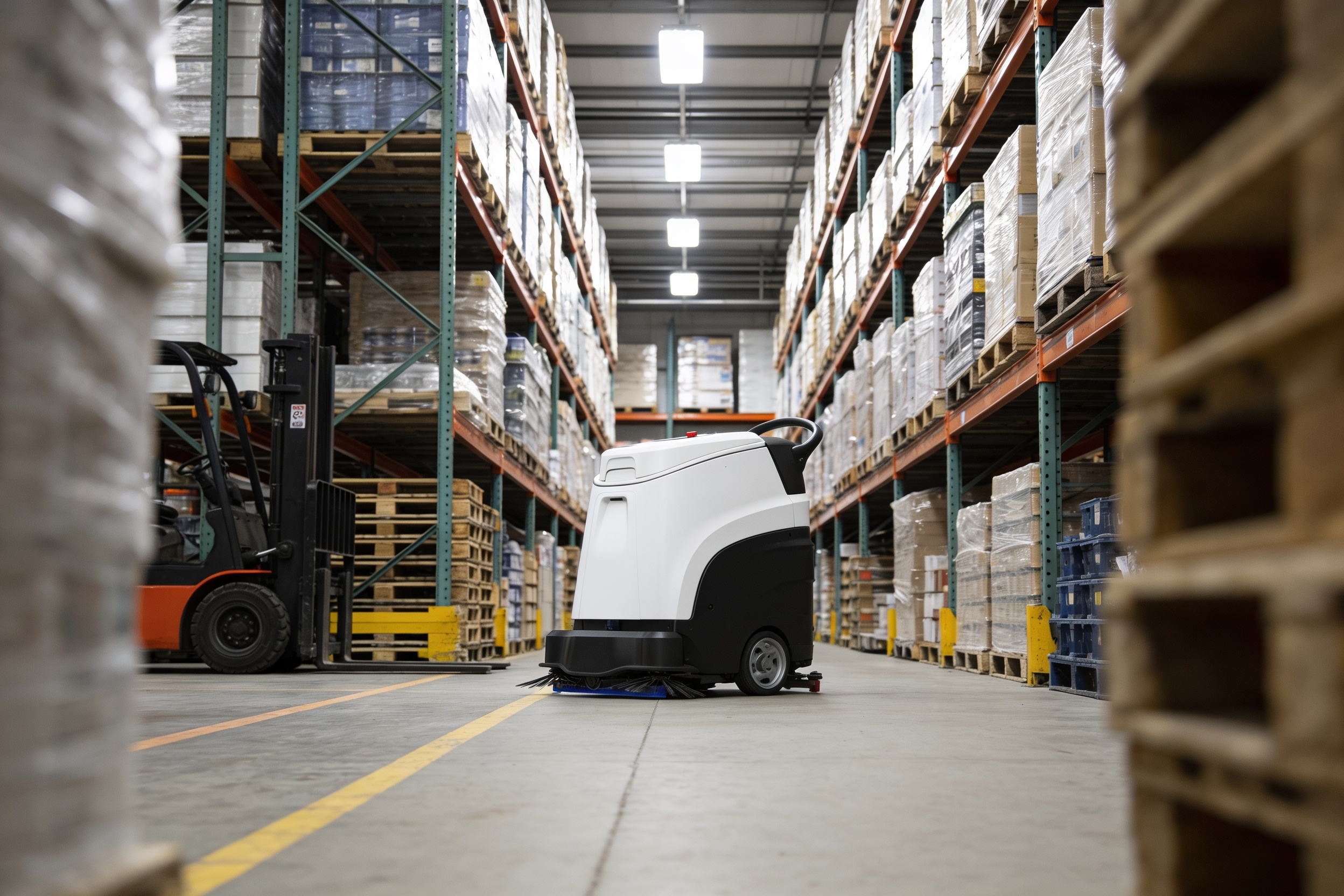
A robot makes sense when the work is mostly one repeated job on a large, reasonably clear floor. Warehouses, big-box stores, distribution centers and open office or lobby floors fit that pattern. The payoff is strongest when the robot can run while the building is quiet, because the floor pass then happens without pulling staff off other tasks during busy hours.
It makes less sense when the building is full of small rooms, moving furniture, stairs or steps the machine cannot handle. It also makes less sense when most of the cleaning is restroom servicing, trash removal and spot cleaning, since those tasks are short, scattered and need a person to decide what is dirty.
A useful test is simple. Take a normal shift, write down every task, and mark which ones are repeated passes over clear floor. If that group is a large share of the hours, the robot case is strong. If it is a small share, a robot will change little, and the janitor stays at the center of the job.
Median hourly wage, Janitors and Building Cleaners
$3,414
Monthly cost of one full-time worker in Houston, TX, at the median wage plus payroll costs (an estimate, not a quote).
- Repeated floor passes
Cleaning Robot
Runs the same route on a schedule, including when the building is quiet.
Janitor
Works the route well but needs breaks and takes longer on large floors.
- Night coverage
Cleaning Robot
Runs unattended once the route is mapped and started.
Janitor
Needs a scheduled shift, supervision and breaks.
- Restrooms and trash
Cleaning Robot
Cannot do these tasks.
Janitor
Handles them and spots what needs attention.
- Spills and surprises
Cleaning Robot
Stops or reroutes, then needs staff to clear the problem.
Janitor
Responds on the spot and decides what to do.
- Stairs and tight spaces
Cleaning Robot
Limited to mapped, flat, clear areas.
Janitor
Moves through stairs, corners and around furniture.
- Changes to the layout
Cleaning Robot
Needs a remap after major changes.
Janitor
Adjusts the same shift without setup.
- Judgment
Cleaning Robot
No judgment about what is dirty or unsafe.
Janitor
Judges condition, handles exceptions and works with people.
What does a janitor actually do in a Houston shift?
A janitor's shift is rarely just floors. A typical building shift splits between trash and recycling, restroom servicing, spot cleaning of glass and surfaces, restocking supplies, responding to spills and requests, and some floor care. Floor work is often the largest single block, but it is broken into pieces across the shift, which is why it is hard to judge from the outside.
The national picture gives a sense of scale. According to the BLS Occupational Outlook Handbook, employment for janitors and building cleaners was about 2.4 million jobs in 2024, with 2% projected growth from 2024 to 2034. The same source projects about 351,300 openings a year, mostly from replacing workers who leave the occupation.
That split matters for the decision. A robot can take the largest continuous block, but the scattered tasks stay with people. So the question is how many hours that block takes in your building, not whether the job itself will still exist.
Which parts of the cleaning can a robot take, and which can it not?
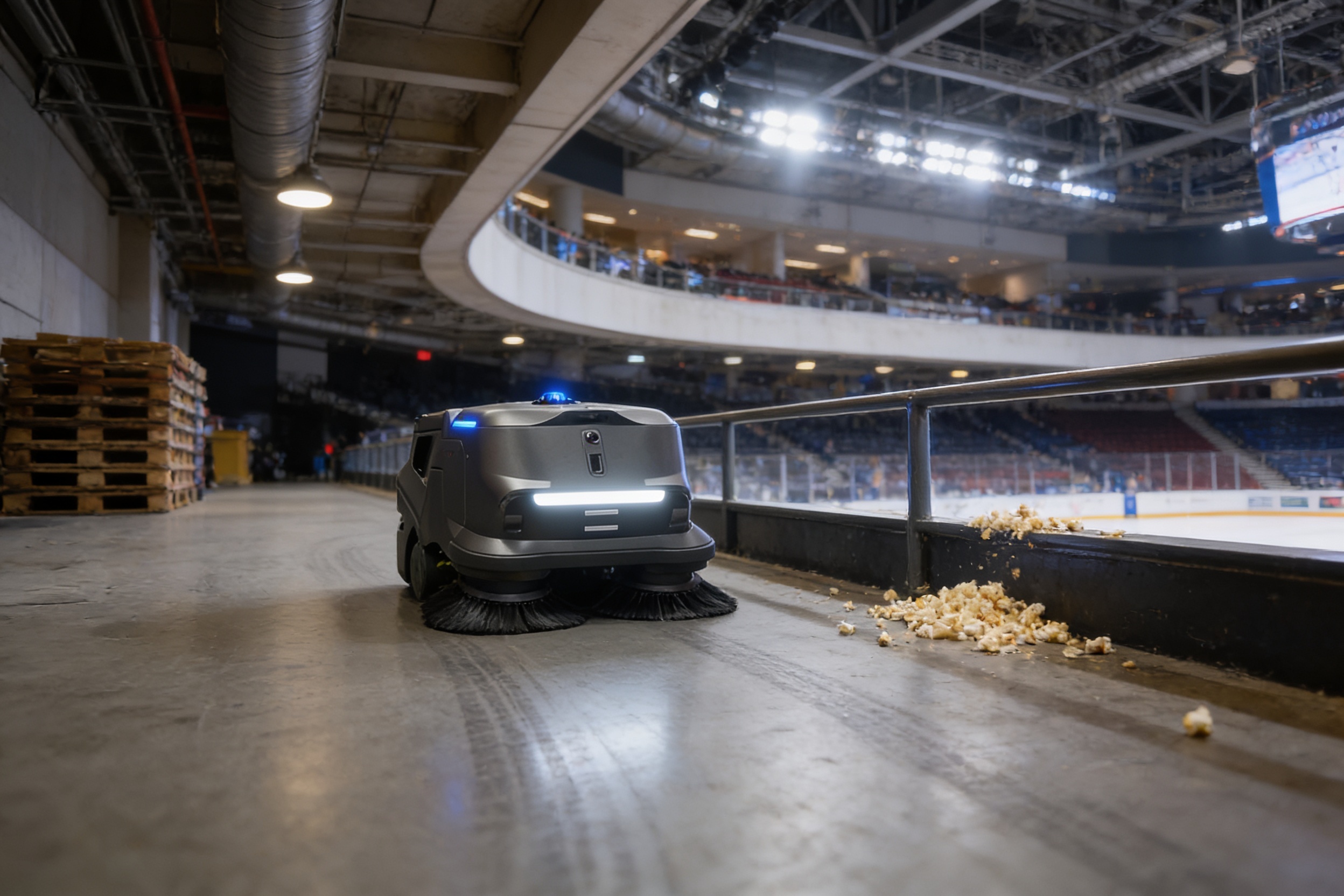
Floor scrubbing and sweeping on mapped, clear, flat floors are the parts a robot does well. Long corridors, warehouse aisles and open retail floors are the typical targets. How big that block is depends on production rates. A University of California time-and-motion study presented to the State of California in 2021 reported rates rising from 3,000 to 3,500 square feet an hour in the 1990s to 5,000 to 8,000 square feet an hour in the study's latest measurements, depending on the venue.
Simple division shows what that means. At 5,000 to 8,000 square feet an hour, one person needs about 6 to 10 hours to make one pass across a 50,000 square foot floor, before obstructions, setup, breaks and the walk back to the start. Practitioner guidance on cleaning teams advises timing a 1,000 square foot test area, observing each worker three to five times, and allowing about 55% of total square footage for obstructions. That is why measuring your own floor beats reading a floor plan.
What a robot cannot take is just as important. Restroom cleaning and restocking, trash and recycling collection, spot cleaning of glass and surfaces, wiping high touch points, stairs and steps, edge detail in tight corners, and any decision about what is dirty or unsafe all stay with the team.
What does the labor picture look like for janitors in Houston?
Local data for this job is thinner than national data, and we say so plainly. The government wage data on this page gives the local wage for this job in Houston, which is the number to use when you price hours. The labor pressure around the job is clearer from national sources.
Injuries are part of the picture. According to the BLS snapshot covering 2015 to 2019, janitors and cleaners, except maids and housekeeping cleaners, had 18,680 nonfatal injury and illness cases with days away from work in 2019. The rate was 157.4 per 10,000 full-time equivalent workers, against 86.9 for all occupations, which is nearly twice the rate. The BLS snapshot covering 2016 to 2020 counted 21,100 such cases in 2020, and 42 fatal work injuries in 2020, against 45 in 2019.
Turnover is the staffing risk that matters most. A cleaning industry statistics compilation that attributes its figures to the trade association ISSA reports that 76% of cleaning firms faced labor shortages in 2023, with annual turnover of 42%. That compilation is secondary and was not checked against the original report, so read it as a direction. Published estimates vary from about 20% to over 100% depending on definition, and the BLS does not publish an occupation level turnover rate in the handbook.
Overtime, night shift premiums and sick days are not covered by the sources behind this page, so we give no Houston figures for them. Pull your own overtime hours, unfilled shift counts and sick day logs before you run the numbers. Those records move the decision more than any national average.

How does a team work with a cleaning robot?
The working model is always a robot plus staff, never a robot instead of all staff. The robot takes the long repeated pass, and the team handles the rest. In a 2023 hospital case study published by a robot maker, the floor care team went from 3 people to 2, total labor fell from about 16 hours a night to 5, and the time to finish cleaning dropped from 8 hours to 5. The vendor reported these figures for one building, so they are not a rule for yours.
Why keep people? Restrooms, trash, spills and judgment do not go away. A robot that loses its route, meets a blocked aisle or stops on a wet patch needs someone to clear it and restart the run. Staff also cover the days the machine does not run and the parts of the building it cannot enter.
We pick the robot for the site, lease it through financing, deploy and integrate it, train the staff who run it, and service it nationwide. Training is the part teams underestimate. The janitor's role shifts from pushing a machine to checking runs, clearing exceptions and keeping the route itself ready.
What can a cleaning robot not do?
The honest limits matter. A robot cannot clean restrooms, empty trash, restock supplies or wipe high touch surfaces. It does not judge what counts as dirty, and it cannot step over a spill, climb stairs or move furniture to reach a corner. Edge detail, glass and doors still need hands.
Floors also limit the robot. Heavy clutter, loose cords, wet surfaces and changing layouts can stop a run, and major layout changes need a remap. Plan for that, because a robot that stops often needs more attention than a janitor who works around the clutter.
The robot does not solve staffing alone. If the building needs a full crew on every shift, the robot changes what those people do rather than making the work disappear. That is why the first question is how many hours of repeated floor work sit inside the shift.
How much does it cost to lease a cleaning robot, and is it worth it?
Cost comes down to two things: the lease terms and the hours the robot takes over. We lease the robot through financing, and the fixed lease payment is quoted after a free site assessment, not before. Nothing on this page is a price, because the right figure depends on the floor, the layout and the service terms for your location.
To judge worth, take the hours the robot would cover on your measured floor, price them at the local wage for this job from the government wage data on this page, and add the overtime and turnover costs you already carry. Set that against the lease payment and the staff time you still need. The result is a payback estimate, not a promise.
Payback is shortest where the floor is large, clear and cleaned every night, and longest where the work is scattered. A short pilot on one building or one zone lets you test the hours before committing to more. Many sites start with one leased unit and widen only after the run logs confirm the numbers.
How do you get started with a cleaning robot in Houston?

Start with a site assessment. We map the floor, measure the clear area, note obstacles and time the floor work your team does now. That gives a fair starting point for the hours the robot can take, and it is the basis for any lease quote.
Then pick a pilot zone, usually one corridor or one warehouse aisle set, and run it for a few weeks. Track completed runs, exceptions and staff time. Use those logs to size any wider deployment and to decide which tasks the team keeps.
Our part is robot selection, leasing, deployment and integration, staff training, and nationwide service. Your part is measuring the shift and deciding who keeps which tasks. If the numbers do not work for your building, the honest answer is to keep the janitors you have.
Frequently asked questions
Put a robot to work in Houston.
We walk your site, learn the job, and recommend the unit that fits. Then we quote the lease, deploy it, and keep it serviced.
Sources
- US Bureau of Labor Statistics, Occupational Employment and Wage Statistics (OEWS May 2024)
- BLS Occupational Outlook Handbook, janitors and building cleaners
- BLS injuries snapshot, janitors and cleaners, 2015 to 2019
- BLS injuries snapshot, janitors and cleaners, 2016 to 2020
- Cleaning industry statistics compilation (secondary, attributed to ISSA)
- University of California time-and-motion study, 2021 presentation
- Practitioner guidance on team versus zone cleaning
- Hospital robot case study, 2023 (vendor-reported)
- Retail floor care robot case study (vendor-reported)