
The short answer
Cleaning robot cost for convention centers depends on how much floor the robot must cover inside the overnight window between events, how the halls, aisles and freight routes change from show to show, and how many units and service visits the site needs. No single figure fits every hall, so the lease quote is built after a free site assessment that maps the floors and measures the turnaround window. Hall size and window length move the cost most, while mapping, integration and service are the costs people tend to miss.
Key takeaways
- Floor area and the overnight window length set the core scope of the job.
- Layout changes between events are a cost driver people underestimate.
- Mapping, integration, service and training are the hidden costs to ask about.
- The lease quote follows a free site assessment, not a fixed catalog figure.
- Overnight labor is a large, slow-growing pool, so a route that runs every night has real value.
Cleaning robot cost for convention centers: what does it depend on?
The cost of a leased cleaning robot at a convention center depends on the floor it must cover, the overnight window it has to finish inside, the surfaces and obstacles on the route, and the number of units and service visits the site needs. Those factors combine differently in every building, so there is no single figure that fits every hall. We build the lease quote for each site after a free site assessment, which is where the real numbers come from.
Scale is the starting point. A 2023 trade press report on large North American convention centers counted 55 facilities with about 40.3 million sq ft of prime exhibit space. A 2020 trade press list of US venues counted 41 with at least 350,000 sq ft of prime exhibit space, and 11 with 1,000,000 sq ft or more.
Those totals matter because a robot does not clean square footage in the abstract. It runs a route, and the route length, the number of separate halls and the number of level changes decide how long one pass takes and how many passes fit in the window. Two venues with the same total area can present very different jobs depending on how that area is split.
Which factors raise or lower the cost at a convention center?
Floor area is the largest factor, but it is not the only one. A single hall with open concrete needs a simple route, while a campus of halls, ballrooms and corridors joined by ramps, thresholds and freight lifts needs a route with many more edges to map and test. Each change in surface or access adds mapping time and can add a unit.
The overnight window sets how fast the route must run and how many units are needed to finish. A short gap between teardown and the next load-in pushes the site toward a faster route, a second unit or a split schedule. Traffic matters as well, because freight, staging and rigging crews can block aisles at night, and a blocked route stops the job until someone clears it.
Mapping and integration depend on how many doors, lifts and building systems the robot must work with. A route that must pass through a freight door or between floors needs more integration work than a route on one level. Service depends on how far the site is from our technicians, how fast a fault must be cleared and whether backup units are kept ready. Each of these moves the quote in a direction the assessment can measure before anything is written down.
How much floor does a convention center cleaning robot need to cover?
A 2020 trade press list put midsize centers, defined there as 125,000 to 349,999 sq ft of prime exhibit space, across 36 US states plus Puerto Rico. The same list counted 11 US venues with at least 1,000,000 sq ft of prime exhibit space. The number of halls matters as much as the total area, because each separate hall is its own route with its own edges, doors and staging.
The exhibit area is only part of the job. Lobbies, pre-function space, loading docks, freight corridors and restroom entrances often sit on the same overnight route, and each adds a change in surface or traffic. A route that looks simple on a floor plan can take much longer once every doorway is counted.
No published figure for floor area cleaned per event was found in our research. For that reason we do not estimate coverage from the venue's total square footage. We measure the route on site, walk each hall with the lead staff member and record where the floor is cleaned by hand today.
How many hours of overnight cleaning does a convention center need?
No published hour figure for event turnaround at convention centers was found in this research, so this page does not quote one. The hours come from the site walk, where we time the existing crew's route, note every stop and record which areas are cleaned by hand. That baseline is what the robot's route is compared against.
The labor pool behind this work is large and grows slowly. According to the Bureau of Labor Statistics Occupational Outlook Handbook, 2,447,700 people were employed as janitors and building cleaners in 2024. The occupation needs no formal credential, only short-term on-the-job training, and BLS projects 2% growth from 2024 to 2034, slower than average, with 47,800 added jobs.
A shift that cannot be filled is the real cost of a thin crew. When staff are short, the route is cut short and the hall opens with a floor that was not finished. A route that runs on a fixed schedule keeps its coverage on a night when the crew is one person short.
| Task | Today | With a robot |
|---|---|---|
| Scrub main exhibit hall aisles | Overnight crew, hours set by the site walk | Scheduled route, checked at start of shift |
| Cover loading docks and freight corridors | Hand sweeping and scrubbing after load-out | Mapped route that runs once trucks clear |
| Clean lobbies and pre-function space | Walk-behind machine and crew pass before opening | Route runs in the same window, with staff spot checks |
| Reset the route after a layout change | Crew relearns the aisles by walking the floor | Remap of changed areas before the next run |
| Check the floor before the hall opens | Manual inspection by lead staff | Final walk of the route, with staff inspection kept |
No published event-turnaround hour figure was found in this research, so the today column comes from the site walk and the withRobot column lists steps, not hours. Labor context comes from BLS occupational data.
Why do safety and injury risk belong in the cost decision?
Cleaning work carries a real injury load. The BLS Survey of Occupational Injuries and Illnesses recorded 191.6 cases per 10,000 full-time-equivalent janitors and cleaners in its 2020 snapshot. For janitors over the 2015 to 2019 period, the same survey recorded 157.4 cases per 10,000 full-time-equivalent workers with days away from work.
These figures come from other years and measures, and no 2024 or 2025 rate was found in this research, so treat them as direction rather than a benchmark. They do show where the risk sits. Heavy scrubbing, repeated passes and night lifting are the tasks a route plan can take off a person's shift.
Fewer manual passes also mean less exposure for the crew, and a fixed route is easier to supervise than a rushed hand shift. Those effects are real but hard to put a number on for one venue, so the quote treats them as a reason to measure the crew's tasks carefully, not as a line item.
Are convention centers and other venues adopting cleaning robots?
Interest is rising, but the best public survey is old. A joint survey by AACEM and ISSA, fielded in February 2019, sent nearly 23,000 invitations and drew 250 complete responses. About 26% of respondents expressed some likelihood of using autonomous equipment, and about one-third of non-adopters said they might adopt within a year.
ISSA Today, in its September and October 2025 issue, described robotic cleaning as having reached a tipping point. The text we reviewed gave no new survey percentages, so that is a statement of view rather than a measured adoption rate. A 2026 vendor release said planned adoption of robotic floor equipment roughly doubled from 2025, but it named no survey or sample, so we do not rely on it.
For a convention center, the more useful test is whether your own crew, schedule and floor fit a route, and the site assessment answers that directly. Public adoption figures show interest in the category, not whether a particular hall is ready.
How does leasing a cleaning robot through financing work?
A robot leased through financing is paid for over a set term, not in one large upfront payment. We quote the lease after the site assessment, and the quote shows the term, the units, the service plan, the fixed lease payment and what is excluded. The items the quote lists are the items covered under the lease.
Leasing spreads the cost across the term, which suits a venue that books events through the year but does not want to commit a large capital outlay to one machine. We lease the unit, deploy and integrate it, train the crew and service it nationwide, so the venue deals with one partner rather than several vendors.
Check the quote for the things that change the number: how many units it names, whether backup coverage is included, how remapping is handled and what happens at the end of the term. A quote that answers those questions in writing is easier to compare with the crew's existing cost of hand cleaning.
What can a convention center cleaning robot not do?
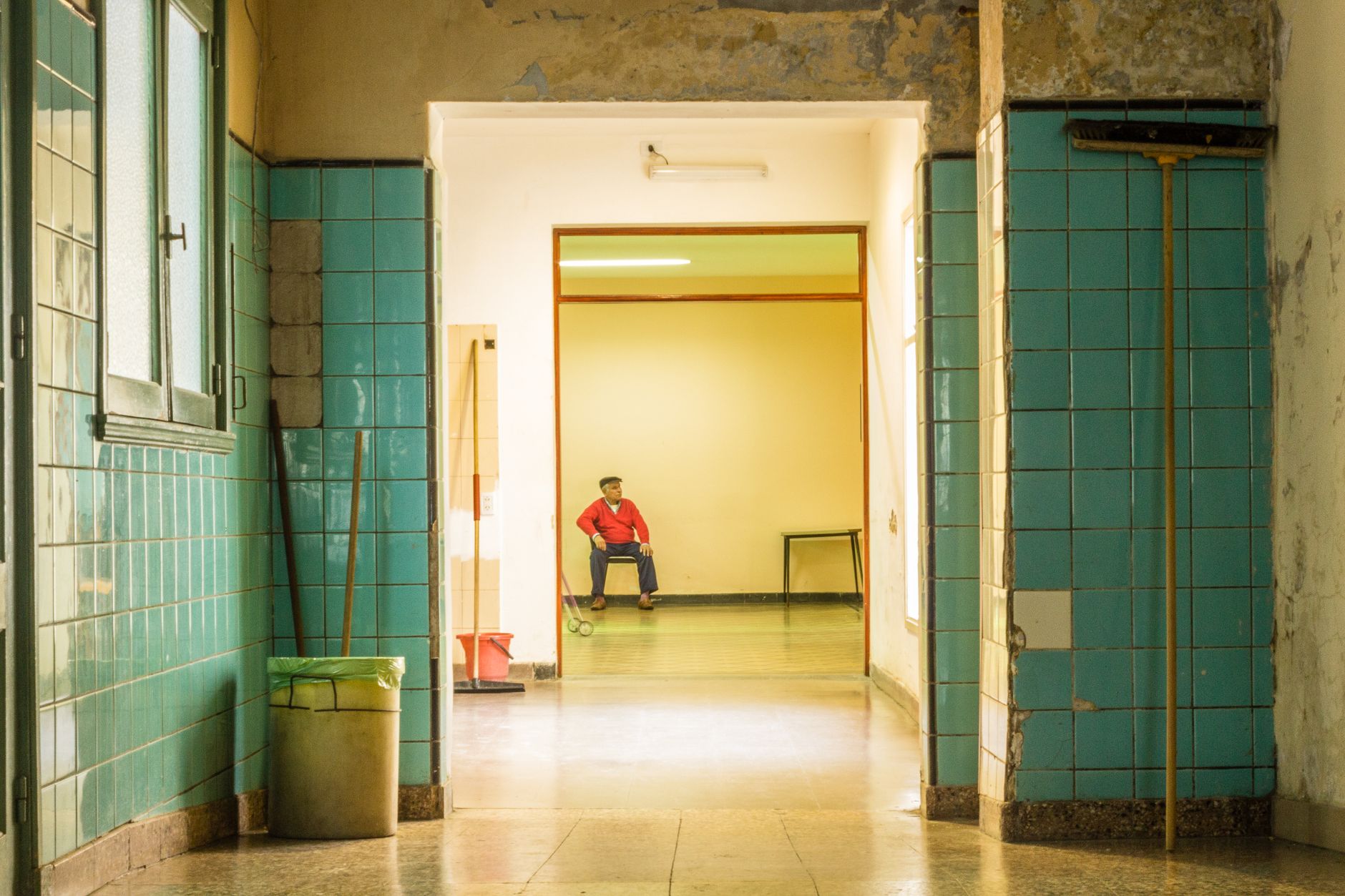
A floor scrubber cleans the mapped route. It does not clean restrooms, clear tables, reset chairs, handle staging or move carts. It also cannot finish a route that is blocked by freight or a truck left in an aisle, and those jobs stay with staff, so the crew plan should say so.
A robot does not judge a floor it has not seen. Wet spills, new stains and debris left by a show may need a person to look before the route runs. Plan a short walk before each run and a check after it, so the crew knows what the machine handled and what it did not.
Expect the robot to be useful on the repeatable part of the job, the same route every night, and to stay weak on the variable part, the messy and unplanned work that every show leaves behind. A plan that names both sides is the one that holds up through a busy season.
- Restrooms and table clearing
- Staging, carts and blocked aisles
- Spills and debris the map has not seen
- Final inspection of the finished floor
How do you get a cleaning robot quote for a convention center?
Start with a free site assessment. We walk the halls, measure the overnight window, map the route, note surfaces, doors and freight lifts, and record how the crew cleans today. The result sets the units, the service plan and the lease quote.
Bring what you already have: floor plans, the event calendar for the coming season, the length of the turnaround window and any notes on surfaces or access limits. The more complete the calendar, the better the assessment can predict where layout changes will fall and how much of the route needs remapping.
Expect a written quote that states the lease term, the fixed lease payment, deployment and integration, training, service coverage and what is excluded. If a line is unclear, ask for it to be written out before you sign, and compare the quote against the route plan rather than against the machine alone.
Frequently asked questions
Want a cleaning robot at your convention center?
Tell us about your site. We will recommend the robot, quote the lease, and keep it serviced.
Sources
- 2023 trade press report on large North American convention centers
- 2020 trade press list of US convention centers by size
- BLS Occupational Outlook Handbook: Janitors and Building Cleaners
- BLS Survey of Occupational Injuries and Illnesses: Janitors and Cleaners 2020 snapshot
- BLS Survey of Occupational Injuries and Illnesses: Janitors 2015 to 2019 snapshot
- AACEM and ISSA autonomous cleaning survey, 2019
- ISSA autonomous cleaning survey results
- ISSA Today, September and October 2025 issue