
The short answer
Cobot cost in Boston depends on how many cells you run, how much the arm must integrate with your existing machines, how much safety guarding and risk assessment each cell needs, and how many shifts it works. We set the lease quote after a free site assessment that measures your floor, power and process, because those factors move the number far more than the arm itself.
Key takeaways
- The arm is the smallest part of a cell, so scope, integration and safety drive the quote.
- Ask whether the quote lists deployment, training and service as separate lines.
- Hours measured on your floor set the labor case, not a generic template.
- Older building stock and tight bays are checked in the site assessment before any quote.
- The lease payment is set in a written quote after a free site assessment, never from a sticker figure.
What does cobot cost in Boston depend on?
Cobot cost in Boston is not one fixed figure, and any number quoted without a site visit deserves caution. A collaborative robot arm is only one part of a working cell. The cell also includes a gripper or other tool, a fixture or tray that presents parts in the same place each cycle, guarding or sensing around the work area, a controller and program, and the connection to the machine or line it serves. Each piece is sized to your work, so the lease reflects the whole cell.
Boston adds local conditions that change the scope. Some sites are older buildings with tight bays, uneven slabs, and electrical service sized for the equipment that was there when the space was fitted out. Cold loading docks and winter salt tracked in from the street affect floor sealing and where a cell can sit safely. The site assessment measures these conditions before anyone writes a number.
Demand context affects lead time more than the quote itself. According to the International Federation of Robotics, in its preliminary 2025 release, US industrial robot installations rose about 11 percent to roughly 38,000 units, with automotive still the largest customer at 13,500 units. When installations grow, ask any integrator how service response and spare units hold up when many customers need help at once.
Which factors move the cost up or down in a Boston shop?
Scope is the largest driver. One arm feeding one machine is a small job. An arm that moves between several machines, or serves two lines on different shifts, needs more guarding, more programming, and more time on the floor to confirm each handoff. Count the machines, not the arms, when you compare quotes.
Integration comes next. A machine with an open controller and a documented signal interface can be connected in a short engineering window. A machine with an old controller, no documented interface, or a manual step that depends on an operator's judgment takes longer, and some of that work cannot be scoped until the controller is opened and read.
Part variety and changeovers decide the tooling. Parts that stay the same across the week need one gripper and one fixture. Parts that change often need a tool changer, more fixtures, or a vision check to find part position. Shifts decide how much service slack the cell needs, since a cell running two or three shifts has less room for downtime than one running a single shift.
How many labor hours does a cobot take over in a Boston shop?
Labor savings come from hours that are repetitive and predictable. Loading a fixture, moving parts from a machine to a tray, and holding the same process cycle after cycle are the usual candidates. The hours on your floor matter more than any sector average, so we time them during the site assessment instead of estimating from a template.
Local labor supply is part of the picture. BLS occupational data lists about 44,360 janitors and cleaners in the Boston-Cambridge-Nashua metro area, which shows the size of the service workforce nearby, though it does not measure shop floor labor directly. FRED reports total separation rates for professional and business services of roughly 4.1 to 4.7 percent a month in late 2025, a broad industry measure that does not isolate production roles.
Hours saved are only real if the people who used to do them move to work the cell still needs. Tell the quote team which hours you expect to free up and where those people will go, because a lease cannot return hours that are never reassigned.
What can a cobot not do in a Boston cell?
A cobot is a bounded tool, not a general worker. It repeats a defined task inside a cell designed for it. It cannot judge a part that looks wrong, clear a jammed feeder on its own, or decide what to do when a supplier changes packaging. Those tasks stay with people, and the cell is designed around that split.
Speed and payload are limits too. Collaborative arms are built for work near people at lower speeds and modest payloads, so heavy parts, fast cycles, or hazardous materials may need a different cell or a different machine. The site assessment checks part weight and cycle time before the quote, not after installation.
Injury rates across private industry are already low. According to BLS, total recordable cases in 2024 were 2.3 per 100 full-time equivalent workers, down from 2.4 in 2023 and the lowest since the series began in 2003. A cobot should be justified on consistency, throughput, and labor coverage, not on a dramatic drop in injuries.
How does leasing a cobot through financing work?
We lease cobots through financing rather than sell them. The business gets the cell and service without a large upfront outlay, and the lease payment is fixed for the term once the quote is signed. That predictability is what most finance teams need. Changes to the work should be handled as written scope changes, not absorbed silently into the lease.
A quote from us lists scope in its own lines. It should cover the lease through financing, the site assessment and layout, integration to the machine or line, guarding and risk assessment for the cell, training for operators and setup staff, and service coverage nationwide. Ask for response terms, spare unit position, and term length in writing. Any item outside scope, such as third-party software licenses or liability coverage your business already carries, should be named, so no line is left to assumption.
A lease is a financing structure. The term, the fixed lease payment, the end-of-term options, and what happens if the cell moves or a unit fails all belong in the written quote. Read those terms with your finance team before signing.
How do I get a cobot quote after a free site assessment?
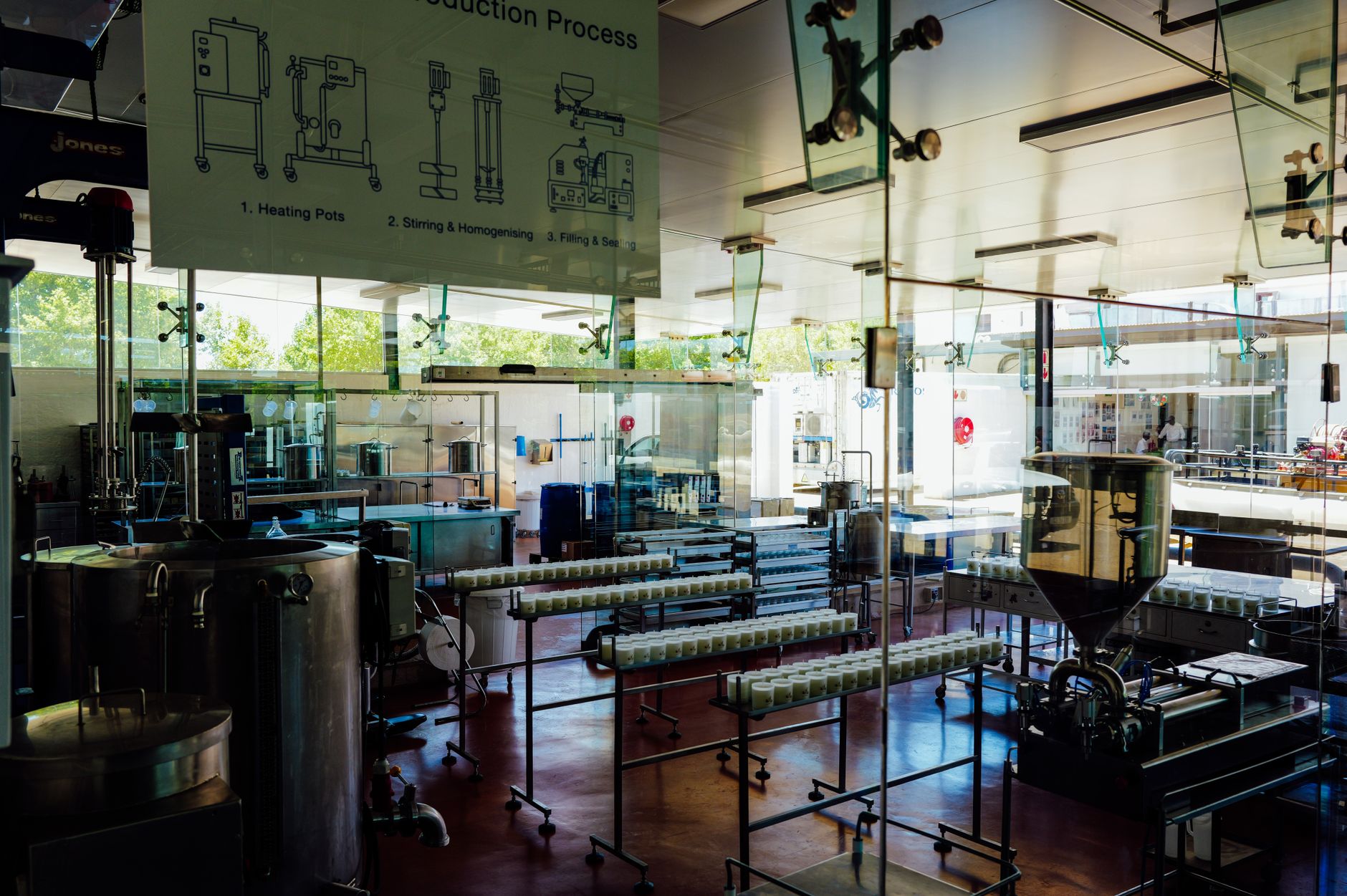
The quote starts with a free site assessment. We walk the cell location, measure floor and bays, check power and network access, look at the machines the arm must connect to, and review parts, cycle times, and the shift pattern. This is where the number is set. A quote written without this step is a guess about your floor.
After the assessment, the quote shows the lease payment for the term, the scope lines, the deployment plan, and the service terms. It should answer what happens in your first week after go live, not only in the sales call. If your line cannot stop, ask for a phased plan, and ask for a single contact covering deployment, service, and dispatch.
Which Boston businesses run cobots, and what local conditions matter?
Census QuickFacts reports 22,034 employer establishments and 720,353 employees in Suffolk County, which contains Boston, for 2023. Census also reports 71,344 nonemployer establishments, a separate measure, so the two should not be added together. A count of many small employers against that employment suggests one cell can be a large share of a single shop's floor, which is why scope and staffing deserve careful planning.
Food producers are an active part of the category. According to IFR coverage, food-industry robot installations were reported up 30 percent, with growth driven by food and logistics. A Boston food producer should ask about washdown and food-contact requirements in the cell design before the quote is final.
Building stock and climate matter. A 2015 analysis of Boston energy reporting, covered by BDC Network, found pre-1950 buildings more energy efficient than later ones. The first reporting year covered about 45 percent of commercial, industrial and institutional building energy use. That finding is about energy, not floors, but it shows Boston's building stock is mixed, so measure the building you have rather than the one on the plan.
Is leasing a cobot worth it for a Boston shop?
Whether it is worth it depends on whether the cell replaces repetitive hours you can actually redeploy, and whether the part mix is stable enough for the cell to run long between changes. A cell that sits idle because no one owns programming is a poor return on any lease. A cell with clear scope, measured hours, and a named owner tends to justify itself on labor coverage and consistency.
Compare the quote against the work it replaces. Ask what the same hours cost in staff time and overtime across the lease term, what happens when a shift cannot be staffed, and how long a single fault can stop the cell. A cell with a spare unit and fast dispatch carries different risk than one without.
For most small operations, start with one cell on the highest-repeat task. One leased cell lets you test integration, staffing, and service before committing to a second. Phased deployment keeps the rest of the operation running while you learn what the cell needs.
Frequently asked questions
Put a robot to work in Boston.
We walk your site, learn the job, and recommend the unit that fits. Then we quote the lease, deploy it, and keep it serviced.
Sources
- Bureau of Labor Statistics, OEWS (Boston metro janitors and cleaners)
- International Federation of Robotics, preliminary 2025 release
- A3 North American robot orders 2025 via The Robot Report
- Bureau of Labor Statistics, Survey of Occupational Injuries and Illnesses
- US Census Bureau QuickFacts, Suffolk County MA
- FRED, JOLTS total separations, professional and business services
- IFR food and logistics coverage via Business Wire
- BDC Network, Boston energy reporting analysis