
The short answer
Autonomous forklift ROI for building materials distributors comes from labor hours that are hard to staff, mainly off-shift pallet moves in yards and warehouses on fixed routes, offset against a lease payment quoted after a free site assessment. The savings range depends on how many of those moves repeat, how many night shifts go unfilled, and how much of each route a unit can run without a person. Read the range as a planning estimate for your site, not a promise.
Key takeaways
- The return comes mainly from repeatable pallet routes that keep running when night shifts are hard to fill.
- The math offsets labor hours against a lease payment, scaled by the share of work a robot realistically takes.
- Route length, traffic and shift gaps move the number more than any headline specification.
- Safety data supports separating pedestrians from forklift traffic, but it does not set the savings range.
- A free site assessment turns the range into a lease quote for your own yard.
Run the numbers for your site
Pick your city or state for a real regional number - we use the real BLS wage there. (On the live site this auto-detects from your location.)
What do you want to automate?
The robot takes the repetitive cart and pallet moves off the heaviest motion.
What is autonomous forklift ROI for building materials distributors?
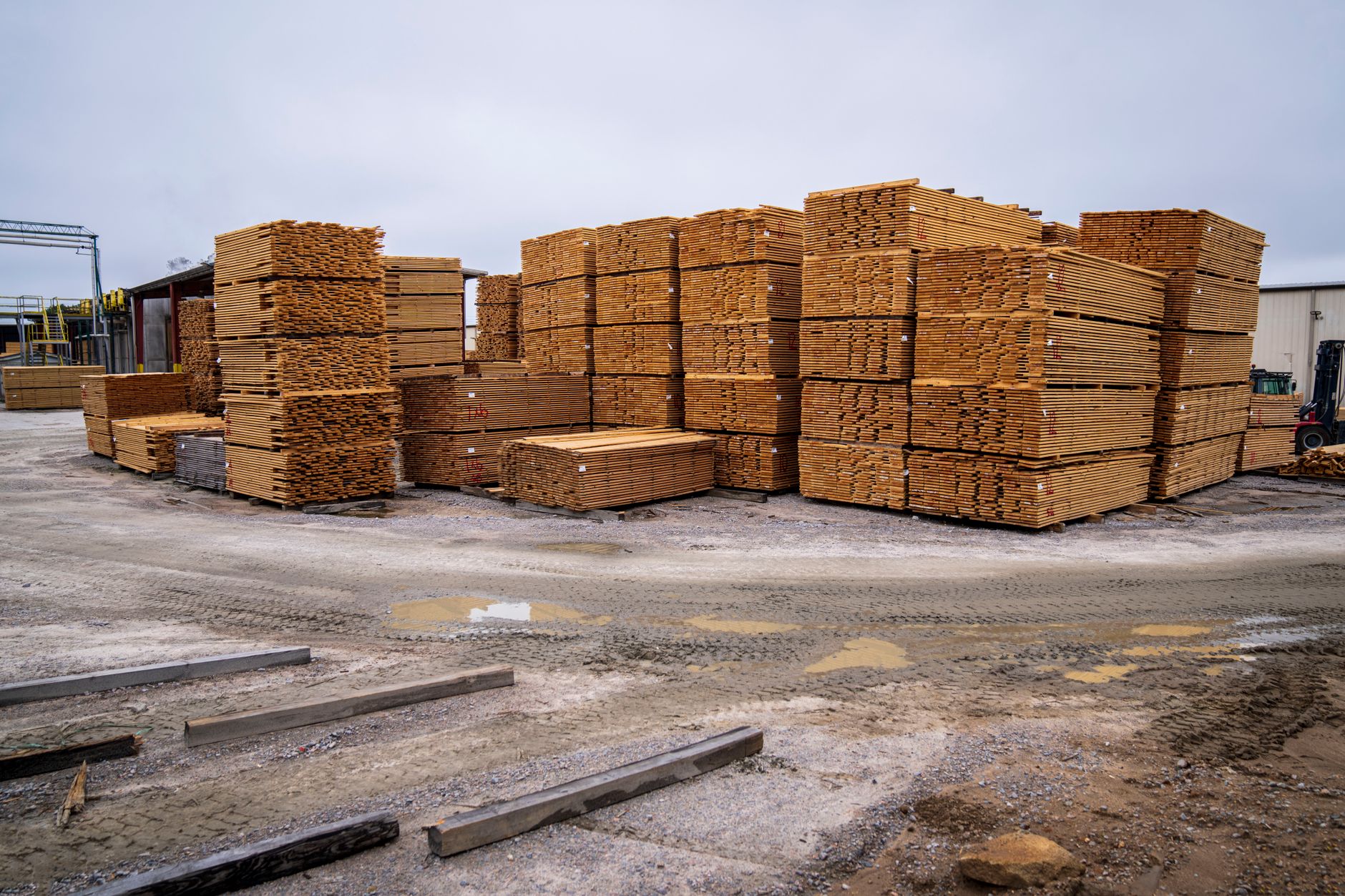
Autonomous forklift ROI for building materials distributors is the comparison between a lease payment and the labor hours the machine takes over. In this setting the hours are pallet moves between trailers, yard staging, will-call and dock areas, and much of that movement repeats on the same routes every shift. When night crews are short, the return can come as much from keeping those moves running as from cutting hours, because a missed night often means a backlog for the morning crew.
The job pool is large. According to the Bureau of Labor Statistics May 2023 estimate, about 3,008,300 people work in the Laborers and Freight, Stock, and Material Movers, Hand occupation nationally, and the government wage data on this page is for that job. Yard and dock work is often shared among several occupations, so a site may not have a single operator headcount to point to.
The business base is also large, though its data is dated in places. According to FRED, national employment for NAICS 4441, building material and supplies dealers, was 1,262.5 thousand on 2022-01-01. A 2013 summary by Abrigo, citing Census data, put about 70,818 firms in the sector, and Principia Consulting estimated about 1,170 two-step LBM distribution locations in the US. Those figures measure distinct things across separate years, so use them to size the market, not to count your own sites.
Our role here is narrow. We assess the site, lease the right unit through financing, integrate and train, and service it. The rest of this page explains how the return is built so you can check our assumptions against your own numbers.
Where does the return come from in a building materials yard?
The return starts with repeatable moves. Yards and dock areas usually have a few fixed flows: unloading inbound trailers to staging, moving staged product to will-call or pick aisles, and returning empty pallets to a set bay. A unit on a fixed route does not need to be told where to go each time, which is why these moves suit night operation better than irregular work.
The labor offset is the operator time those moves would otherwise take. Those hours are priced against the local wage for the Laborers and Freight, Stock, and Material Movers, Hand type of work, not against the forklift operator wage itself. That framing matters because the robot takes over transport hours, while a person still handles loads that need judgment.
The second source of return is coverage. Unfilled night shifts often push moves into overtime or into the next day. Keeping fixed routes running through a short-staffed night shrinks the backlog and gives the day crew a clean start. That effect is harder to put into a single hourly figure, so the calculator keeps it separate from the direct hours offset.
Median hourly wage, Laborers and Freight, Stock, and Material Movers, Hand
$4,380
Monthly cost of one full-time worker, at the median wage plus payroll costs (an estimate, not a quote).
How does the savings math work?
The calculation is simple at its core. Take the route hours per shift that the robot can realistically run, multiply by the number of shifts it runs each week, and convert the result into labor hours at the local wage for the work. Then subtract the lease payment quoted for the unit, plus the supervision, charging and exception time a person still spends on it.
The share of work a robot takes is the number most often overstated. A route that looks full on a plan may be interrupted by blocked lanes, irregular pickups and loads that need a person. Realistic planning starts with the routes that repeat and treats the remainder as human work. The calculator range reflects that split, with a low case where less of the route is repeatable and a high case where most of it is.
Lease cost enters as a fixed charge over the lease term. Financing spreads the cost across that term, so the decision can be compared with the hours a unit takes over rather than with a single up-front payment. Savings are always a range, because the labor side and the route side both vary from site to site. Treat the result as a planning estimate for your yard, not a promise.
What changes the number up or down?
Route length and count matter most. A unit with a long repeatable run returns more hours than one shuttling short moves between closely spaced bays. Traffic matters next. Manual forklifts and foot traffic on the same aisles add setup, zoning and stop time, and they reduce the share of route the robot can run without a person.
Shift coverage and staffing history set how much value the hours carry. A site with a steady night crew gets less from coverage than one that loses several night shifts a year. The adoption trend is worth a look as a signal, not as a benchmark. According to a BlueBiotics survey, which is vendor-reported and covers AMRs and AGVs rather than forklifts alone, more than 70% of respondents plan to extend their fleets within two years, mostly by three or more vehicles.
Floor condition and mapping also move the number. Uneven slabs, gaps at dock plates and racking that changes often make routes less reliable. A site with clean, stable aisles and a fixed pallet pattern will show a stronger range than one that reorganizes its floor every few weeks.
What are the risks to the return, and how do you avoid them?
The main risk is underuse. A unit installed for a route that later changes, or for a flow the site has since moved, will take fewer hours than planned. Avoid this by starting with one route, measuring the hours it actually takes over for a set period, and expanding only after the number holds.
The second risk is service downtime. A unit that sits idle waiting for a repair takes no hours and still carries its lease payment. Ask for a service plan with a clear response path, remote triage and a backup option before signing. Spare coverage matters most on a yard that cannot absorb a missed night.
The third risk is the crew. A robot that people do not trust gets routed around, and exceptions pile up. Train the night lead and operators on the exception process, and make clear which work stays with people. The MHI and Deloitte 2026 Annual Industry Report, published April 2026, names robotics and autonomous technology among eight categories it expects to rise over five years. It gives no autonomous percentage, so use it as context rather than as a return figure.
What is a realistic timeline from assessment to payback?
The timeline runs in phases rather than as a single install. It starts with an assessment that maps routes, shifts, traffic and dock layout. The lease quote follows from that assessment, and integration and staff training come next. A pilot on one route runs before any wider rollout, so the hours can be measured instead of estimated.
Payback is the point where cumulative hours offset cumulative lease payments. It depends on the lease term, the share of the route the robot takes, and how many nights it runs. Those inputs are not known until the site is measured, so we do not give a payback date in advance. Once the pilot has run long enough to show the hours, the range narrows and the expansion decision gets easier.
A practical sequence is assessment, quote, pilot on one route, measured review, and then expansion to other routes or a second unit if the numbers support it. Go-live support and training happen during the pilot, so the crew sees the exception process before the unit covers a full night.
How do you get a precise figure from a free site assessment?
A precise figure needs site data, not a template. The assessment asks for the repeatable routes and their length, the night shifts now unfilled or covered by overtime, the traffic mix on those aisles, pallet dimensions and load types, and the dock layout. It also uses the local wage for the work, so the labor side reflects your market.
Our team walks the site, maps the proposed routes and runs the calculator with those inputs. The output is a savings range with its assumptions shown, a lease quote after the site assessment, and the service terms for the site. The assessment is free, so the main cost of finding out is the time to walk the yard with us.
Bring your own records where you have them: overtime history, shift gaps and the route list the day crew already uses. The more of the route that is written down, the narrower the range that comes back.
How does a robot compare with a person on night pallet work?
The comparison matters because it shows where each side is stronger. A robot is steady on repeatable routes and does not need a break or shift cover. A person is better at anything that needs judgment, including damaged stock, mixed loads and unexpected blockages. Most sites end up with the robot on fixed routes and people on exceptions, which is the split the calculator assumes.
A person also stays more flexible. Moving a crew member to new work takes a conversation. Moving a robot to a new route takes remapping and a short validation run. That is a real cost, so it belongs in the decision alongside the hours.
- Night coverage
Autonomous Forklift
Runs fixed routes all night with no breaks or shift cover
Staff
Needs breaks, days off and shift cover, and gaps are common
- Route consistency
Autonomous Forklift
Follows the same route the same way on every run
Staff
Varies route and pace with the day and the load
- Exceptions and damaged stock
Autonomous Forklift
Stops and alerts, then waits for a person
Staff
Judges the load and decides what to do on the spot
- Mixed or irregular loads
Autonomous Forklift
Needs routes set up in advance, so it suits these less
Staff
Adapts without setup and handles the odd pallet
- Blocked lane
Autonomous Forklift
Waits or reroutes if the map allows it
Staff
Clears the lane or finds another way through
- Flexibility to new work
Autonomous Forklift
Needs remapping and a short validation run for a new route
Staff
Moves to new work with a conversation and some training
Does the safety record change the case?
Safety data can support the case but should not set the savings figure. The Bureau of Labor Statistics 2017 fact sheet on forklift fatalities counted 74 fatal work injuries involving forklifts that year, and it reported that forklift-related injuries to pedestrians had the highest median days away from work, at 20 days. That data is from 2017, so use it to see the pattern, not as a current rate.
The warehousing and storage group is the closest BLS industry covering yard and dock pallet work. According to BLS, it reported a total recordable case rate of 4.8 per 100 full-time workers in 2024. Building materials distribution is a separate industry, so treat that figure as context for the category, not as a measure of your site. Routes that separate pedestrians from forklift traffic lower exposure, and that belongs in the same plan as the return.
Frequently asked questions
Want an autonomous forklift at your building materials distributor?
Tell us about your site. We will recommend the robot, quote the lease, and keep it serviced.
Sources
- US Bureau of Labor Statistics, Occupational Employment and Wage Statistics (OEWS May 2024)
- Bureau of Labor Statistics, Occupational Employment and Wage Statistics, May 2023
- FRED, Federal Reserve Bank of St. Louis, NAICS 4441 employment
- Abrigo, Building Material and Supplies Dealers industry trends
- Principia Consulting, two-step LBM distribution locations, via HBS Dealer
- Bureau of Labor Statistics, Warehousing and Storage injury rates
- Bureau of Labor Statistics, Fatal occupational injuries involving forklifts, 2017 fact sheet
- MHI and Deloitte, 2026 Annual Industry Report press release
- BlueBiotics survey, reported by SDCExec