
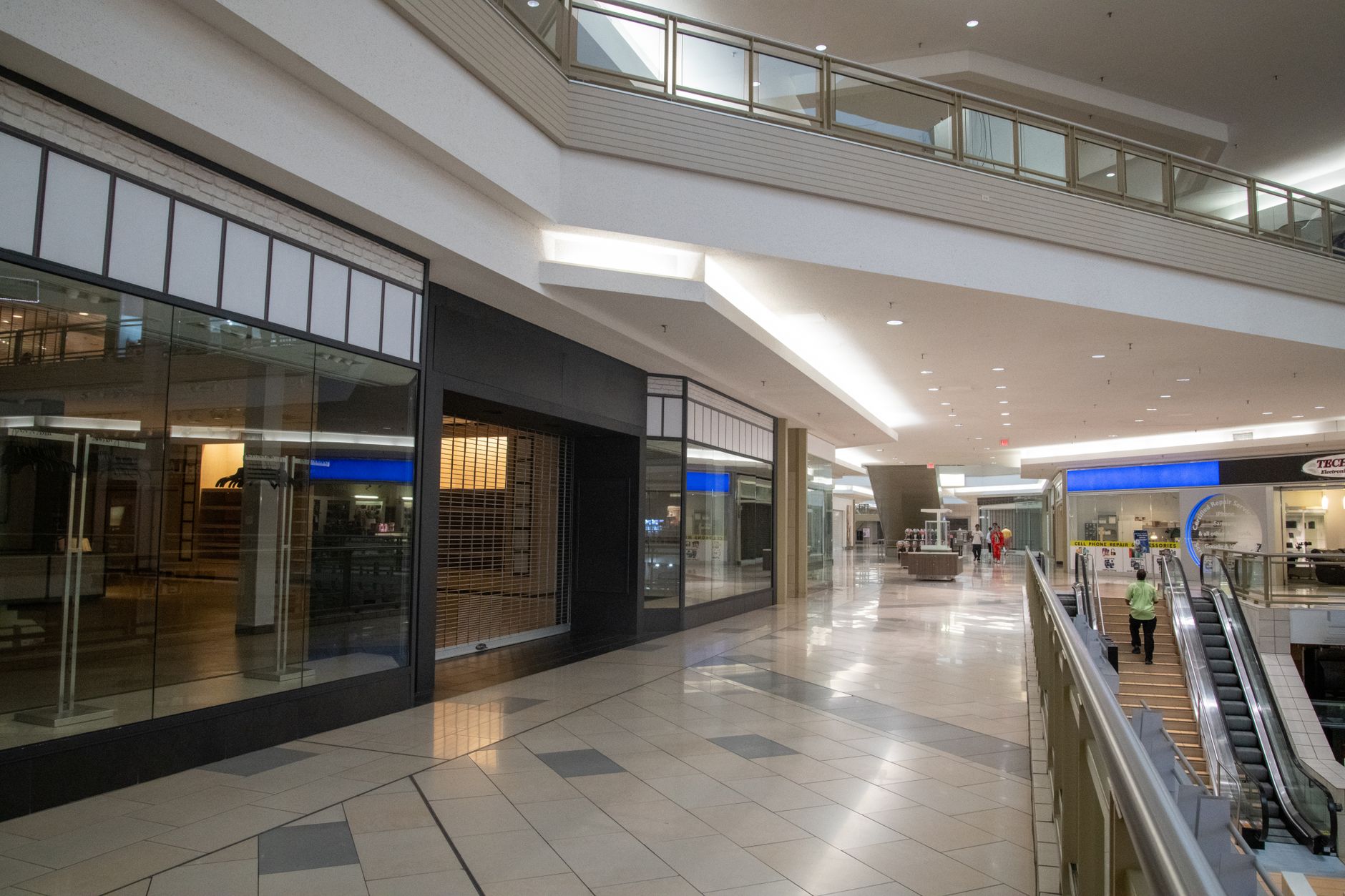
The short answer
Cleaning robot ROI for big-box retail stores comes mostly from floor scrubbing hours that move to an overnight route, so the labor offset is the janitor and building cleaner time the robot takes over. The savings range depends on how much of the open floor a robot can cover on a clear route, the local wage for this job, and the fixed lease payment, and it stays a range until a site assessment measures the floor. Figures on this page come from government and trade association sources, and no savings figure is a promise.
Key takeaways
- Most of the return is janitor and building cleaner hours moved off the trading day, not a cut to the sales team.
- The robot takes the scrubbing on mapped open routes, while spills, edges and daily checks stay with staff.
- Spec-sheet coverage runs above practical output, so the range should use measured coverage from the floor.
- The lease quote follows a free site assessment, and the range is only as precise as the floor and hour data behind it.
- Less manual scrubbing can lower exposure to the falls and floor injuries that dominate cleaning work.
Run the numbers for your site
Pick your city or state for a real regional number - we use the real BLS wage there. (On the live site this auto-detects from your location.)
What do you want to automate?
The robot runs the open floor overnight; your crew keeps detail and edges.
What return can a big-box retail store expect from a cleaning robot?
Cleaning robot ROI for big-box retail stores is mostly a labor question. A large store has a wide, open sales floor with long aisles, and floor scrubbing on that floor is repeat work that an autonomous scrubber handles well on a fixed route. The return is the janitor and building cleaner hours the robot takes over, weighed against the lease, not a reduction in the sales team.
The range shown with the calculator is an estimate built from your floor and your existing cleaning hours, not a promise. A store with a clear, mappable route and an early or overnight cleaning window usually has a stronger case than one where fixtures and displays block most of the floor. The number firms up once a site assessment measures the route.
Why do big-box floors suit an overnight floor scrubber?
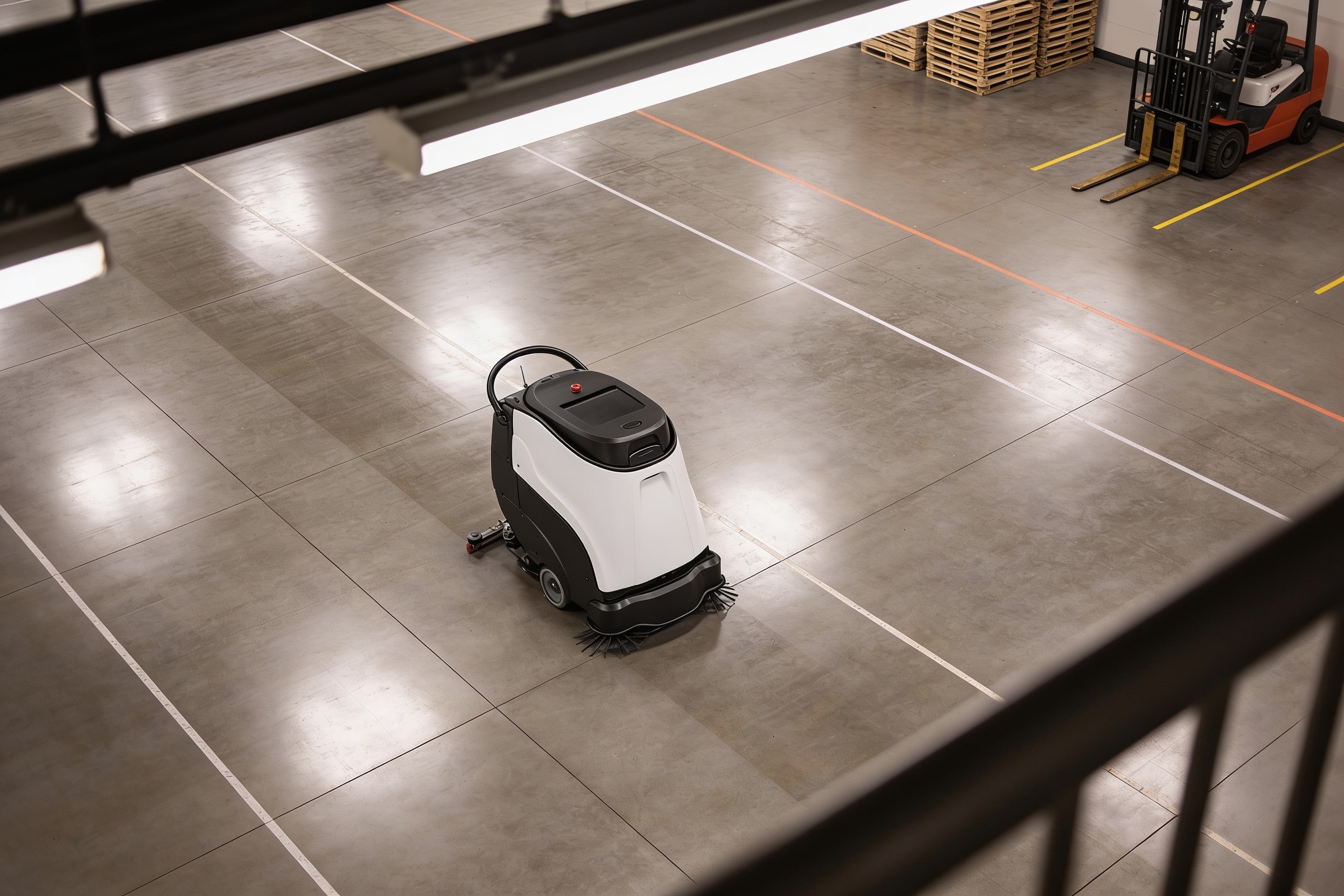
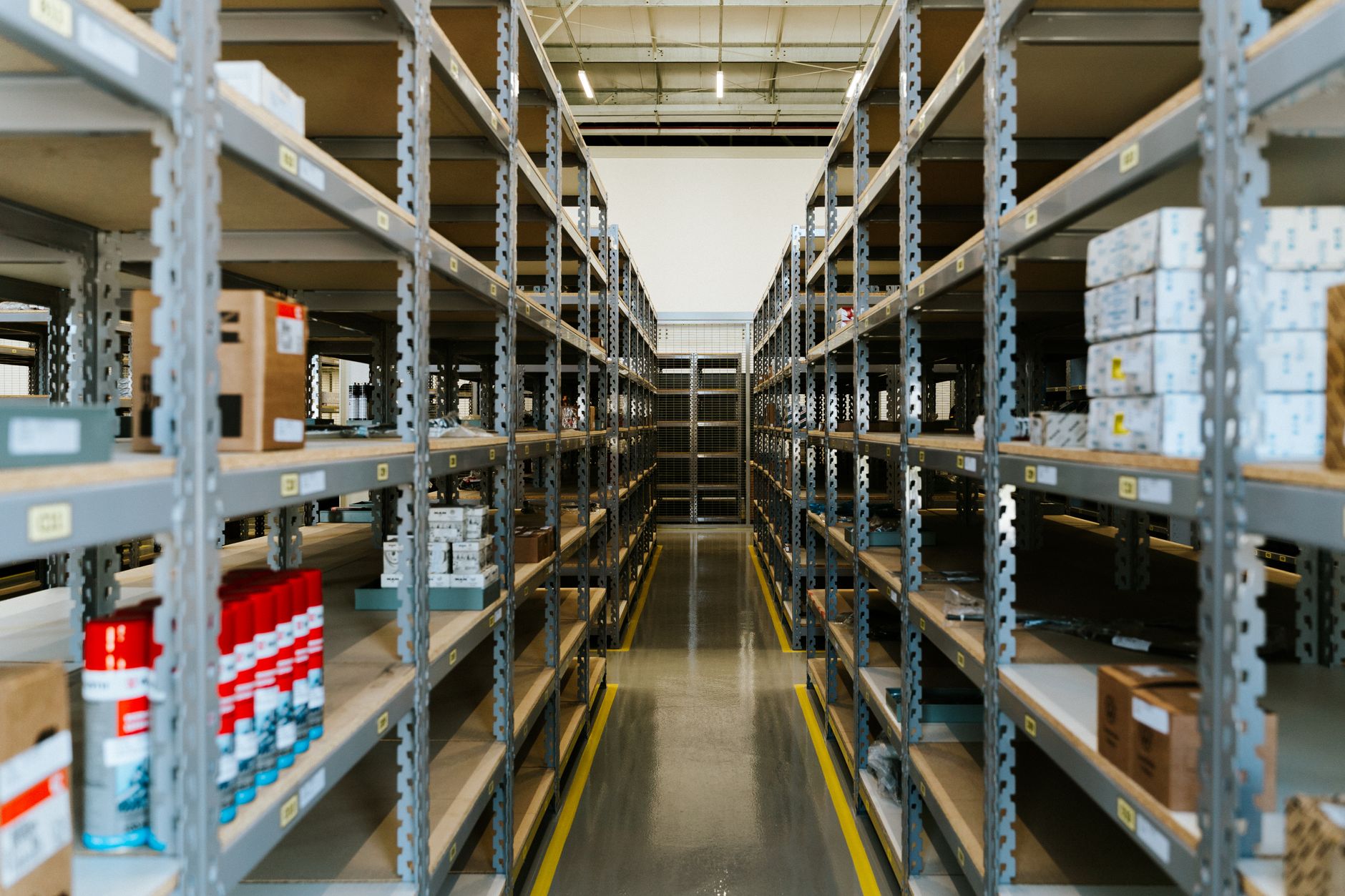
Big-box floors are large, mostly flat, and open along the length of the building, with main aisles that run the full depth of the store. That geometry suits an autonomous floor scrubber that repeats one route, because the work is predictable from night to night. A route can run after close without an operator riding or steering the machine.
Floor cleaning during trading hours puts carts, customers, and staff in the same aisles the scrubber needs. Moving the work to a route run after close or before opening gives the robot a clear floor and keeps the trading day free of that work. The labor question then becomes how many janitor and building cleaner hours the overnight route replaces.
Retail is a large sector. According to the U.S. Census Bureau, the 2022 Economic Census counted 1,040,277 Retail Trade establishments, which is among the top five sectors by establishment count. The census total does not separate big-box stores, so the count for your segment has to come from your chain or your regional real estate list. Adoption is real but still a minority practice: a cleaning industry trade association survey found that 27% of respondents were active autonomous equipment users, across commercial cleaning generally rather than retail alone.
Median hourly wage, Janitors and Building Cleaners
$4,041
Monthly cost of one full-time worker, at the median wage plus payroll costs (an estimate, not a quote).
Where does the labor offset actually come from?
The labor offset is the time janitors and building cleaners spend on the floor scrubbing that the robot now does. According to the Bureau of Labor Statistics, this occupation had about 2,447,700 jobs in 2024, with projected growth of 2% from 2024 to 2034. In your store that work may sit with in-house staff or a contract cleaning crew, and the split decides how you count the hours. The government wage data on this page sets the cost basis for each of those hours.
Store staff who work the sales floor, stock shelves, and run registers are not priced in this calculation. The robot takes janitors and building cleaners type of work off their plate, so the offset is those hours alone, not the time of the people serving customers.
The hours that move are the route hours. Setup, a daily check of charge and fault alerts, and handling of spills and obstacles stay with staff, and the table below shows how the work divides. The hour figures come from your own records in the site assessment, since the sources we reviewed publish no average for floor scrubbing hours in a big-box store.
| Task | Today | With a robot |
|---|---|---|
| Scrub the main sales aisles | Measured in the site assessment from your own records | Runs on a mapped overnight route with no operator riding |
| Spot-clean spills and debris | Staff time during trading hours or early shifts | Still handled by staff, usually before the route starts |
| Scrub edges, corners, and under fixtures | Janitor time by hand | Still done by staff, since the robot covers the open lanes |
| Check and charge the robot | Not needed | Daily check of charge and fault alerts |
| Clear obstacles that stop the route | Not needed | Staff clear the obstruction and restart the route |
The sources reviewed publish no average hours for floor scrubbing in a big-box store, so the today column is measured per store during the site assessment. The split of work shown is our operating model, not a published figure.
Where does the robot work inside the store?
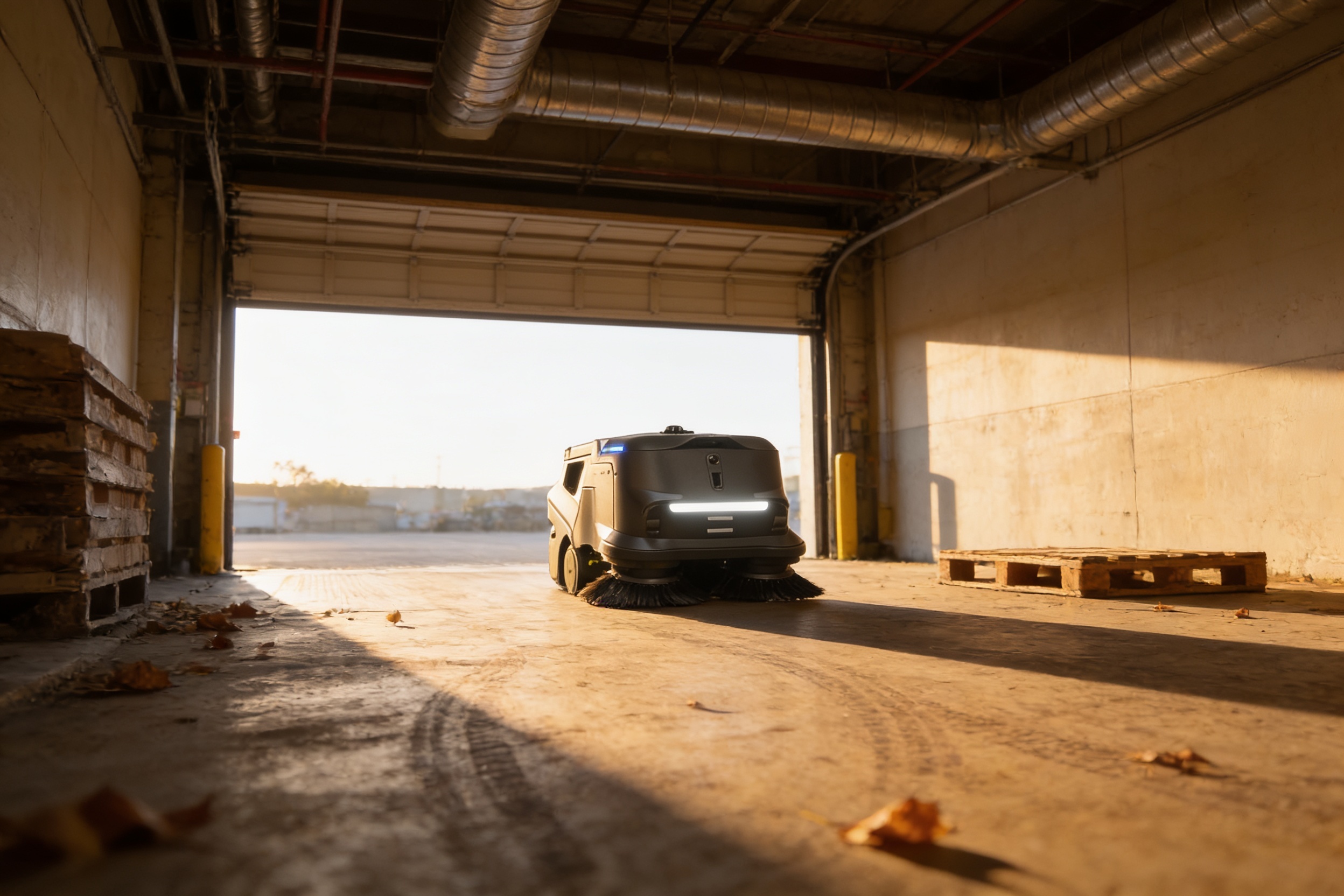
A robot does not clean the whole building. It runs the open floor on mapped routes, and the route plan is set with store management during the site assessment. The zones below show where the robot runs and where people keep the work.
Route planning matters more than raw floor size. A large open area with clear sightlines can carry a long route, while a floor full of seasonal displays, pallets, and temporary fixtures has fewer clean lanes. Those lanes decide how much of the floor the robot covers in one night, and that share drives the savings range.
How is the savings range calculated?
The savings range starts with the janitor and building cleaner hours the robot takes over each week, valued at the local wage for this job from the government wage data on this page. Overhead and the employment costs that go with those hours are added on top, since that is the labor cost the robot can offset. The calculation treats the robot as taking the route hours only, not the whole cleaning load.
From that labor offset, the calculator subtracts the fixed lease payment and any add-on cost in the lease quote. The result is a range because two inputs are estimates: the share of the floor the robot covers on its route, and the hours the team really spends. A range holds up when its low end still covers the lease on a conservative share of the floor.
Share of work is the main lever. A robot that covers most of a clear open floor takes most of the route hours, while a robot that covers only half the route still needs staff for the rest. Quote the range with the coverage assumption printed next to it, so the number can be checked against the floor after go-live.
What changes the number up or down?
Three inputs move the number most: how much of the floor is open and mappable, how many janitor and building cleaner hours the store spends today, and how the lease is structured. The checklist below sets out what to check before you rely on the range.
Speed matters, but spec-sheet speed is not working speed. Rated coverage for floor scrubbers runs well above what a machine holds on a live floor, because turns, obstacles, and operator pace cut output. The range should use practical output, and the site assessment replaces that assumption with measured coverage.
Going up: a clear route, a long clean window, and a lease that covers service. Going down: a merchandised floor, a short window that forces the route to stop early, and frequent interruptions from staff traffic.
What are the risks to the return, and how do you avoid them?
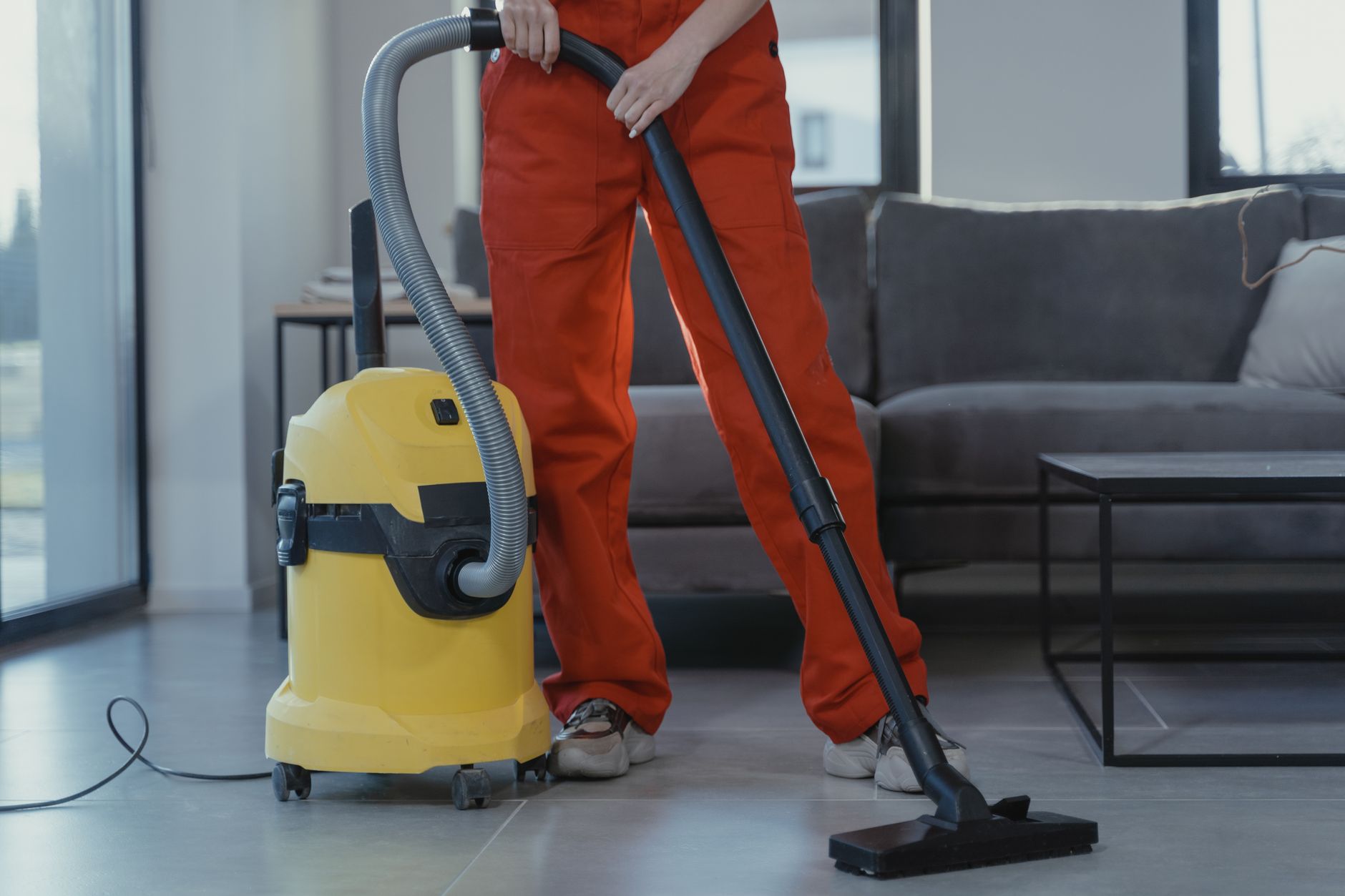
The main risk is a route that stops holding. Fixtures move, seasonal displays go up, and a route mapped in one season can lose clean lanes by the next. Avoid it by setting the route with store management and scheduling a route review at each seasonal reset.
The second risk is over-counting labor cuts. Staff still handle spills, broken glass, and unusual debris, and a robot that stops at an obstacle needs someone to clear it and restart the route. A return that treats the robot as a full replacement for the cleaning team is overstated, so count only the route hours.
Safety is part of the case, and the data is specific. According to the Bureau of Labor Statistics injury snapshot for janitors and cleaners, except maids and housekeeping cleaners, there were 21,100 nonfatal injury and illness cases with days away from work in 2020, and an incidence rate of 191.6 per 10,000 full-time equivalent workers, up from 157.4 in 2019.
The same snapshot lists 42 fatalities in 2020, 45 in 2019, and 48 in 2018. It names falls on the same level as the leading event in the 2019 data, with floors, walkways, and ground surfaces as the leading source. Less manual pushing may reduce exposure on the route, but slip control on wet floors stays a staff task.
What changes for the people on the floor?
Store staff see less of the overnight floor work and keep the daytime duties they already have. The robot does not change how customers shop or how associates stock shelves, and the store team still owns the floor during trading hours.
Cleaning staff change the most. Their work moves from pushing a machine down every aisle to running route checks, clearing exceptions, and covering edge and spill work. The table below sets the robot and a person side by side, including where the person still does better.
- Overnight coverage
Cleaning Robot
Runs a set route after close with no operator riding it
Staff
Needs overnight shifts, scheduling, and supervision
- Repeat consistency
Cleaning Robot
Makes the same pass on the same route each night
Staff
Pace and thoroughness vary with fatigue and staffing
- Spills and odd debris
Cleaning Robot
Stops and waits for staff to clear the obstacle
Staff
Decides on the spot and deals with it
- Edges, corners, under fixtures
Cleaning Robot
Limited reach in tight spaces and around fixtures
Staff
Handles edges and corners by hand with full reach
- Setup and change management
Cleaning Robot
Needs route mapping and re-mapping at each seasonal reset
Staff
Needs training, and adapts to changed displays without a map
- Exposure from pushing equipment
Cleaning Robot
Reduces manual pushing of heavy equipment on the route
Staff
Carries the manual exposure reflected in the injury data
How long until payback, and how do you get a precise figure?
The timeline runs in phases: a free site assessment with floor mapping, a lease quote tied to the assessed route, financing and deployment, integration and staff training, then go-live support. Payback is measured from go-live using operating data, so the first solid number arrives only after the route has run long enough to show a stable pattern.
We pick the robot for the site, lease it through financing, deploy and integrate it, train the staff who work with it, and service it nationwide. Service sits inside the lease terms, and the quote states exactly what it covers, including maintenance, response times, and whether a backup unit is available while a robot is down. Ask for those terms in writing with the quote.
To get a precise figure, bring your real cleaning hours, your floor plan, your route limits, and your seasonal reset schedule to the free site assessment. Cleaning robot ROI for big-box retail stores is only as precise as the floor data behind it, so the assessment replaces the estimates on this page with measured coverage. The lease quote comes after that visit.
Frequently asked questions
Want a cleaning robot at your big-box retail store?
Tell us about your site. We will recommend the robot, quote the lease, and keep it serviced.
Sources
- US Bureau of Labor Statistics, Occupational Employment and Wage Statistics (OEWS May 2024)
- Bureau of Labor Statistics, Occupational Outlook Handbook: Janitors and Building Cleaners
- U.S. Census Bureau, 2022 Economic Census geographic statistics
- Bureau of Labor Statistics, Injuries, Illnesses and Fatalities snapshot: Janitors and Cleaners, except maids and housekeeping cleaners, 2016 to 2020
- Cleaning industry trade association, Autonomous Cleaning Survey Part 2