
The short answer
Cleaning robot ROI in Bridgeport, CT comes from the janitor floor hours a leased robot takes over, weighed against the lease cost. The size of the return depends on usable floor area, the share of work a robot realistically takes, and the local wage for this job, so the calculator on this page shows a savings range rather than a promise. A lease quote follows a free site assessment that measures those inputs on your own floor.
Key takeaways
- The return comes from janitor floor hours a robot takes over, not from removing staff by default.
- The local wage for this job sets the value of each hour offset, so use the panel figure, not the metro average.
- Usable floor area and shift timing move the number more than total building size.
- Theoretical scrubber speeds are ceilings, so plan on measured route time.
- The exact savings range and lease quote come from a free site assessment.
Run the numbers for your site
Auto-detected from your location - we use the real BLS wage here. Not right? Pick your city or state above.
What do you want to automate?
The robot runs the open floor overnight; your crew keeps detail and edges.
How much can a business in Bridgeport, CT save with a cleaning robot?
Cleaning robot ROI in Bridgeport, CT comes down to two questions. How many janitor floor hours will a leased robot take over on your schedule, and what is each of those hours worth at the local rate for this work? The calculator on this page is pre-filled for Bridgeport and returns a savings range, because the inputs behind it, mainly floor area and the share of work a robot can do, vary from one building to the next.
The range is not a promise. It reflects uncertainty in the inputs, and it narrows once someone measures your floors and records your cleaning hours. Treat the range as a way to decide whether a site assessment is worth requesting, not as a forecast of what your books will show.
Where does the return come from in Bridgeport?
The return comes from floor hours. According to the U.S. Bureau of Labor Statistics Occupational Outlook Handbook, janitors and building cleaners held about 2.4 million jobs in 2024, and 35% of them worked in services to buildings and dwellings. Much of this work sits inside buildings that run fixed cleaning schedules, which is where a robot's repeatable floor passes fit best.
The local wage for this job appears in the panel beside this text. It is taken from the May 2024 BLS wage table for Janitors and Building Cleaners in the Bridgeport area. The BLS Bridgeport metro release reports an all-occupation average wage above the national average, but that covers all jobs, not cleaning work, so use the panel figure to value each hour.
Hiring demand is steady rather than fast growing. BLS projects janitor employment to grow 2% from 2024 to 2034, which is slower than average, with about 351,300 openings a year on average over the decade. Filling cleaning shifts is an ongoing task, and the hours a robot covers are hours a manager does not have to staff.
Median hourly wage, Janitors and Building Cleaners
$4,212
Monthly cost of one full-time worker in Bridgeport, CT, at the median wage plus payroll costs (an estimate, not a quote).
How does the ROI math work?
The calculation has three inputs. The first is the number of floor hours per year the robot takes over. The second is the local hourly wage for janitors and building cleaners, taken from the panel. The third is the lease cost, which is quoted after a site assessment. Labor value is the offset hours multiplied by the wage, and savings are that labor value minus the lease cost. Per-site staffing varies widely, so the calculator starts from one cleaning position until the assessment confirms your headcount.
For example, if a robot takes over half of a crew's floor hours, the offset equals half of the labor value of those hours. Payback is the point where accumulated savings cover the lease cost. The math is simple. The hard part is the first input, because it depends on measured routes rather than assumed ones.
Two adjustments matter. Only the share of the work the robot realistically takes should count, so restrooms, stairs, spills and furniture moves stay out of the offset. Second, the freed hours must be real. If the crew keeps the same shifts, the savings appear as coverage or overtime avoided, not as a smaller payroll line, and a finance team should see that difference before approving the lease.
How many hours does a robot take over?
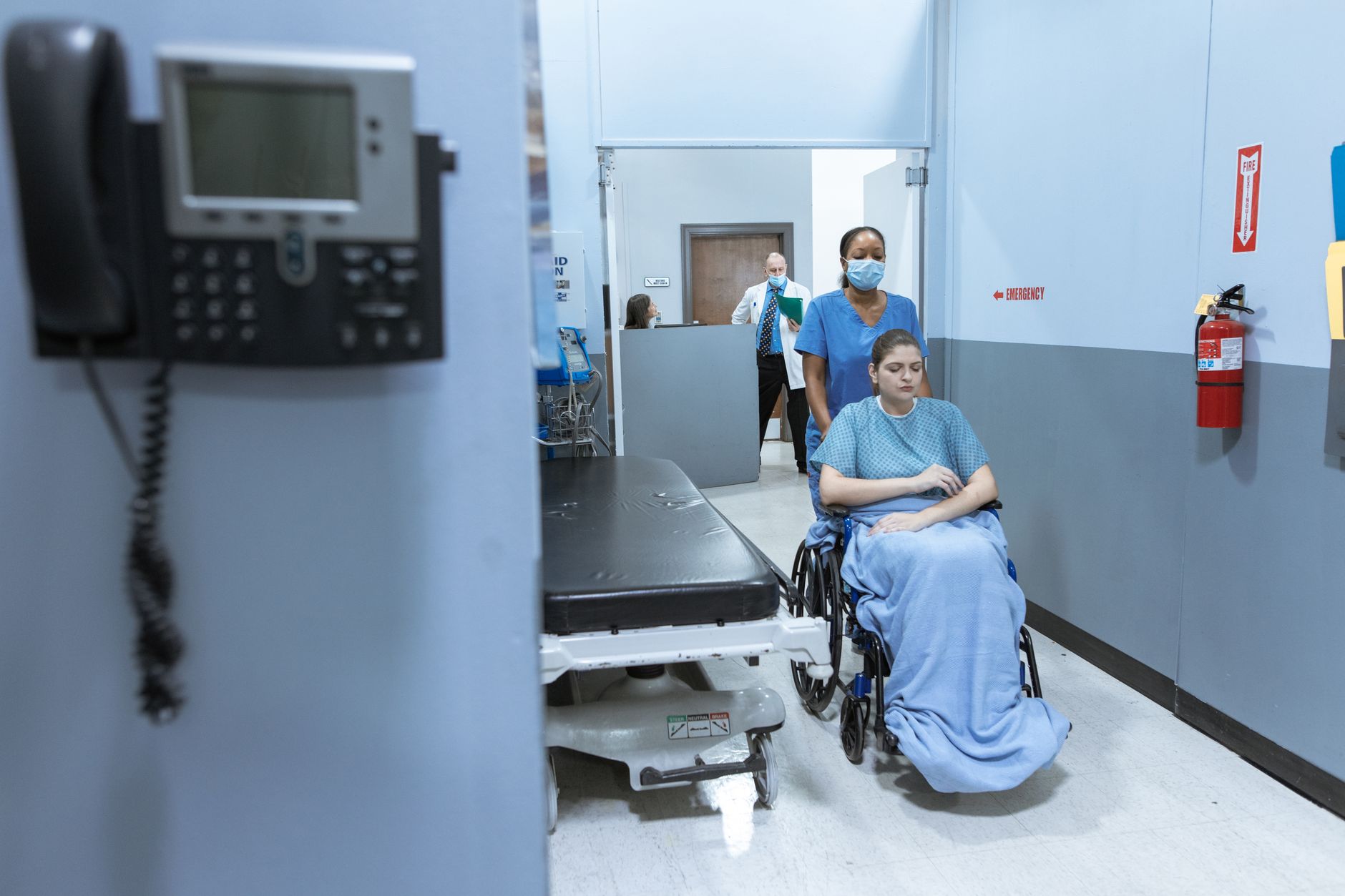
Throughput sets the ceiling. An industrial cleaning equipment guide estimates manual mop-and-bucket cleaning at 4,000 to 5,000 square feet per hour, and a 28-inch walk-behind scrubber at 13,009 square feet per hour. These are estimates, not measured jobs, and other published estimates run lower, so the baseline should be measured on your floor.
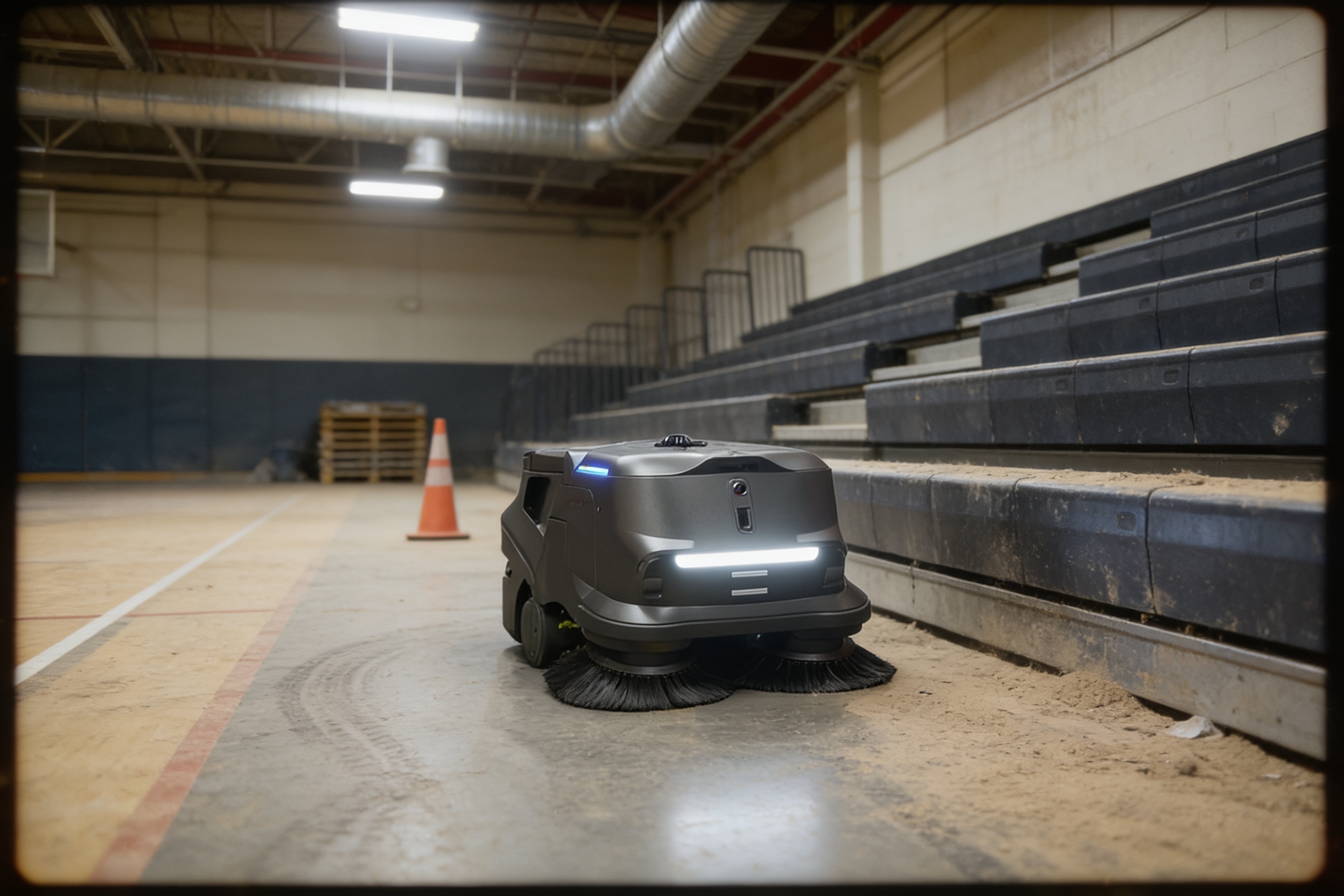
Autonomous scrubbers are rated for higher coverage under ideal conditions, but the working rate on a real floor is lower. Stops, turns, obstacles, charging and route planning all cut the usable time. Plan on the measured route time for your building, not on a manufacturer's ceiling.
The shift for a 10,000 square foot open floor shows the logic. Cleaned by hand at the guide's estimated 4,000 to 5,000 square feet per hour, the work takes roughly 2 to 2.5 hours of janitor time. The robot covers the same floor without operator time once the route is set, and staff spend brief periods checking the route and clearing faults instead. The table below breaks down the other tasks.
What changes the number up or down?
Floor area and layout come first. Open, flat, clear floors with few thresholds let a robot run long unbroken routes, which raises the share of hours it takes. Cluttered floors, many stairs or small rooms reduce that share, and those areas usually stay with staff.
Shift timing is the second lever. A building cleaned only overnight, when nobody works in the space, gives the robot a clean window. A building cleaned during business hours needs route planning around people, which can cut the usable hours. The local wage sets the value of each hour, so the same hours carry a value set by the local rate, not the national one.
Uptime is the third. When the robot is out for service, its hours return to staff, which trims the offset. Backup coverage and fast service response protect the number, so ask how each is handled before signing.
Does cleaning robot ROI include safety gains for janitors?
Manual cleaning carries real injury exposure. BLS reports 21,100 nonfatal injury and illness cases involving days away from work for janitors and cleaners, except maids and housekeeping cleaners, in 2020. Falls on the same level and overexertion are among the leading causes, and the incidence rate for this group was 157.4 per 10,000 full-time equivalent workers in 2019.
The wider picture is similar. BLS reports a total recordable case incidence rate of 2.3 per 100 full-time equivalent workers across all private industry in 2024, with an injury-only rate of 2.2 per 100, unchanged from 2023. No 2024 janitor-specific rate was located for this page, so the janitor figures above are the 2019 and 2020 baseline.
A robot takes over repetitive floor passes. It does not take over chemicals, ladders, stairs or spill response, so staff still need a written safety plan for those tasks. Treat any injury reduction as a safety benefit to measure, not as a line in the savings range.
What are the risks to the return and how do you avoid them?
The most common risk is over-counting hours. A plan that assumes the robot takes all floor work will show an offset that the first months of operation do not support. Count only the area and time the robot covers on a measured route, and check the result against the staff's real schedule.
A layout change after deployment is the second risk. New shelving, furniture or events can block routes and reduce the offset. Ask for a map update and route review whenever the floor changes. Staff reaction is the third. Crews who see the robot as a threat may stop reporting faults, which raises downtime. Explain which hours move and what the staff will do with the time.
Uptime is the last risk. A single unit with no backup means a service visit can idle the floor for a shift. Ask about response times, remote triage and whether a spare unit covers the gap, and write those answers into the quote.
What is the timeline from assessment to payback?
The path runs in a fixed order, and each step sets the next. Assessment and mapping come first, when the floor is measured and the cleaning schedule is recorded. The lease quote is built from those measurements. Once the lease is agreed, the robot is selected for the site, deployed and integrated, and staff are trained.
Go-live support follows, and the route and schedule are tuned over the first operating period. Payback begins when measured offset hours accumulate against the lease cost. Some sites prefer to start with one leased unit, which produces measured route data before a wider rollout. The timeline depends on the site and the quote, so ask for it during the assessment rather than relying on a standard calendar.
We pick the right robot for each site, lease it through financing, deploy and integrate it, train the staff and service it nationwide. One team owns the path from floor map to service call, which keeps the offset measurable from the start.
How do I get an exact figure from a free site assessment?

A free site assessment replaces estimates with measurements. Bring a floor plan, or let us map the floor on site. Share the cleaning schedule for each area and the staffing by shift as it runs today. The assessment measures robot-suitable floor area, identifies the tasks that stay with staff, and checks the local wage for this job against your schedule.
The output is a lease quote and a savings range built from your numbers. The payment is a fixed lease payment quoted after the assessment, with financing options and the maintenance and service terms written into the same quote, including on-site dispatch when needed. Ask what is included, and compare the savings range against the schedule you run today.
The range is still a range. Even a measured assessment cannot foresee every layout change, event or staffing shift, which is why the review after go-live matters as much as the quote.
Frequently asked questions
Put a robot to work in Bridgeport.
We walk your site, learn the job, and recommend the unit that fits. Then we quote the lease, deploy it, and keep it serviced.
Sources
- US Bureau of Labor Statistics, Occupational Employment and Wage Statistics (OEWS May 2024)
- U.S. Bureau of Labor Statistics, Occupational Outlook Handbook: Janitors and Building Cleaners
- U.S. Bureau of Labor Statistics, injury and illness snapshot: janitors and cleaners
- U.S. Bureau of Labor Statistics, Injuries, Illnesses, and Fatalities release, 2024
- U.S. Bureau of Labor Statistics, Bridgeport metro occupational employment and wages release
- Industrial cleaning equipment guide, industry blog