
The short answer
Cleaning robot ROI in Hartford, CT comes from the janitor and building cleaner hours a robot takes over, measured against a fixed robot lease payment quoted after a free site assessment. The government wage data on this page sets the value of those hours, and the share of floor work a robot realistically handles sets the offset. Savings are shown as a range, and the precise figure depends on floor area, shift pattern and the lease terms confirmed at assessment.
Key takeaways
- Hartford returns come from janitor and building cleaner hours that leave the schedule, not from guesses about headcount.
- A robot takes a share of floor work, usually the repetitive open-area passes, and that share sets the offset.
- Savings are a range that moves with floor area, foot traffic, shift timing and the lease quoted at assessment.
- Injury and staffing data support automating routine passes, but they do not prove a return on their own.
- A free site assessment turns the range into a figure for your building, using your own logged hours.
Run the numbers for your site
Auto-detected from your location - we use the real BLS wage here. Not right? Pick your city or state above.
What do you want to automate?
The robot runs the open floor overnight; your crew keeps detail and edges.
What return should a Hartford business expect from cleaning robots?
Cleaning robot ROI in Hartford, CT is mainly a labor question. A business pays janitor and building cleaner hours on every shift, and a leased robot can take over part of that work, usually the repetitive passes across large, mostly open areas. The return is the value of the hours that leave the schedule, less the lease cost, measured over the term of the lease.
Expect a range, not a single number. Hartford buildings differ in floor area, foot traffic, shift pattern and how much of the cleaning is already handled by a contractor or by staff. The ROI calculator on this page is pre-filled for Hartford and shows a savings range from the inputs you enter, and your site assessment then narrows it.
Where does the return come from in a Hartford building?
Most of the return comes from routine floor work that repeats on a fixed route. Corridors, open lobbies, back-of-house hallways, parking levels and open sales floors fit that pattern well, because a robot can follow a mapped path and cover the same ground each night without changing method.
The second source is coverage timing. Some buildings clean during business hours because no one is on site at night, or because daytime work disrupts tenants and customers. A robot can run a route when the building is empty, so the work happens without adding a shift. In that case part of the value is cost avoided, not only hours trimmed from an existing shift, and the math should show which one applies.
The return is weaker where the work is spotty, low traffic or detailed. Restrooms, glass, furniture, corners and edges still need a person, so a robot does not remove those hours. Count only the work the robot actually takes.
Median hourly wage, Janitors and Building Cleaners
$4,046
Monthly cost of one full-time worker in Hartford, CT, at the median wage plus payroll costs (an estimate, not a quote).
How does the ROI math and the hours offset work?
The basic math has three inputs. The first is the hours of janitor and building cleaner work the robot takes over each week. The second is the value of those hours, which the local wage for this job sets from the government wage data on this page. The third is the lease cost, quoted as a fixed robot lease payment after the site assessment.
The offset is the share of those hours the robot can realistically cover. If a route takes a crew a set number of hours and the robot can run all of it, the offset is the full route. If the robot covers the open areas but a person still does the edges and restrooms, the offset is only the open-area portion. Most sites land on a partial offset, and the savings range reflects that.
Net return is the value of the offset hours, minus the lease payment, plus any avoided cost of after-hours coverage. Keep the math honest by counting only hours that actually leave the schedule. Hours that move to another task do not count as savings until the task is removed or reassigned on paper.
| Task | Today | With a robot |
|---|---|---|
| Open corridor passes | a recurring share of each crew shift | the robot runs the mapped route, staff review the log |
| Open lobby and sales floor | a steady block of crew time every night | the robot covers open floor, staff check the edges |
| Pre-shift route setup | staff clear and prepare the path | a short status check and a clear path at shift start |
| Restrooms | detailed crew time on each visit | stays with staff, so not counted as offset |
| Glass, corners and furniture | detail work spread across the shift | stays with staff, so not counted as offset |
Task hours are not published on this page. Your site assessment logs actual crew hours by task, and the offset is set from that log.
What does the government labor data show for Hartford?
According to the Bureau of Labor Statistics Occupational Outlook Handbook, about 2.4 million people held janitor and building cleaner jobs in 2024. The same source projects 2 percent growth from 2024 to 2034, slower than the average for all occupations, and about 351,300 openings a year. Data USA reports about 2.24 million employed in 2024 for the same occupation. That is a different count that reflects its own method, so do not mix the two.
For the Hartford metro, WageDex, citing the May 2025 BLS release, lists about 8,980 jobs. The official BLS table for May 2020 listed 8,510 employed in the same metro. That 2020 count is useful for trend only. The local wage for this job comes from the government wage data panel beside this text, and that is the wage figure to use in your own math.
Read these counts as context. A metro's employment shows how common the work is in the area, not how many cleaners any one building needs. That is the question the site assessment answers.
How much floor work can a robot realistically take?
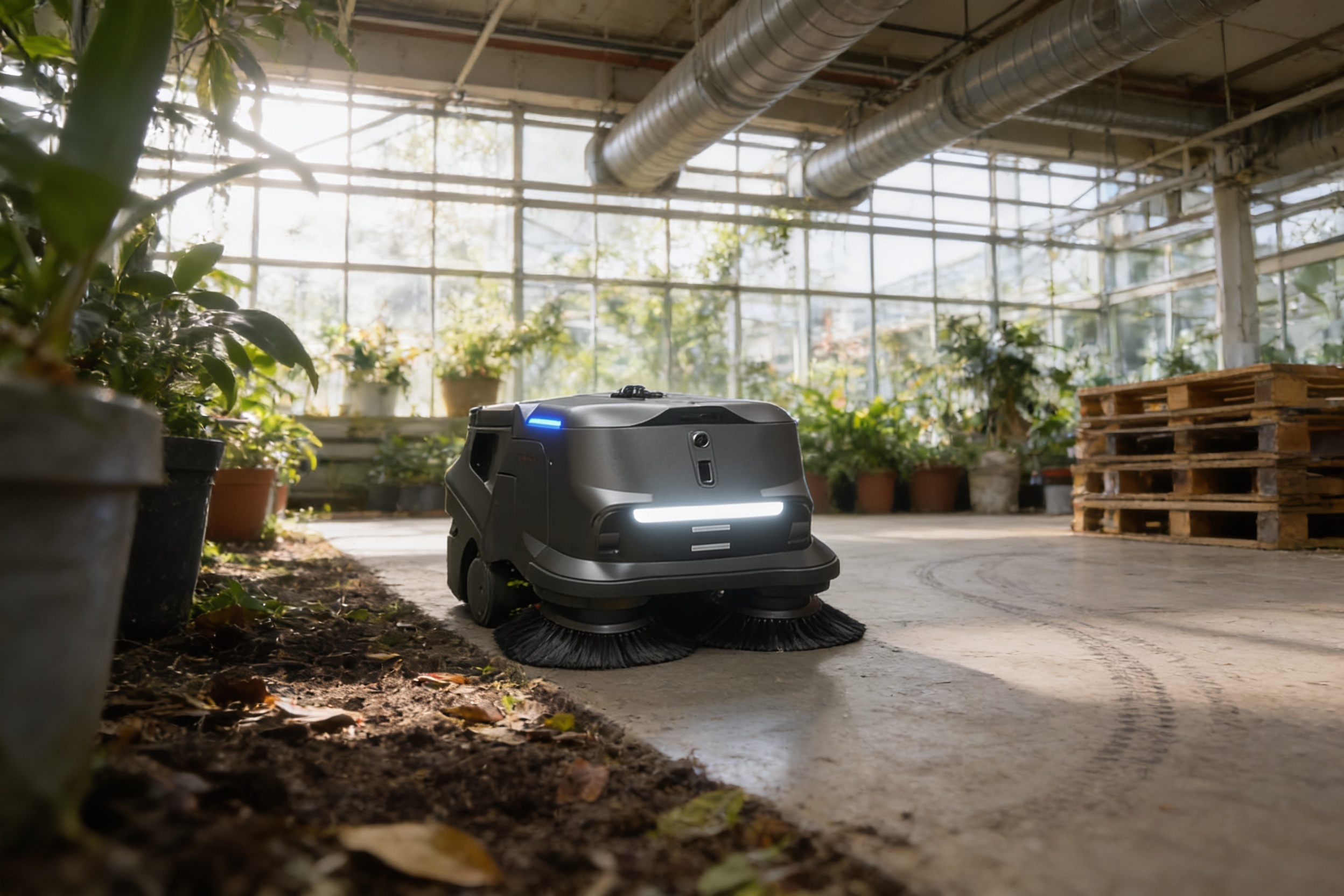
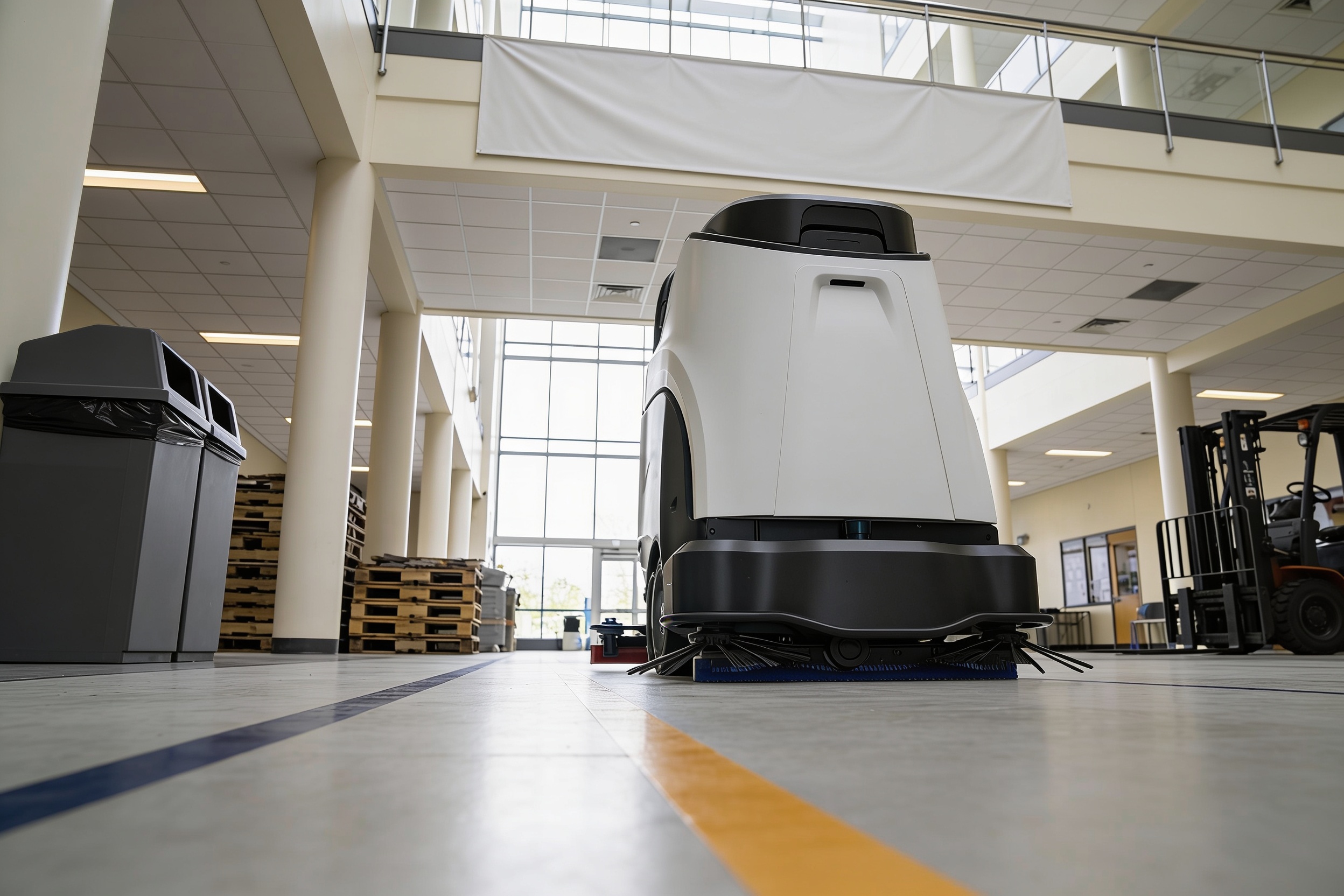
Realistic coverage depends on the floor. Large, open, mostly level areas with predictable traffic suit a robot best. Crowded corridors, frequent obstacles, stairs, thresholds and floors that change between carpet and hard surface push the share down, and sometimes take a route off the robot entirely.
Market research supports a cautious starting assumption. The AACEM and ISSA Autonomous Cleaning Survey, published in 2019 and reported by FMLink, described adoption as early stage, and about one third of non-adopters said they were somewhat likely to adopt within a year. That view is dated, but it fits a market where operators still test one route before they scale.
A practical method is to measure one route first. Log the hours it actually replaced over a stable stretch of operation, and set the offset from that log rather than from a brochure. Your site assessment gives you the starting map and the first route to measure.
What is a realistic timeline from assessment to payback?

The timeline runs in stages. It starts with a free site assessment, where the floor is mapped and routes are planned. Next come the lease quote and financing, then deployment and integration, staff training and go live. Payback is measured from go live, once the robot is taking a logged share of the work.
The early months are the slowest. Staff need time to trust the routes, exceptions still need a person, and the first routes often need adjusting after mapping. Returns firm up when routes are stable and the hours log shows a steady offset.
We cannot promise a specific payback period, because it depends on the offset you can prove and the lease terms quoted for your site. Ask for the timeline in writing with the quote, and check that it lists each stage above.
What are the safety and incident risks, and how do you reduce them?
Cleaning is a physical job with real injury exposure. According to the Bureau of Labor Statistics injury snapshot, janitors and cleaners in private industry had 21,100 cases with days away from work in 2020, an incidence of 191.6 per 10,000 full-time workers, up from 157.4 in 2019. Fewer repetitive passes on staff can reduce exposure, though these figures do not measure that effect.
Business Insurance, citing BLS, reported that the all private industry total recordable incidence rate fell to 2.3 per 100 full-time workers in 2024, from 2.4 in 2023. That is an all-occupation rate, so it is not a cleaning benchmark, but it shows the national trend is down.
Robots add their own risks. A unit moving through a crowded corridor, a cord left on the floor, a wet surface or a person stepping into the route can all cause trouble. Mapped routes, marked zones and a standing rule that staff clear the path before a run reduce those risks.
How do staff turnover and headcount affect the return?
Turnover is often cited as a reason to automate, but the public data is thin. BLS publishes job openings for this occupation, not a turnover rate, so a turnover figure should come from the employer's own records. Cleanlink reports that only a small share of building service contractors see turnover at the very high levels often quoted for the industry.
Turnover matters to the return in one practical way. Each new hire needs training time before a route runs cleanly, and a robot that holds its route steady reduces how often a route depends on one person. Use your own records to put a number on that, not an industry average.
On headcount, no source we reviewed gives a typical number of cleaners at one site of this kind, so the headcount field on this page is a planning floor of one. Your site assessment sets the real count from floor area and shift pattern, and the savings range updates from that count.
How do you get a precise figure from a free site assessment?
A free site assessment turns the estimate into a figure for your building. We map the floor, log the route and crew hours with you, identify which work the robot can take, and mark where people must stay. We are a robot integrator, not a single-brand seller, so the robot we recommend is the one that fits your floor and your work.
We then quote a fixed robot lease payment through financing, with deployment, integration, staff training and service terms in the same quote. Maintenance can be included, with on-site dispatch and a backup unit program if a robot goes down, and we service units nationwide. Ask for the quote in writing, with the terms shown line by line.
Bring your existing hours, floor plans, shift schedule and any staffing records. The more accurate those inputs, the tighter the savings range and the clearer the lease quote. That is the fastest way to find out whether a Hartford route is worth piloting.
Frequently asked questions
Put a robot to work in Hartford.
We walk your site, learn the job, and recommend the unit that fits. Then we quote the lease, deploy it, and keep it serviced.
Sources
- US Bureau of Labor Statistics, Occupational Employment and Wage Statistics (OEWS May 2024)
- Bureau of Labor Statistics, Occupational Outlook Handbook: Janitors and Building Cleaners
- Data USA: Janitors and Cleaners profile
- WageDex: Janitors and Cleaners, Hartford metro (citing May 2025 BLS release)
- Bureau of Labor Statistics, OEWS May 2020 table: Hartford metro
- Bureau of Labor Statistics, Injuries and Illnesses snapshot: Janitors and Cleaners 2016 to 2020
- Business Insurance, citing BLS 2024 injury data
- FMLink: AACEM and ISSA Autonomous Cleaning Survey
- Cleanlink: building service contractor turnover article