
Key takeaways
- Peak-season pallet moves are where autonomous forklifts free up crews at a coffee warehouse first.
- Repeatable routes between receiving, storage and roasting suit an autonomous machine well.
- Hours of travel saved per shift are a planning range to test, not a promise.
- The model is a robot plus a smaller trained team, not zero staff.
- The lease is quoted after a free site assessment, so the fit comes before the commitment.
How can autonomous forklifts for coffee warehouses help?
Autonomous forklifts for coffee warehouses take over the repeatable pallet moves that tie up your drivers during peak season. Green coffee arrives on heavy palletized sacks, and those pallets travel between receiving, storage and the roasting floor along the same routes day after day. That repetition is what makes the work a good match for an autonomous machine.
The practical benefit is that your crew spends less time driving empty aisles and waiting on pallets, and more time on work that needs judgment, such as sampling, roast planning and quality checks. The roasting schedule stops depending on driver availability. Pallets arrive where they need to be, when they need to be there.
Service Robot Co. is a US commercial robot integrator. We pick the right robot for your site, lease it through financing, deploy and integrate it, train your staff and service it nationwide. The payment comes in a quote after a free site assessment, so you see the fit before you commit.
What makes peak season hard at a coffee warehouse today?
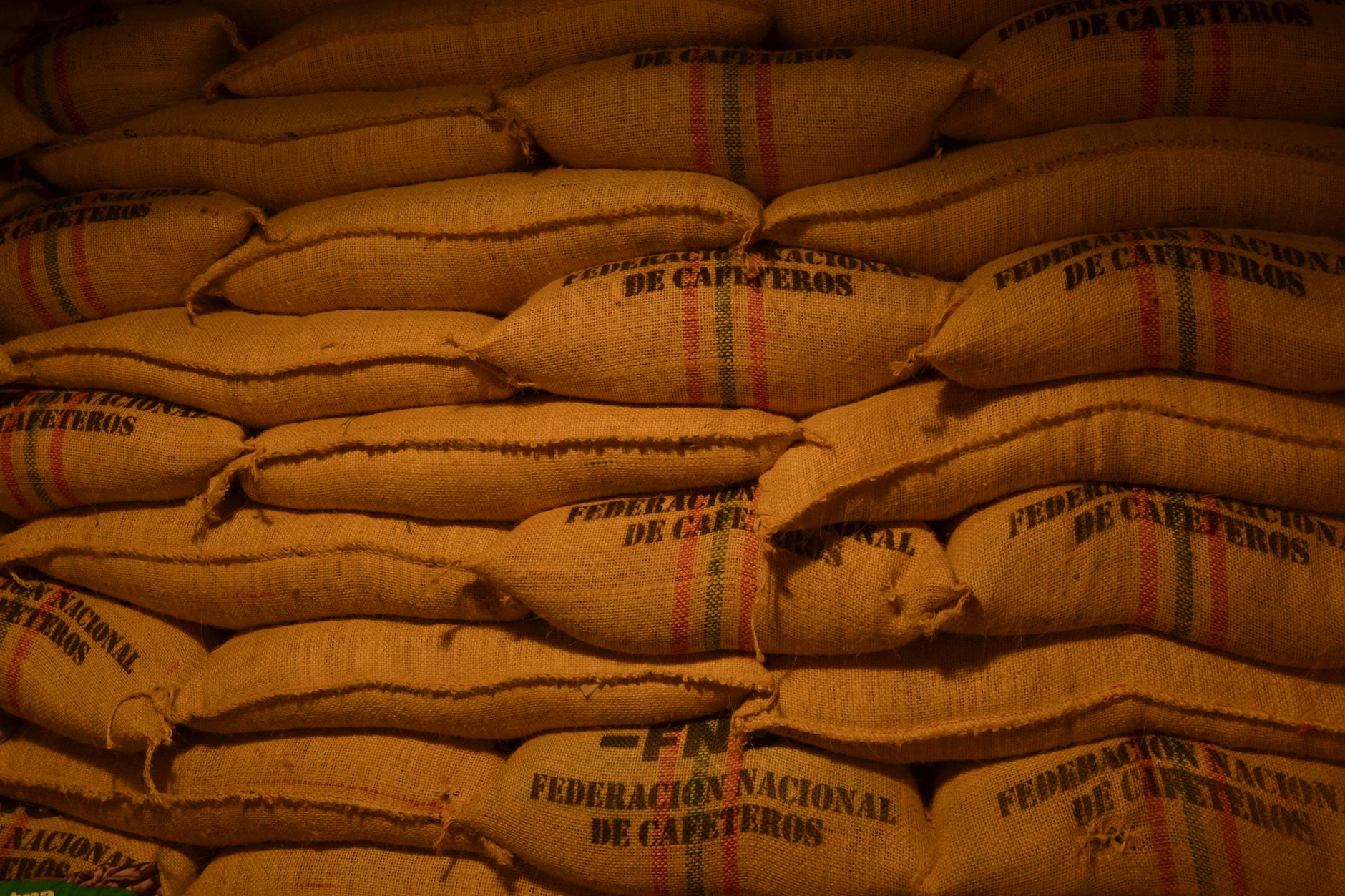
A coffee warehouse runs on a tight chain. Green coffee comes in, gets stored, moves to the roasting room and goes out as roasted product. Green coffee is commonly shipped in jute sacks. According to a trade publication, 60-kilo (132-pound) jute, sisal or burlap sacks are stacked on kiln-dried 50 by 60 inch boards so air can circulate. Each move is heavy and needs a qualified driver.
Peak season compresses all of it. Receiving bunches up, pallets wait in staging, and roasters can wait on the next batch. Staffing makes the squeeze worse. According to Instawork's 2025 State of Warehouse Labor report, a vendor-published survey, 50 percent of respondents said staffing was easier in 2025 than in 2024, up from 38 percent the previous year. The same report still names turnover and difficulty finding qualified workers as ongoing pain points.
Workforce pressure is not only a coffee problem. A 2022 survey reported by Supply Chain Dive found that labor shortages, turnover and retention were among executives' top peak-season concerns, cited by 48 percent. The survey is dated, but it describes the same pressure that a pallet route feels first.
Where do the savings come from?
Most of the savings come from driver hours, not from cutting people. A vendor infographic states that one automated forklift can save 3 to 4 hours of traveling time per 8-hour shift. That figure is an estimate, not a documented case, so treat it as a planning range and test it on your own routes during a pilot.
Saved travel hours turn into work your crew can do instead, and in a coffee warehouse the most valuable hours keep roasters fed during the busy weeks. Before you decide, count three things: the hours your drivers spend moving pallets per shift, the number of shifts in peak season, and the open roles you carry going into that season.
Labor is also a hiring question. The Bureau of Labor Statistics projects about 1,008,300 annual openings for hand laborers and material movers, mostly from workers transferring or retiring. Those openings are national, but your gaps are local. Every open shift on a pallet route is a move someone else has to make.
What are the main benefits?
The benefits show up in four places, and each one maps to a pain point you already feel.
- Pallet moves keep running during peak season without pulling drivers off roasting support work.
- Fixed routes between receiving, storage and roasting make travel time more predictable from shift to shift.
- Experienced drivers move into supervision, sampling support and exception handling.
- Dispatch works from a schedule instead of reassigning drivers each time a batch lands.
How does the robot work day to day?
Before go-live, the site is mapped and routes are set, from the receiving dock to the racking and from storage to the roasting room. Your staff then send tasks through the schedule you already run. The robot picks up the pallet, carries it along its assigned route and sets it down at the marked location.
Between tasks, the robot charges and waits in its assigned spot. Exceptions, such as a pallet out of position or an aisle blocked by a delivery, go to a person on the floor. The crew keeps the final say on what moves and when.
The day has a rhythm. Early moves clear receiving before the roasting room starts. Midday moves keep the roasters fed. Afternoon moves stage finished product for dispatch. Service Robot Co. trains your staff to manage this rhythm and dispatches a technician on site if something needs attention.
Which areas of a coffee warehouse does it work in?
Autonomous forklifts for coffee warehouses work best where the routes repeat, so start with the zones that generate the most pallet moves in peak season. Expand once the first routes run cleanly and your crew trusts the handoffs.
The zones below are the areas where the robot typically works. Each one connects to the next, so the pallet keeps moving from the truck to the roaster and out the door.
How do autonomous forklifts work alongside existing staff?
The robot does not replace the whole crew. It works next to a smaller team, and the team handles the work that needs a person: inspecting sacks, sampling, resolving exceptions and managing the roasting schedule.
Labor data points the same direction. The Bureau of Labor Statistics projects 4 percent growth for hand laborers and material movers, with 258,400 added jobs. Material moving machine operators, about 867,700 jobs in 2024, are projected to grow 1 percent, slower than average, and industrial truck and tractor operators account for 792,500 of those jobs. These are national projections, not a forecast for your building, but they show that experienced driver growth is slow.
Plan the handoff before go-live. Name who owns exceptions on each shift, and train at least two people per shift to handle the robot's alerts. A robot plus a smaller team is the goal, and your operation should still run on a bad day.
What can the robot not do?
It cannot judge coffee. Sampling, roast profiles, cupping and decisions about green lots stay with your people. It also cannot make a route work when the layout changes every week, because the savings depend on repeatable paths.
It needs a workable floor and clear aisles. Blocked paths, damaged pallets, uneven slabs and loads that do not match the planned positions will need a person. Plan for those exceptions rather than hoping they stay rare.
It is not a substitute for a service plan. The robot needs maintenance, charging and software care, and Service Robot Co. services robots nationwide. Ask about response times in the quote, since they depend on your location and your service window.
How do you get started?
Start with a free site assessment. We walk the warehouse, map the pallet routes between receiving, storage and roasting, and identify the zones where moves are most frequent. The assessment shows whether the robot fits your floor before anything is decided.
Next comes the robot selected for your site and its lease through financing. The payment comes in a quote after the assessment, so you can compare it against your own peak-season numbers. A pilot with one unit in one zone is a common way to start, and it lets you expand based on results.
Deployment and integration follow, with training for your staff and go-live support. Service Robot Co. selects the robot, deploys and integrates it, trains the team and services it nationwide. If you want to see what the numbers look like for your own warehouse, the assessment is the place to begin.

Frequently asked questions
Want an autonomous forklift at your coffee warehouse?
Tell us about your site. We will recommend the robot, quote the lease, and keep it serviced.
Sources
- U.S. Bureau of Labor Statistics, Material Moving Machine Operators
- U.S. Bureau of Labor Statistics, Hand Laborers and Material Movers
- 2025 State of Warehouse Labor report (vendor-published)
- Supply Chain Dive press release, 2022 peak-season survey
- Vendor infographic on automated forklift travel time (estimate)
- Trade magazine, jute sack and pallet board description
- Green coffee sack size reference