
Key takeaways
- Seasonal peaks, not average volume, are where pallet moves tend to break down.
- Repeatable pallet routes are the best fit for a steady autonomous fleet.
- SEC filings show the busy months carry most of a pool supply distributor's net sales and operating income.
- The robot works beside a smaller crew, never in place of the whole team.
- Start with a free site assessment, then review the lease quote.
Can autonomous forklifts for pool supply distributors handle the peak season?
Autonomous forklifts for pool supply distributors earn their keep in one situation: the weeks when inbound trailers, outbound orders and replenishment pulls all land on the same crew. A pool supply distributor runs a stock cycle that climbs hard in the warm months and then drops off, so a building can move from manageable to overloaded within a few weeks.
The short answer is yes, for the right kind of route. A leased autonomous forklift keeps pallet moves steady when the crew is stretched, repeats the same trips on schedule, and frees experienced operators for work that needs judgment. It does not fix a building with no clear route plan, and it does not replace the people who run the floor.
The rest of this page explains where the pressure comes from, what the robot does each day, where it fits in the building, and how a distributor moves from a site visit to a lease quote.
Why does the peak hit pool supply distributors so hard?
According to the fiscal 2017 annual report filed with the SEC by a publicly traded pool supply distributor, the second and third quarters produced about 62% of net sales and 83% of operating income. That filing is several years old, so treat it as background rather than a forecast.
The quarterly reports from the same company describe the mechanics. According to its 10-Q filings, peak accounts receivable collections fall in June, July and August, borrowing peaks in the second quarter, and inventory and payables build over the winter ahead of the season. Weather can shorten or lengthen the season, and late springs or early falls cut it short.
On the operations side, receiving, put-away, replenishment and outbound loading all compress into a few months. Overtime, temporary hires and pallets staged in the aisles become the normal state, and the people moving pallets are often the same people who should be picking orders and checking for damage.
What are the main benefits for a distributor?
The biggest benefit is steadier pallet movement in the months that matter most. An autonomous forklift runs the same route at the same pace whether it is a slow week or the third week of a rush, so reserve, pick and staging moves stop being the first thing to slip.
Second, it gives you a predictable floor. Routes run on a set map with defined pickup and drop points, which makes it easier to see how many moves a shift actually needs and where the bottleneck sits.
Third, it can reduce foot traffic in shared aisles. OSHA's Region I directive on powered industrial trucks identifies pedestrians being struck as the leading cause of lift-truck-related work fatalities. A separate OSHA directive cites older national estimates of about 85 forklift fatalities per year, 34,900 serious injuries and 61,800 non-serious injuries, with about 1.5 million workers operating more than 855,900 powered industrial trucks. Those estimates are dated, so use them as background.
How does the robot work at a distributor day to day?
The day starts with the site map, not the robot. The distributor's team marks the routes that repeat: trailer to staging, staging to reserve, reserve to pick face, and finished orders to outbound doors. The fleet works through those routes while people handle the exceptions.
During the shift, the unit moves pallets between defined points and stops at doors, cross aisles and charging spots. A supervisor watches the route list and clears blockages. Staff load and unload trailers, deal with damaged or mislabeled pallets, and step in when a load does not match its route.
Charging is scheduled around the busiest windows. Put the charging plan into the first conversation, because a unit that charges during the rush is not moving pallets when you need it most.
Which areas of a distributor does the robot work in?
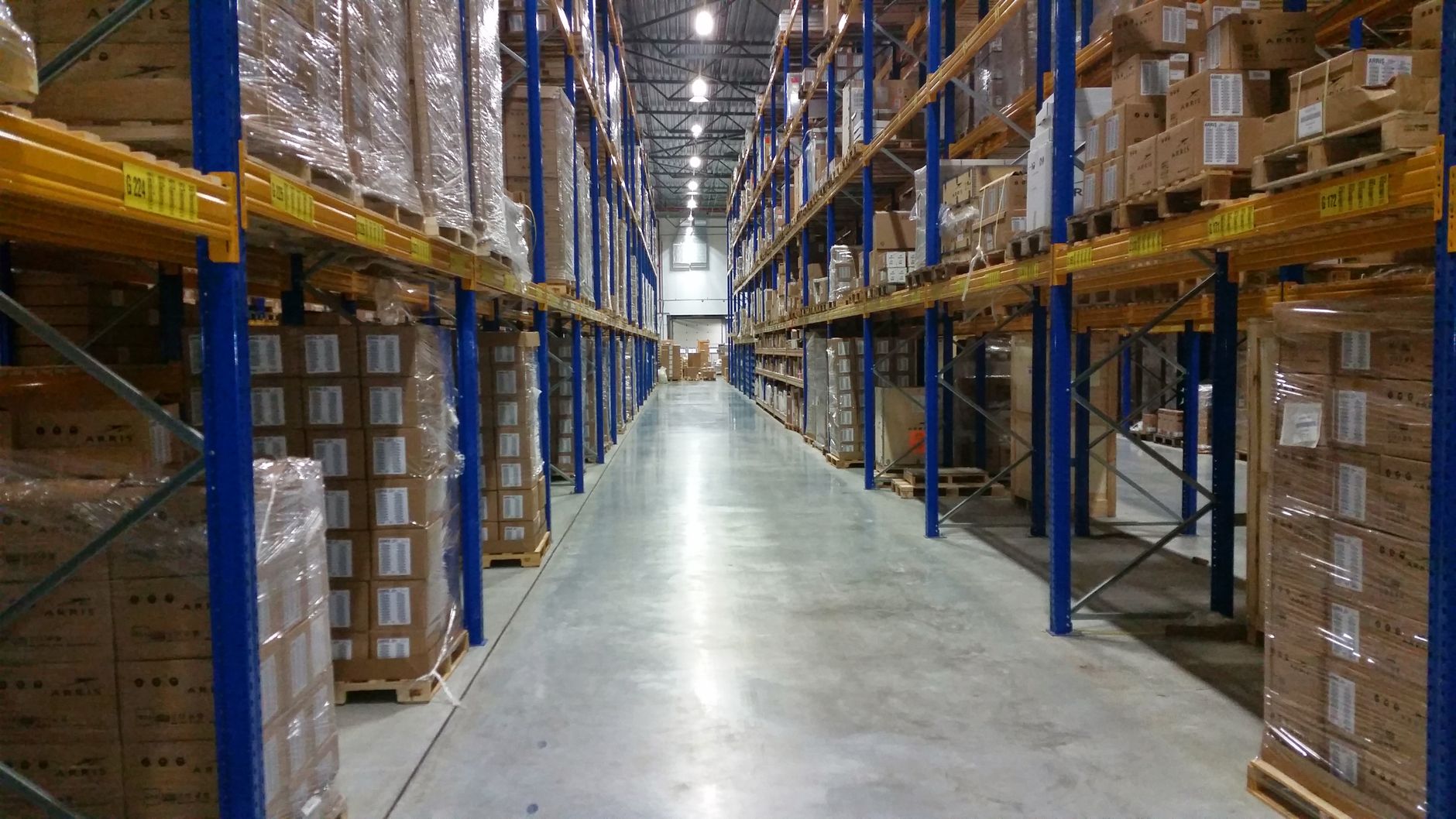
The robot works where pallets move along repeatable paths. For most distributors that means the inbound dock, reserve racking, pick aisles, the staging lanes near outbound doors, trailer loading and any covered overflow area. According to the fiscal 2025 annual report filed with the SEC by a publicly traded pool supply distributor, the network counted 81 domestic sales centers in California, 67 in Florida and 60 in Texas, out of 408 domestic centers.
Some areas are a poor fit. Mixed or unmapped floors, tight spaces where the unit cannot pass, and open yards with uneven ground call for a closer look first. The free site assessment checks aisle widths, floor condition, door heights and charging locations before any quote.
How does the robot work alongside existing staff?
The robot does not work alone, and it does not replace the team. A leased unit runs with a smaller crew that still includes people who load trailers, handle exceptions, check damage, supervise the route list and make the calls that need experience.
The change is in who moves pallets during the rush. Experienced operators shift from repeating the same reserve-to-pick trips to supervising, loading and fixing the problems that break routes. That is the part of the work most distributors find hardest to staff in a peak month.
Service Robot Co. trains the people who will supervise the fleet, so the operator who knows the building also knows how to clear a blocked route, check a charge level and call for service.
What drives the savings and labor hours?
The savings come from hours, not from a promise. Overtime, temporary shifts, time spent waiting on trailers and pallets that sit in staging are all measurable, and they are the numbers to track before the lease starts and after the first season.
Published vendor case studies report labor hours saved, but few are independent and none match your building's route count, shift pattern or aisle layout. That is why we measure your own hours before we quote, and why a figure from another site should be read as a question to test, not an answer.
According to the Bureau of Labor Statistics, industrial truck and tractor operators are a tracked national occupation with official wage data. Your own payroll and shift records are the right baseline for the labor side of the math.
What can an autonomous forklift not do?
The robot has limits, and a distributor should know them before the first site visit. It performs best on repeatable routes and does poorly with anything that needs a decision on the spot.
Plan for backup. When a unit is down during the busiest week, the crew still has to move pallets, so decide in advance who covers which routes. Spare unit coverage and service dispatch narrow that gap but do not remove it.
- Handle unmapped or changing routes without a new map and a short re-test
- Take on a load that does not match its route, such as a damaged or unlabeled pallet
- Cover the whole peak alone, since a single unit moves one load at a time
- Work outdoors in severe weather or on uneven ground, or judge hazardous storage rules
How does a distributor get started?
Start with a free site assessment. The visit maps your aisles, door heights, floor condition and charging points, and it identifies the two or three routes that repeat most often in your busy months.
From there, Service Robot Co. chooses the right robot for the site, leases it through financing, and handles deployment and integration. A distributor can begin with one leased unit on the most repeatable route, then decide on more after the first season shows where the value sits. The payment comes in the quote, which is sent after the site assessment.
Deployment is followed by training for your staff and go-live support, and the service team is available nationwide for dispatch and repair. Ask for the service terms, spare unit coverage and dispatch times in the quote, so the peak season plan is written down before the first trailer arrives.
Frequently asked questions
Want an autonomous forklift at your pool supply distributor?
Tell us about your site. We will recommend the robot, quote the lease, and keep it serviced.
Sources
- SEC Form 10-K, fiscal 2025 annual report
- SEC Form 10-K, fiscal 2017 annual report (background, dated)
- SEC Form 10-Q, 2017 quarterly report (background, dated)
- OSHA directive CPL 04-00-023e, powered industrial trucks (dated estimates)
- OSHA Region I directive CPL 04-00-023D, powered industrial trucks
- Bureau of Labor Statistics, OES May 2023, industrial truck and tractor operators