
Key takeaways
- Autonomous forklifts take the repeated pallet runs that tie up experienced operators at tire distributors.
- The U.S. Bureau of Labor Statistics counted 640,950 industrial truck and tractor operator jobs in May 2020.
- A 2025 peer-reviewed study found autonomous forklifts averaged fewer working hours per day than manual ones in its setting.
- The robot works best as part of a team, with leads and operators still handling exceptions.
- Start with a free site assessment and one leased unit on the busiest routes.
How can autonomous forklifts benefit tire distributors?
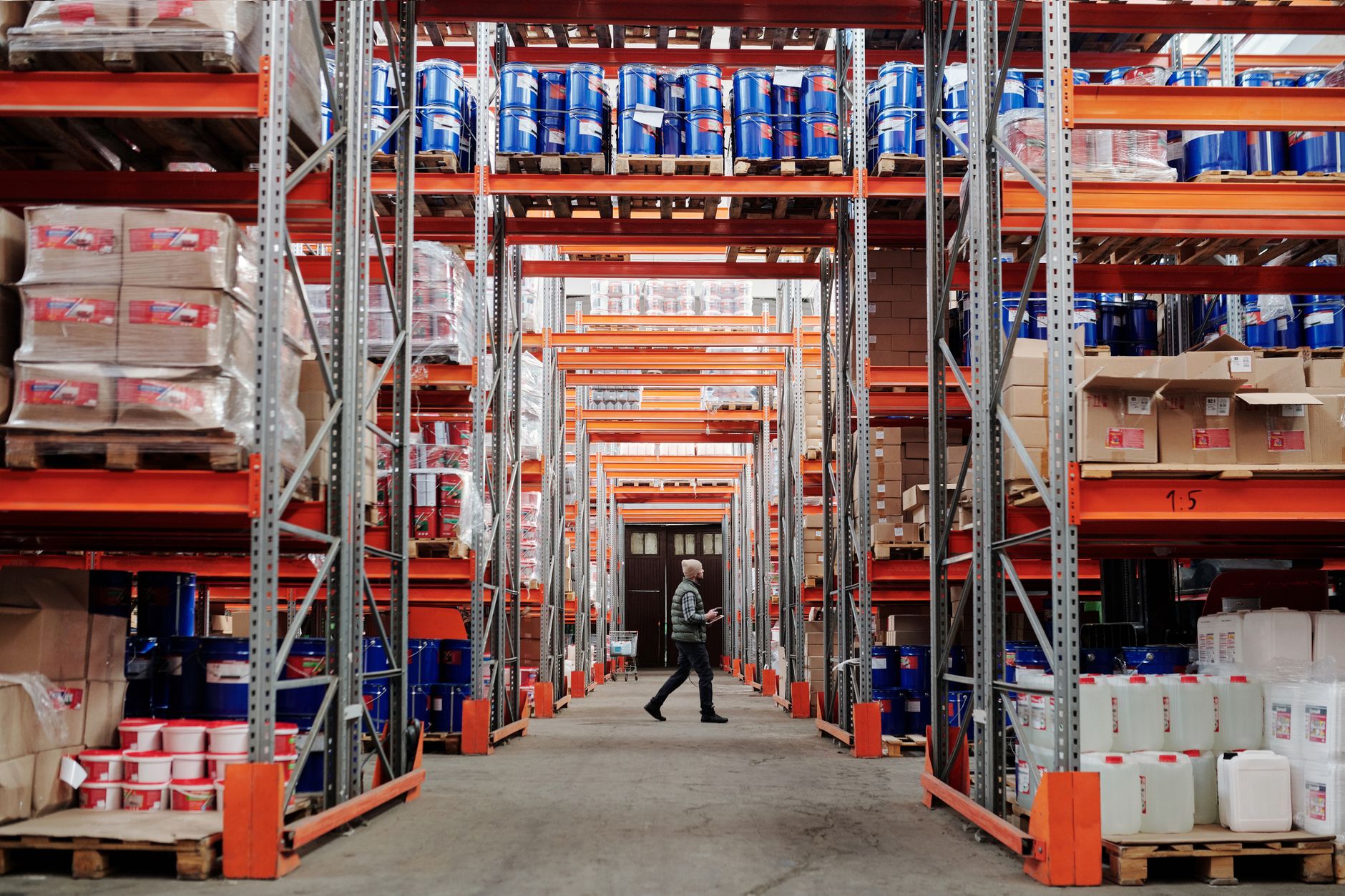
Autonomous forklifts for tire distributors take over the repeated pallet moves that use up experienced operator hours. A tire warehouse moves heavy stacks from trailers to staging lanes, from lanes into racks, and from staging out to delivery trucks, all day, along the same routes. A robot that follows fixed paths can run many of those moves while trained staff handle the exceptions.
The main benefit is coverage. When a qualified operator is hard to hire or a shift opens up, the line does not have to stop. The robot keeps running its scheduled routes, and your team stays on the tasks that need judgment, such as setting aside a damaged stack or building a mixed outbound load.
This is not a plan to remove the people who run the building. It is a way to put one robot on the work that would otherwise pull a skilled operator away from more varied jobs. The economics depend on your routes and your labor, so the rest of this page explains how to test that on your own floor.
What slows a tire distributor down today?
Tire distribution runs on many sites and many deliveries. According to LocationsCloud, a location analysis of the largest U.S. tire dealerships, the top 10 chains together run more than 7,090 locations. One chain in that set runs 2,200 or more, another runs 1,300 or more, and a third runs 1,100 or more. Modern Tire Dealer's MTD 100 ranks the largest U.S. tire dealerships by outlet count, which is a useful map for anyone studying the segment.
The labor side is the harder part. The U.S. Bureau of Labor Statistics describes industrial truck and tractor operators as workers who move materials with forklifts and similar trucks in warehouses, storage yards and factories. In May 2020 it counted 640,950 of these jobs nationally. A tire warehouse draws on that same pool of people, and one empty operator shift can hold up a trailer, a staging lane and an outbound load at the same time.
Tire stacks are heavy, and the moves repeat. Pallets come off a trailer, go to a lane, move into racks, and later come back out for a delivery route, usually along the same aisles and at similar times of day. Those repeated runs are where a fixed-path robot fits best, and where a skilled operator's hours are easiest to free up.
What are the main benefits for a tire distributor?
The first benefit is steadier flow. A robot on a mapped route runs the same path at the same pace each time, which makes receiving, putaway and load-out easier to schedule. Your lead can plan the dock around known run times instead of around who happens to be on shift.
The second is staffing resilience. When an operator calls out, the robot still runs its scheduled routes, and the smaller crew covers only the exceptions. Work that would otherwise stop the dock can keep moving at a lower level until the shift is filled.
The third is focus. Experienced operators spend less time on repeated transfers and more time on work that needs them, such as checking loads, resolving damaged stock and building mixed orders. That matters in a building where the same people know the stack patterns and the customer accounts.
How does the robot work day to day?
Day to day, the robot runs routes that were mapped during the site assessment. Each route sets its start point, drop lanes and stop locations. Staff load each pallet at the start point, confirm the destination, and release the run from the lead's terminal.
The robot slows and stops when a person or object enters its path. A lead still watches the floor, and a manual forklift stays on hand for anything the route does not cover. The robot handles the scheduled runs, and staff decide what goes on the schedule.
At the end of a shift, the run log shows what moved, what stopped and why. Those records help the lead spot a slow aisle or a poor stack pattern, and they give the service team a clear starting point when something needs attention.
Which areas of a tire warehouse does it cover?
Most of the value comes from a handful of repeated routes. The robot suits areas where pallets move in the same direction, along the same aisles, many times a day. It is a poor fit for places where every move is a one-off.
Six areas usually make sense for a tire distributor's building. Each one has its own pattern, so each gets its own route, as shown below.
Routes are set during the site assessment. Many sites start with one or two routes, then add more once the team has learned the pattern and the run logs confirm it.
How does it work alongside your existing staff?
The robot is never meant to run a building alone. Think of it as another set of hands on repeated runs, with trained staff still doing the work that needs judgment. A realistic site keeps its leads, its experienced operators and at least one manual forklift on the floor.
Training matters more than most managers expect. Service Robot Co. trains the staff on the route map, the start and stop routine, the fault messages and the daily checks, so people on the shift can manage the robot without calling for help on every run.
A smaller team is the usual end state, not zero staff. Some sites need fewer operators on the repeated runs, while leads and exception handling stay in place. The mix depends on how many routes you automate and how many shifts you need to cover.
What drives the savings, in hours and labor?
Savings come from hours, and from the skilled time those hours free up. Start by counting the hours your crew spends on repeated pallet moves each shift, and the operator shifts that go uncovered each week. Those two numbers set the value of any route you automate, and no single percentage holds across every dock.
The best hours evidence so far is mixed. A 2025 peer-reviewed study compared autonomous forklifts with manual ones and found the autonomous units averaged about 4 hours of total working time per day, while the manual units averaged about 5 hours. In that setting the manual trucks did more, so a robot does not win on hours by default.
Where a robot does pay, it tends to show up in coverage. A route that runs on schedule while an operator is out, and a lead who spends less time on repeat transfers, both appear in the run log and in the weekly overtime. Ask for your own site numbers before you trust any headline figure, including ours.
What can autonomous forklifts not do?
The robot follows its mapped routes. It does not reason about a damaged stack, a mixed load that needs a decision, or a pallet that arrived out of position. Those jobs stay with staff, and a site that plans for them keeps a manual forklift on hand.
Routes also need upkeep. Aisles change as inventory shifts, and a route that worked last quarter may need a new map. Plan for regular route reviews and for the floor to stay clear, since a cluttered aisle slows every run.
Raw speed is not the pitch either. The same 2025 study found manual units logged more working time per day, so plan for the robot to fit a schedule rather than outwork a skilled operator. Its value lies in steady repeated runs and in covering the gap when a shift is open.
How do you get started with a site assessment?
Start with a free site assessment. Service Robot Co. is a US commercial robot integrator. We pick the robot that fits the site, lease it through financing, deploy and integrate it, train your staff, and service it nationwide. During the assessment we map the routes, check clearance and traffic, and review the floor with your leads.
A practical first step is a robot pilot program with one leased unit on the two or three routes that repeat most often. That lets your team test the route map and the staffing pattern before any wider deployment, and a phased rollout keeps the rest of the building running. Go live support covers the first weeks, while routes are tuned and staff settle into the routine.
Service stays with us after go live. We handle maintenance through on-site dispatch when a fault needs a technician, and remote triage for faults that can be checked from a distance. The lease is quoted after the site assessment, and the payment comes in that quote, with the financing terms in writing before you commit.
Frequently asked questions
Want an autonomous forklift at your tire distributor?
Tell us about your site. We will recommend the robot, quote the lease, and keep it serviced.
Sources
- U.S. Bureau of Labor Statistics, Occupational Employment and Wages, May 2020
- U.S. Bureau of Labor Statistics, Occupational Employment and Wages, May 2023
- LocationsCloud, top 10 US tire dealership location analysis
- Modern Tire Dealer, MTD 100 2026
- Peer-reviewed 2025 study on autonomous and manual forklifts (Wojtynek et al.)