
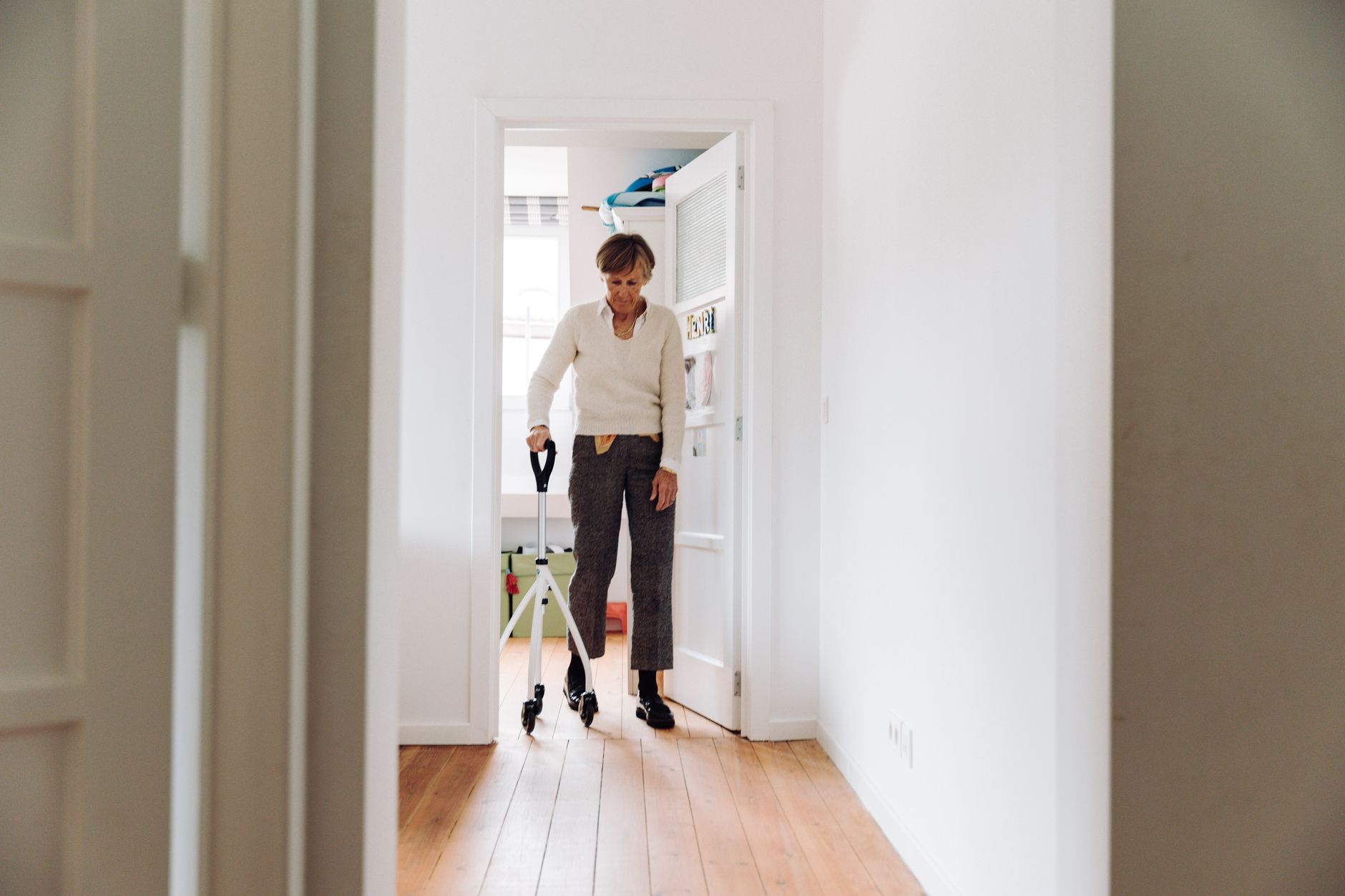
The short answer
In the cleaning robot vs night janitor question, a robot makes sense for the repetitive hard floor routes in a senior living community, such as corridors, lobbies and dining rooms, that can run on a schedule overnight. It does not make sense where the night role also covers resident response, spills, linen, carpet or wet areas, because those need a person. The practical answer is one robot with a smaller night team, never zero staff.
Key takeaways
- A robot fits the repetitive hard floor routes in corridors, lobbies and dining rooms, not the whole night role.
- Spills, carpet, wet areas, linen and resident response stay with people.
- The labor case has to rest on your own night log, since no verified senior living shift hour figure was found.
- Plan one robot with fewer night staff, never zero staff.
- The lease payment is quoted after a free site assessment of your floors, routes and hours.
Cleaning robot vs night janitor at senior living communities: which makes sense?
A cleaning robot makes sense at a senior living community when the night work is mostly repetitive floor care on hard surfaces. Corridors, lobbies and dining rooms are the usual candidates, because the same routes get cleaned at the same times and a robot can run them on a schedule. It makes less sense when the night janitor is also the person who answers spills, moves furniture, handles linen or cleans carpet and wet areas.
The honest answer is usually a mix: one robot working the route based floors, with the night team kept at a size that still covers residents, spills and the rest of the building. Replacing every night staff member with a machine is not the goal, and a community that tries it will likely end up calling people in anyway.
What matters most is your own building: the hard floor square footage, the number of routes you run each night, and the night hours you actually pay for.
What does a night janitor actually do in a senior living shift?
In most communities the night janitor works through a fixed set of tasks rather than one job. Typical work includes sweeping and damp mopping corridors, cleaning the lobby and entry, resetting the dining room after the last service, emptying bins, restocking supply closets and cleaning restrooms. Each task repeats every night, which is why it suits a route, but the same person also answers an unexpected spill or a soiled surface found in the early hours.
The Bureau of Labor Statistics notes that most janitors learn the work on the job and usually work indoors. That fits a senior living building, where the floors are many and the route, not any single room, sets the workload.
Median hourly wage, Janitors and Building Cleaners
$4,041
Monthly cost of one full-time worker, at the median wage plus payroll costs (an estimate, not a quote).
Which parts of the night work can a cleaning robot take, and which can it not?
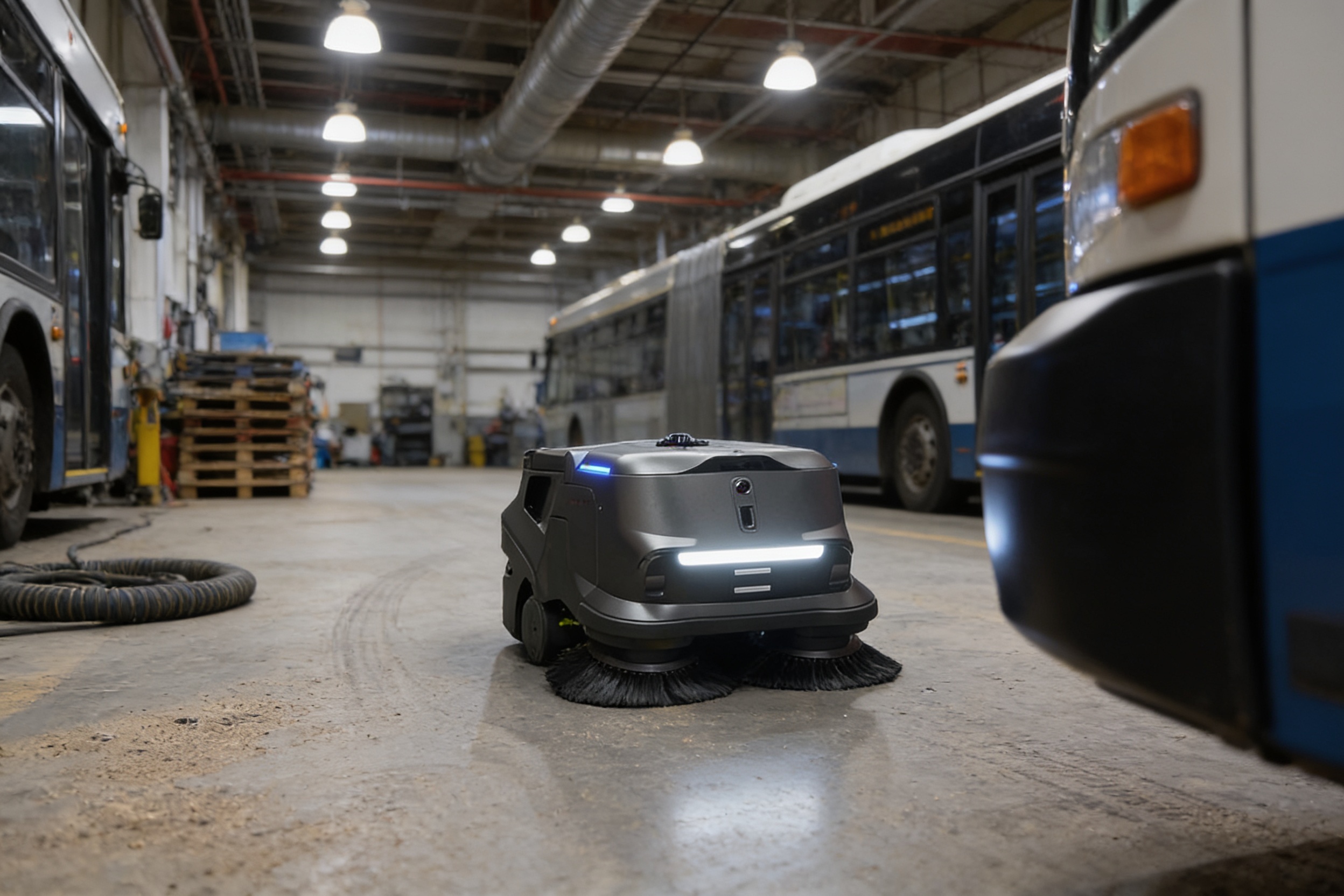
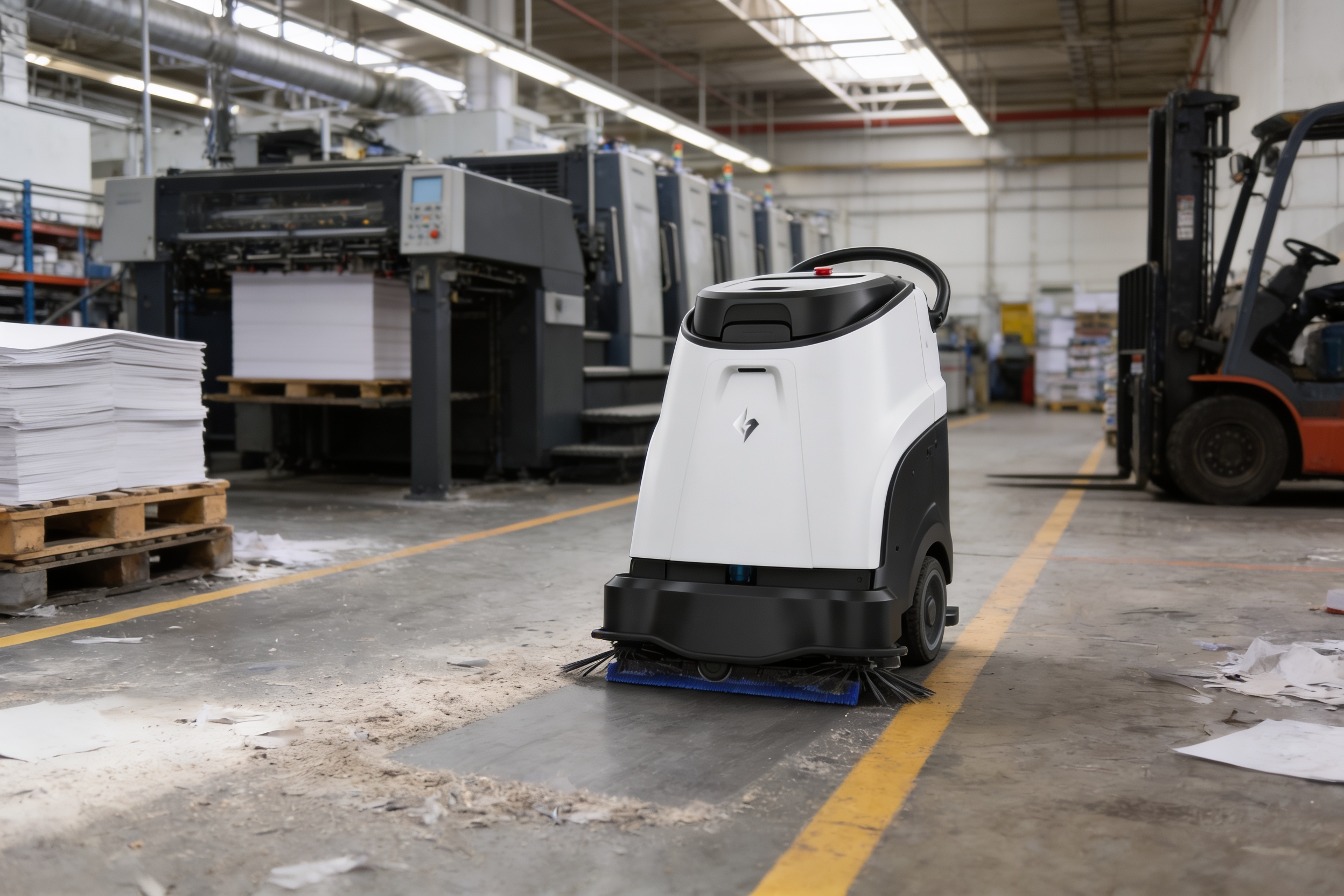
A cleaning robot handles the continuous floor work on hard surfaces: scrubbing or sweeping the same corridor, lobby and dining room floors on a timed route. It runs without someone pushing it and can finish the route while the building is quiet. The work is repetitive, and repetition is what a route based machine does well.
It cannot take the parts of the shift that need judgment, hands or a resident interaction. Someone still has to respond to a spill, move furniture for an event, handle linen and waste, clean carpeted rooms, wet bathrooms and kitchens, and report a broken door or a leak. The robot also depends on a clear route, so clutter, cords and rugs in the path must be cleared before the run.
In practice, the split looks like this.
- Timed scrub or sweep of hard floor corridors
- Lobby and entry hard floors, outside the mat zones
- Dining room hard floors after the last service, with chairs and tables cleared first
- Spills, accidents and biohazard response: staff only
- Carpet, rugs, thresholds, wet bathrooms and linen: staff only
How many hours does night floor work take, and what does the labor picture look like?
The labor picture behind any cleaning robot vs night janitor decision starts with government data. According to the Bureau of Labor Statistics, 2,447,700 people were employed as janitors and building cleaners in 2024, and projected employment growth for 2024 to 2034 is 2%, which the agency calls slower than average, with about 47,800 new jobs. The agency projects about 351,300 openings a year on average, mostly from replacement needs, so hiring for this job is largely about filling turnover.
Hour figures for senior living night floor work were not available in a form we could verify. The closest measured figures come from a 2023 hospital case study published by the robot manufacturer. In that one site, two floor technicians spent 8 or more hours scrubbing and dry mopping a 50,000 square foot area, and total floor care labor fell from about 16 to 5 person hours per night after robots took over the routes. That is a vendor document about a different kind of building, so use it as a method, not a benchmark.
On turnover, the research did not find a verified figure for janitors. The closest recent numbers come from nursing homes, not assisted living, and from a private staffing survey, not federal data. As reported in Provider magazine and covered by LeadingAge, certified nursing assistant (CNA) turnover was 42.34 percent in the period surveyed, down from 44.16 percent, and registered nurse turnover was about 36.5 percent. Those figures show how hard the caregiving workforce churns, and every open night shift adds overtime and coverage gaps somewhere else.
Injury risk belongs in the picture too. In a BLS injury snapshot covering 2016 to 2020, the days away from work rate for janitors and cleaners, except maids and housekeeping cleaners, was 191.6 per 10,000 full time equivalent workers in 2020, up from 157.4 in 2019. The same snapshot lists 42 fatal injuries in 2020 and 45 in 2019. The research found no verified 2024 injury rate, so treat 2020 as the latest published figure.
Overtime, night shift premiums and sick day counts were not verifiable in this research. Pull them from your own payroll for the last twelve months, then set the local wage for this job, from the government wage data on this page, against the night hours you actually pay for.
What does a night shift look like with a cleaning robot?
The robot's shift is planned around the building, not the clock. The last resident rounds and dining cleanup set the start, because the route should not run through a room that is still in use. Staff clear the route, the robot runs the timed scrub, and the janitor covers the tasks the robot cannot do while the building is quiet.
Timing matters more than speed. Schedule the run to finish before the early shift and before the first morning meal service. Leave a window for the robot to return to its dock and for staff to check the route, the bins and any spot the robot skipped.
Adding the robot does not remove the need for someone on site overnight. It changes what that person does, and it makes sure the route is finished the same way every night.
How does the team work with a cleaning robot?
The working model we recommend is one robot plus a smaller night team, never a robot with zero staff. The robot takes the route based floor work, and people keep the response work, the carpet and wet areas, and the walk through that catches problems a sensor misses. Staff also need to know how to handle an alert from the robot, how to clear a blocked route and whom to call.
We pick the robot for the site, lease it through financing, deploy and integrate it, train the staff and service it nationwide. Training covers the daily start and end checks, route clearing, spill handling around the robot and escalation. The robot should become a fixed part of the night routine, not a surprise that staff work around.
Fewer staff does not mean fewer checks. Build the night log around the robot: when it ran, what it skipped and what staff fixed. That log is also the record you will use to judge the result after go live.
- Night coverage
Cleaning Robot
Runs the timed route while the building is quiet, without breaks
Night Janitor
Covers the whole building, including tasks outside the route
- Repeat consistency
Cleaning Robot
Same route and same pass every night
Night Janitor
Varies with fatigue, staffing and the day's needs
- Spills and accidents
Cleaning Robot
Pauses or alerts, and needs a person to clear the spot
Night Janitor
Responds, cleans and reports
- Resident interaction
Cleaning Robot
None. Does not notice a person in distress
Night Janitor
Notices a resident in trouble and responds
- Carpet, wet areas and linen
Cleaning Robot
Not suited to these surfaces or tasks
Night Janitor
Handles them
- Adapting to changing conditions
Cleaning Robot
Follows the programmed route and escalates what it cannot pass
Night Janitor
Adjusts the route around an event, a closed corridor or an unexpected mess
Which areas of a senior living community suit a cleaning robot?
The best areas are repetitive, uncluttered and hard surfaced. Corridors and lobbies usually rank highest, because the layout stays the same and night traffic is predictable. Dining rooms work well after cleanup, provided chairs and tables are moved first.
Some areas need a different plan. Carpeted rooms, thresholds, rugs, bathrooms and kitchens are not the right first routes, and activity rooms with movable equipment need a daily reset. Mapping the building during the site assessment shows where the robot can run cleanly and where night staff must still work by hand.
What can a cleaning robot not do?
It cannot respond to a person or an emergency. It will not notice a resident who has fallen, a staff member who needs help or a fire door that has been propped open. It can pause or alert when it meets an obstacle, but a person still has to respond, and it cannot be trusted to finish a route through a blockage no one has cleared.
It cannot clean the spots that need hands. Stains, vomit, biohazard waste, carpet, stairs and high dusting remain staff work. It also depends on the building: a clear route, a working charging dock, the network coverage the unit needs and a plan for the days a unit is out for service.
How do you get started with cleaning robot leasing at a senior living community?
Start with a site assessment rather than a model. We map the hard floor routes, check the night schedule, note carpet, thresholds and clutter and set the route the robot would run. The lease quote follows the assessment and reflects your layout and the hours at stake, so the fixed robot lease payment is built from your building.
Run a pilot before a wider rollout. A single leased unit on the corridors and lobby for a set period shows whether the route completes, how often staff clear blockages and where the night team spends its time. Use that record, not vendor estimates, to size the team.
Ask for a written service plan that covers how a unit out for service is dispatched and how the night route is covered in the meantime. Our service runs nationwide, and the terms are set out in the quote.
Frequently asked questions
Want a cleaning robot at your senior living community?
Tell us about your site. We will recommend the robot, quote the lease, and keep it serviced.
Sources
- US Bureau of Labor Statistics, Occupational Employment and Wage Statistics (OEWS May 2024)
- Bureau of Labor Statistics, Occupational Outlook Handbook: Janitors and Building Cleaners
- Bureau of Labor Statistics, injury and illness snapshot: Janitors and Cleaners, except Maids and Housekeeping Cleaners, 2016 to 2020
- Provider magazine: nursing home report on lower turnover, 2025 to 2026
- LeadingAge: nursing home turnover declines in 2025
- Hospital floor care case study, 2023 (vendor-published)
- ESM Magazine: autonomous robot usage extends into daytime retail cleaning