
The short answer
The cleaning robot cost in Greenville, SC is set by the floor a robot must cover each night, the surfaces and traffic it meets, the shift window it runs in, and the mapping, integration and service the site needs. No single figure applies, so the quote follows a free site assessment that measures those inputs. Check any quote against the labor hours the robot actually takes over on your own floors.
Key takeaways
- Floor layout, surfaces, shift window and traffic set the cleaning robot cost in Greenville more than floor area alone.
- The hour savings in vendor case studies are the number to test against your own zone hours.
- Mapping, remapping, maintenance, insurance and training are the hidden costs to ask about before signing.
- We lease cleaning robots through financing, and the quote comes after a free site assessment.
- Greenville labor counts come through a wage aggregator, so confirm them in the official BLS table.
What does a cleaning robot cost in Greenville, SC?
A cleaning robot cost in Greenville, SC is not one number. It is set by how much floor the robot covers each night, how the floor and layout behave, how many shifts it runs, and how much mapping, integration and service the site needs before the machine earns its keep. The same robot can need a very different quote in a single-level clinic than in a multi-building warehouse campus.
This page gives you the inputs that move that quote and the labor hours a robot takes over, so the person signing off can test any quote against their own schedule. We do not publish a list figure, because the drivers cannot be read from a map or a spec sheet alone.
Commercial floors here fall into a few common types, including warehouse and distribution space, offices, clinics, schools, retail and manufacturing floors. The drivers differ by type, so the sections below are organized around the site, not the machine.
What moves the cost of a cleaning robot at a Greenville site?
Floor area is the first driver, but it does not scale in a straight line. A robot's work depends on route length, the number of turns and obstacles, and how often it returns to charge or empty. A large open warehouse floor and a building of many corridors and rooms cost differently even at the same square footage.
Surfaces and soil come next. Sealed concrete, polished floors, tile and carpet call for different machines and pads, and a heavily soiled or oily floor changes how often the robot has to run. Traffic matters as much. A floor that is clear all night is a simpler job than one with carts, pallets or staff moving through the route while the robot works, because the robot has to slow, wait or reroute.
Shift window is the lever most people underweight. A robot that runs after close works a fixed route on clear floors. A robot that runs during open hours needs more sensing, more mapping of changing obstacles and a plan for people nearby. The number of units also changes the pattern. One leased unit covers a defined zone, and a second unit changes coverage and backup, not just the count.
Mapping, integration and service finish the list. A site assessment maps the route and notes doors, elevators and wireless limits. Integration covers how the robot connects to building access, work orders or a facility dashboard. Service covers response time and spare parts. Ask for each one as its own line in the quote so you can see what it adds.
Which businesses in Greenville run cleaning robots?
The sites that make the strongest case here have large, repeatable floors and a cleaning schedule that is hard to staff. In practice that means warehouse and distribution buildings, manufacturing floors, big-box and grocery retail, clinics and hospital areas, schools and campuses, and office buildings with long corridors. We describe these by type and do not single out any site.
Industrial space is a large part of the local floor base. A Greenville area industrial market report for the first quarter of 2025 put inventory at 255,704,214 square feet across the combined Greenville and Spartanburg region, with vacancy at 8.4 percent. That is a regional figure that measures space, not cleaning volume, so use it for scale rather than as a count of robot sites.
Office and clinic space needs the same planning. Lobbies, corridors and shared rooms mix hard floors and carpet, and traffic patterns change through the day. The site assessment is where we check whether the robot should run after hours, during open hours or in both windows.
What does the Greenville cleaning labor market look like?
The labor side of this decision is about hours and hiring. A wage aggregator's compilation of Bureau of Labor Statistics May 2025 data counts about 6,250 janitors and cleaners employed in the Greenville-Anderson-Greer metro, with about 560 first-line supervisors of housekeeping and janitorial workers. The same compilation puts metro median pay for janitors about 15 percent below the national median. Because these figures come through an aggregator, check the official BLS OEWS table before you rely on them externally.
Nationally, the Bureau of Labor Statistics Occupational Outlook Handbook lists 2,447,700 janitor and building cleaner jobs in 2024 and projects growth of 2 percent, or 47,800 jobs, from 2024 to 2034, which it rates as slower than average. A site that wants more cleaning hours is therefore likely to compete for the same pool of workers. A janitorial industry blog citing BLS data reports turnover averaging about 64 percent in professional and business services, a broad category that includes janitorial work, so treat it as a sector signal rather than a janitorial rate.
Injury exposure is part of the picture too. In its 2016 to 2020 occupation snapshot, the BLS counted 21,100 nonfatal injury and illness cases with days away from work for janitors and cleaners, except maids, in private industry in 2020, an incidence rate of 191.6 per 10,000 full-time equivalent workers. That is the latest occupation-level page we found, so use it as a baseline for the kinds of manual floor work a robot can take over.
How many hours does a cleaning robot take over?
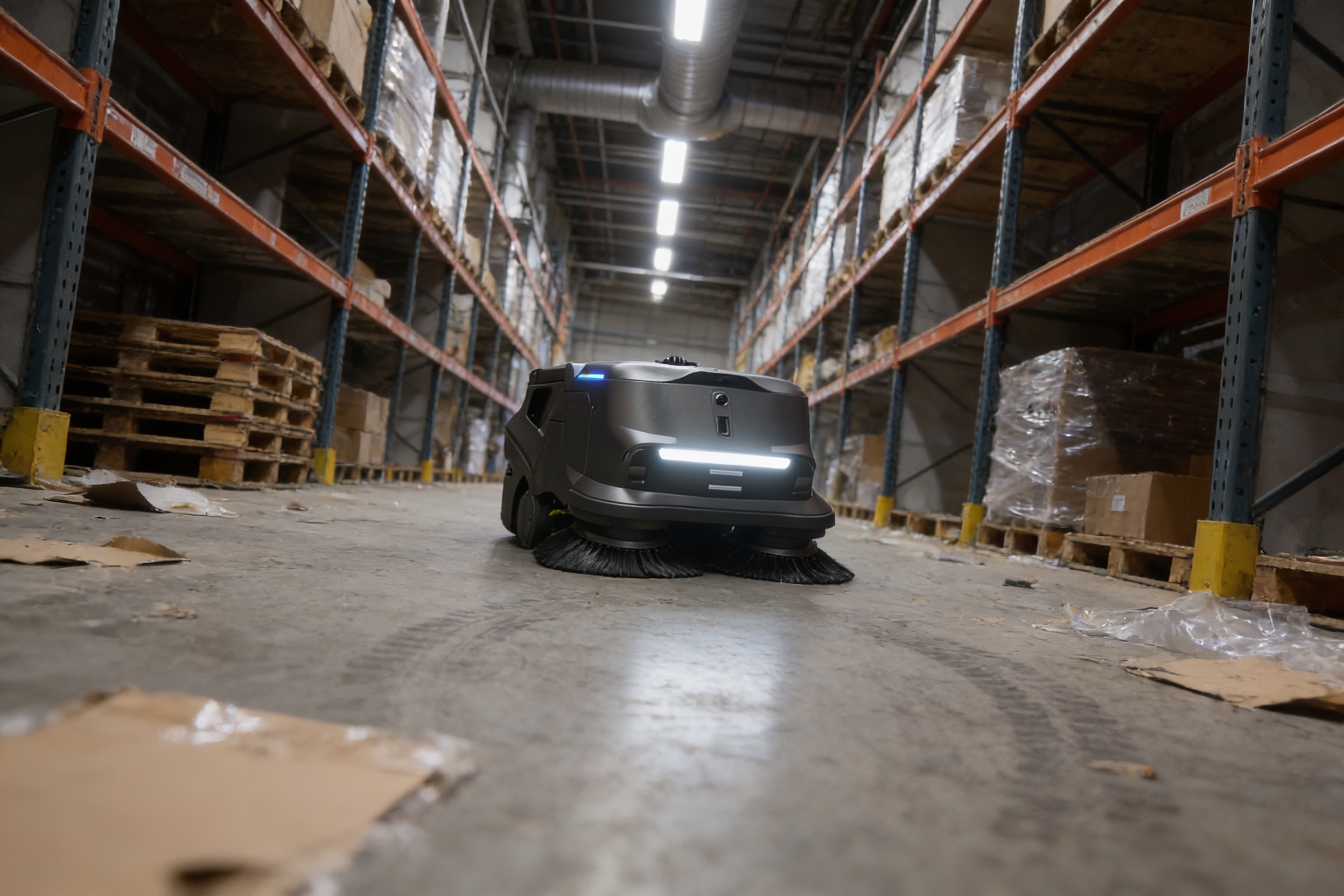
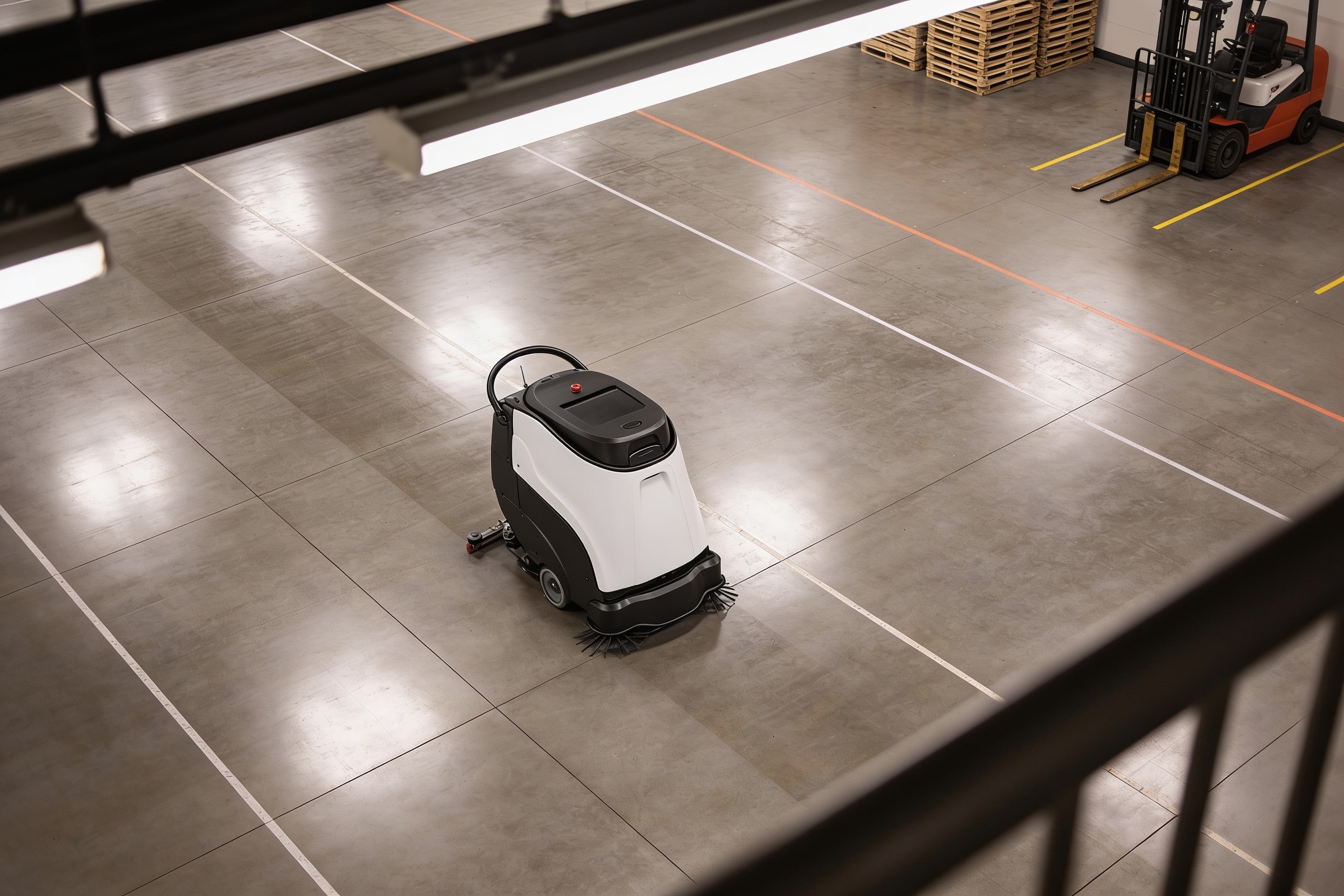
The hour math is where a lease case is won or lost. Most published hour figures come from vendor case studies, so read them as reported and check them against your own logs. In a 2023 case study from a hospital network, two floor technicians spent 8+ hours scrubbing and dry mopping a 50,000 square foot area. With two autonomous scrubbers, total nightly labor fell from 16 hours to 5 hours, according to that vendor-published study.
A commercial cleaning contractor's case study, also vendor-published, reports about 20 hours a week of autonomous cleaning, averaging more than 2.5 hours a day. A warehouse operator in Canada, described in a materials handling trade article, cleaned about 3.5 million square feet between summer 2020 and April 2021 and saved more than 300 labor hours against conventional cleaning. These are the verifiable hour figures we found, and we found no independent peer-reviewed study of hours saved per shift.
To use these numbers for your site, start with the hours your crew spends on the floor each night, measured by zone over about two weeks rather than estimated from memory. Then subtract the time your staff needs for route checks and alerts. What remains is the labor the lease has to cover.
How does leasing a cleaning robot through financing work?
We lease cleaning robots through financing. The robot stays on lease, so the decision turns on the lease payment and on what the lease covers. We choose the robot for your floor, lease it, deploy and integrate it, train your staff and service it nationwide.
A quote follows a free site assessment. During that visit we measure floor area by zone, note surfaces, traffic and shift windows, test the mapping and check how the robot would connect to the systems you name. The quote then states the lease payment, the term and the scope, including deployment, integration, training and service.
Lease options differ by site. A common way to test fit is one leased unit on the zone with the most hours, which gives you a real result before you add more. A backup unit, where offered, covers a machine that goes down during a shift. The quote should show which of these options is in scope.
What can a cleaning robot not do?
A cleaning robot works on defined routes across floors it can read. It does not handle work that needs judgment or hands, such as clearing a spill outside its route, cleaning restrooms, emptying bins across the building, or handling a surface the machine cannot map. Plan for a person to handle those tasks and to check the robot's work at the start of each shift.
Physical obstacles are the other limit. Stairs, thresholds, loose cords, unmarked wet floors and open holes need to be addressed before the robot runs. Glare, dark corners and changing shelving can confuse sensors, and the site assessment is where we test those conditions before quoting. If a route is blocked, a person clears it, because a restart at the wrong hour does not fix a blockage.
A robot also does not replace supervision. Someone still owns the schedule, the alerts and the exceptions, and that is why the training line in the quote matters as much as the machine.
How do I get a cleaning robot quote in Greenville, SC?
Start with your hours, not a number. Note the floor area by zone, the cleaning window, the surfaces, the staff hours you spend now and any known layout changes in the next year. Those notes shorten the site assessment and make the quote more accurate.
Then request the free site assessment. We measure the floor, map the route and work through the drivers in the first section, and then send a written quote with the lease payment, the term and each scope line. Compare that quote against the hour baseline you wrote down, not against a general claim about savings.
If one zone does not justify the full floor, a single leased unit on the highest-hour zone can be a practical first step. The first quote should show whether the robot earns its place there before you decide on the rest of the building.
Frequently asked questions
Put a robot to work in Greenville.
We walk your site, learn the job, and recommend the unit that fits. Then we quote the lease, deploy it, and keep it serviced.
Sources
- Wage aggregator, janitors and cleaners in the Greenville-Anderson-Greer metro, citing BLS May 2025 OEWS data
- Bureau of Labor Statistics, Occupational Outlook Handbook: Janitors and Building Cleaners
- Janitorial industry blog on turnover, citing BLS data
- Bureau of Labor Statistics, occupation injury snapshot for janitors and cleaners, 2016 to 2020
- Hospital network floor scrubber case study, 2023 (vendor published)
- Commercial cleaning contractor floor scrubber case study (vendor published)
- Materials handling trade article on a warehouse floor scrubbing deployment
- Greenville area industrial market report, Q1 2025