
The short answer
Cleaning robot ROI for shopping malls comes mainly from moving floor scrubbing and sweeping hours into trading hours, not from cutting whole shifts. The savings range is set by how many janitor and building cleaner hours at the site are floor work, what share a robot can realistically take, and the fixed lease quote that follows a free site assessment.
Key takeaways
- Cleaning robot ROI for shopping malls comes from moving floor hours into trading hours, not from removing whole shifts.
- The savings range is built from measured floor hours, the share a robot takes over, and the lease quote.
- Wide concourses and open center courts suit a floor robot. Food courts, restrooms and stairs stay with staff.
- Occupation injury data shows that floor work carries real exposure, so safety belongs in the decision.
- Published hour benchmarks for malls are thin, so a free site assessment is the way to get a precise figure.
Run the numbers for your site
Pick your city or state for a real regional number - we use the real BLS wage there. (On the live site this auto-detects from your location.)
What do you want to automate?
The robot runs the open floor overnight; your crew keeps detail and edges.
Where cleaning robot ROI for shopping malls comes from
Cleaning robot ROI for shopping malls comes from floor hours that move from closed hours into the trading day, and from floor work a site no longer has to fill when a shift goes unstaffed. It is not mainly a headcount cut. Most malls still need people for restrooms, spills, trash and customer-facing work, so the return lives in the floor hours alone.
The number of malls is shrinking, which matters for planning. According to a Central Florida news report, the US has about 1,000 enclosed shopping malls, down from as many as 1,500 at one time. The Bureau of Labor Statistics Occupational Outlook Handbook counts 2,447,700 jobs for janitors and building cleaners in 2024 across all settings. An operator with several centers should run the math site by site, because each center has its own floor area, hours and traffic.
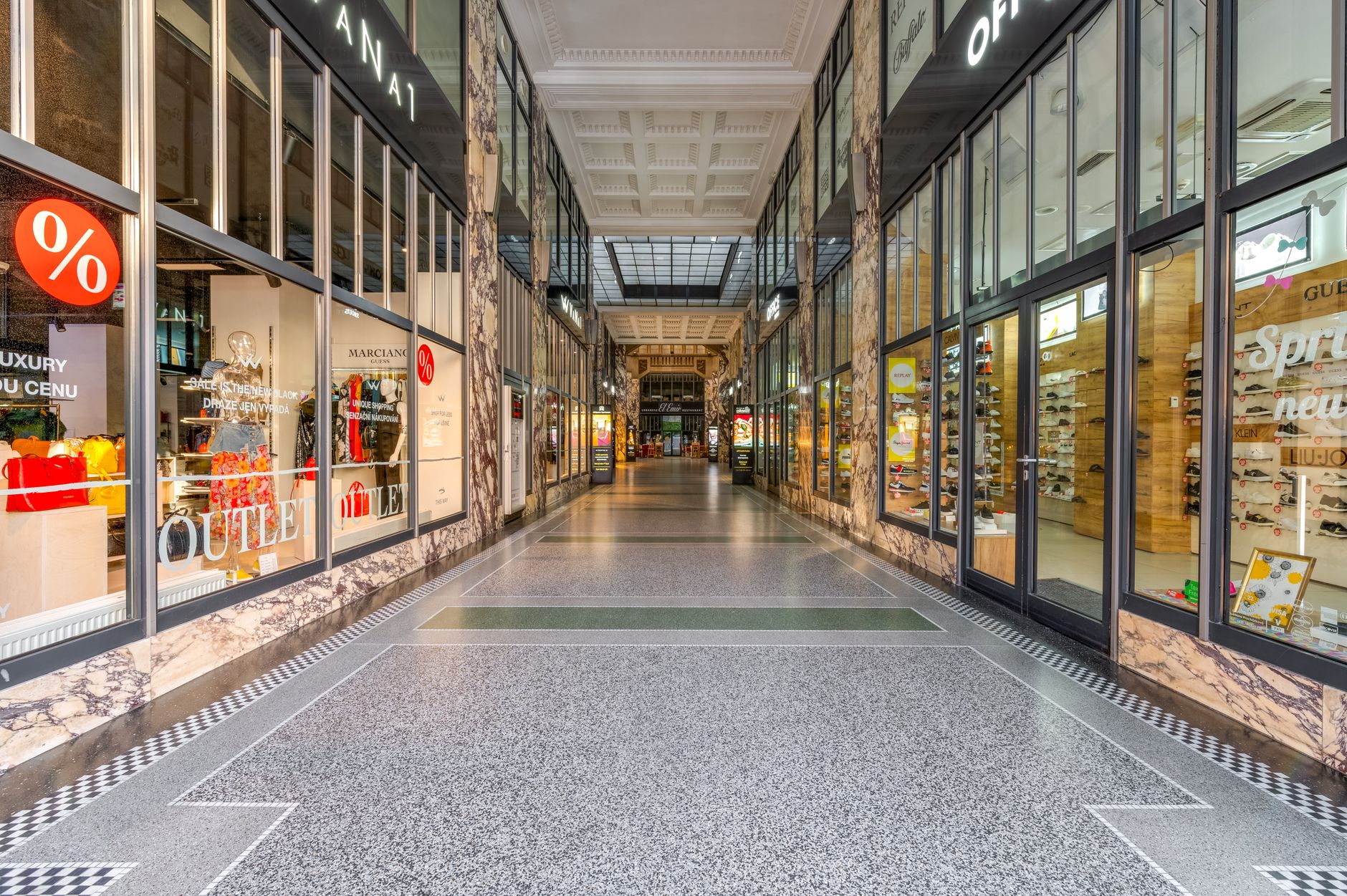
The setting fits the technology for a specific reason. Mall concourses are wide and mostly flat, so an autonomous scrubber can clean during trading hours instead of only after closing. Cleaning only after closing is the constraint that trading hours remove, and most of the return comes from that window.
Which parts of a mall can a floor robot clean?
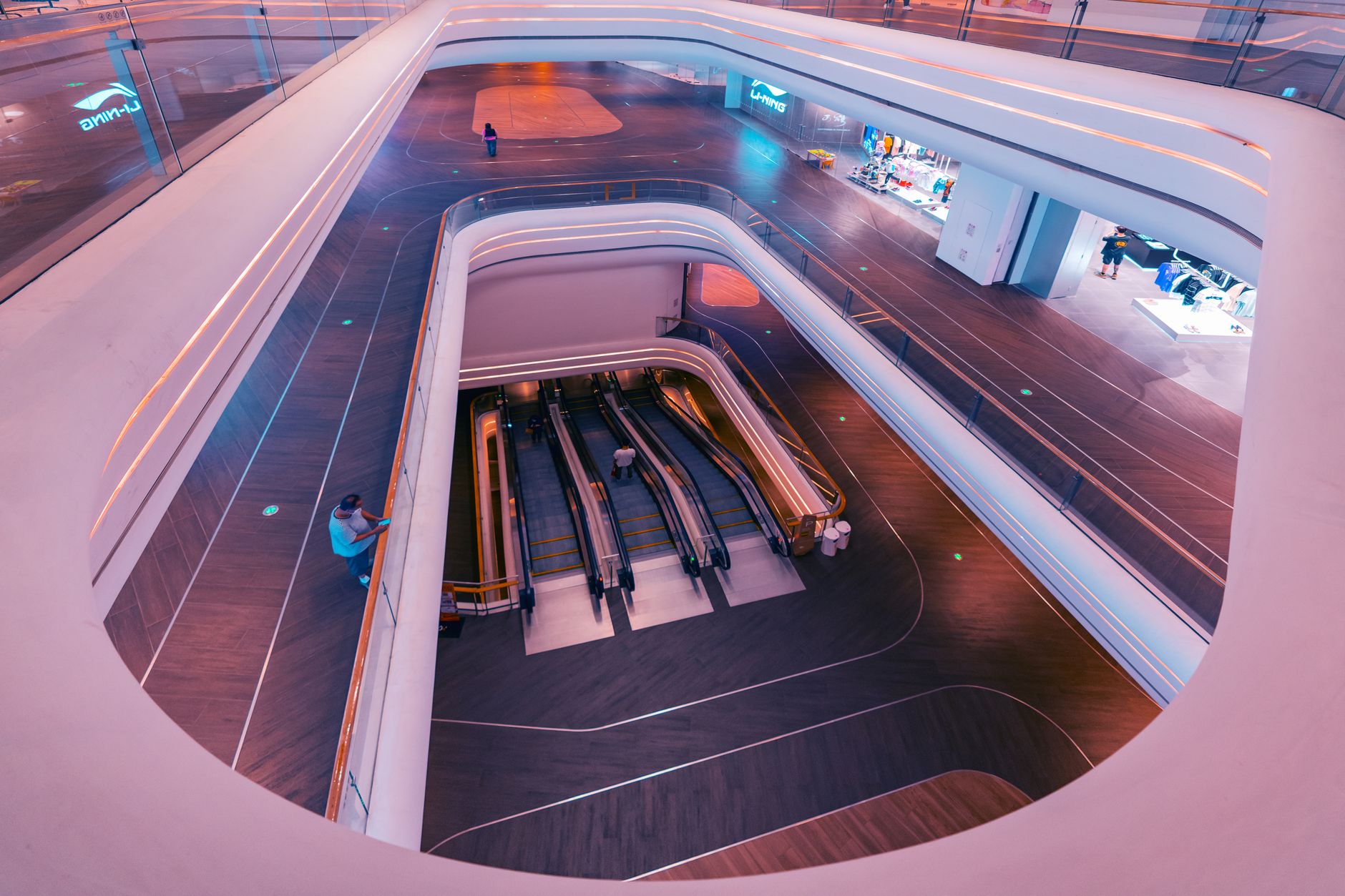
A floor scrubber works best on long, flat runs of hard floor with predictable obstacles. In a mall that describes most of the main concourse and the open center court. Storefront corridors are narrower and have doorways, carts and displays that move, so they need a survey before any route is mapped.
Some areas stay with people regardless. Food courts combine seating, spills and bussing. Entrance vestibules collect tracked-in dirt and have threshold changes. Stairs and escalator landings are outside what a floor scrubber does. Restrooms are a separate task that this page does not count as floor work.
The zones below are the starting point for a site assessment. The return depends less on total square footage than on how much open floor stays clear for long stretches during the day.
Median hourly wage, Janitors and Building Cleaners
$4,041
Monthly cost of one full-time worker, at the median wage plus payroll costs (an estimate, not a quote).
How many hours does mall floor care take?
Published hour figures for mall floor care are thin. The one benchmark found is a mall cleaning contractor's standards page, which suggests one porter for every 50,000 sq ft of common area during all operating hours, with center-court checks every 30 minutes at peak and every 60 minutes off-peak. The page gives no derivation, so treat those figures as cadences to test on site, not as measured fact.
The cadence matters because it shows floor work spread through the trading day. A porter covering common area through all operating hours is doing a repeating pass, and a robot takes part of that pass off the staff schedule. The share it takes depends on how often the route is clear enough to run without stops.
No verified count of people doing this work at one mall was found. The planning figure used on this page is one person, and the site's own staffing roster should replace it. Hour figures for each task should come from a time study during the assessment.
Robot or person: where each one wins
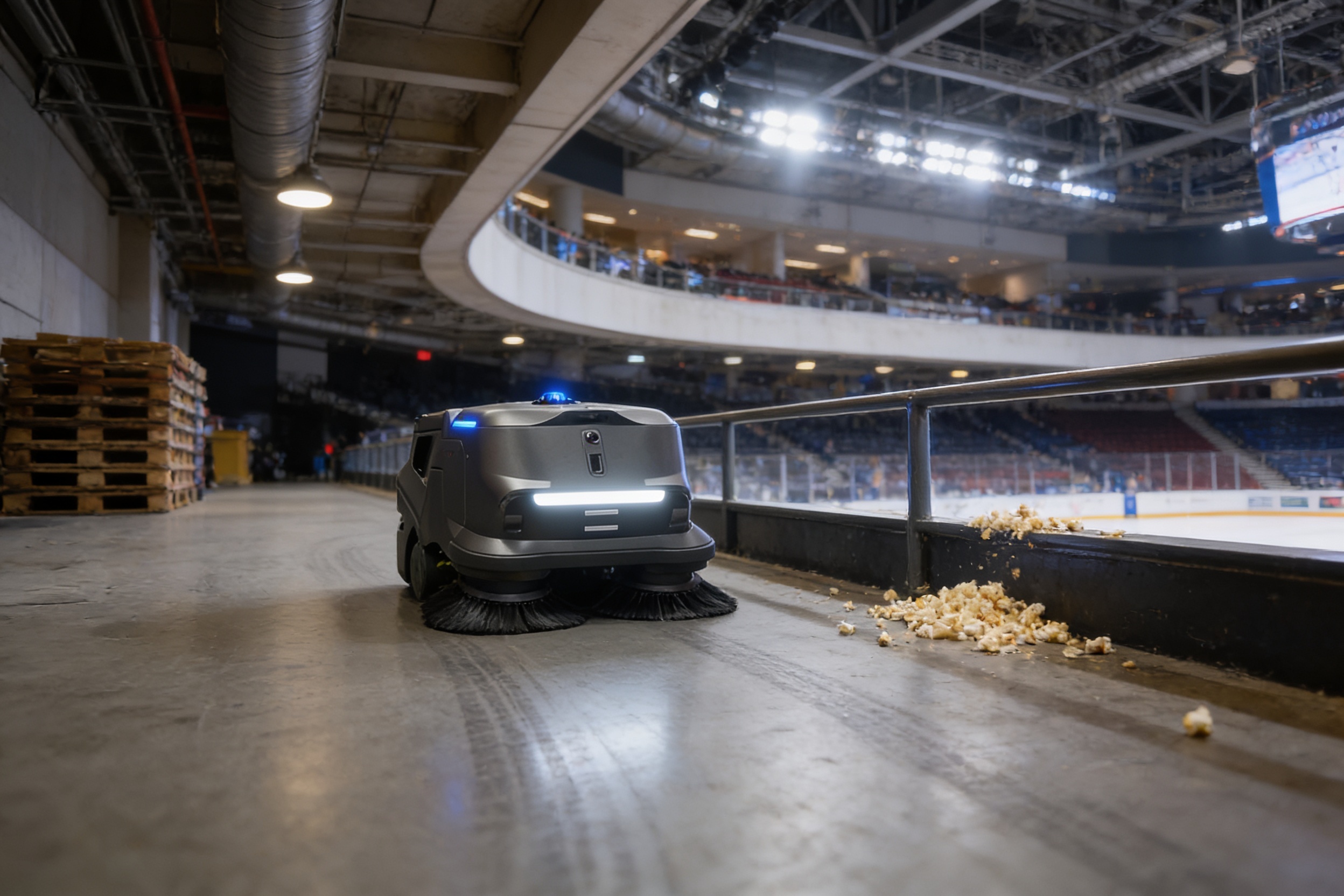
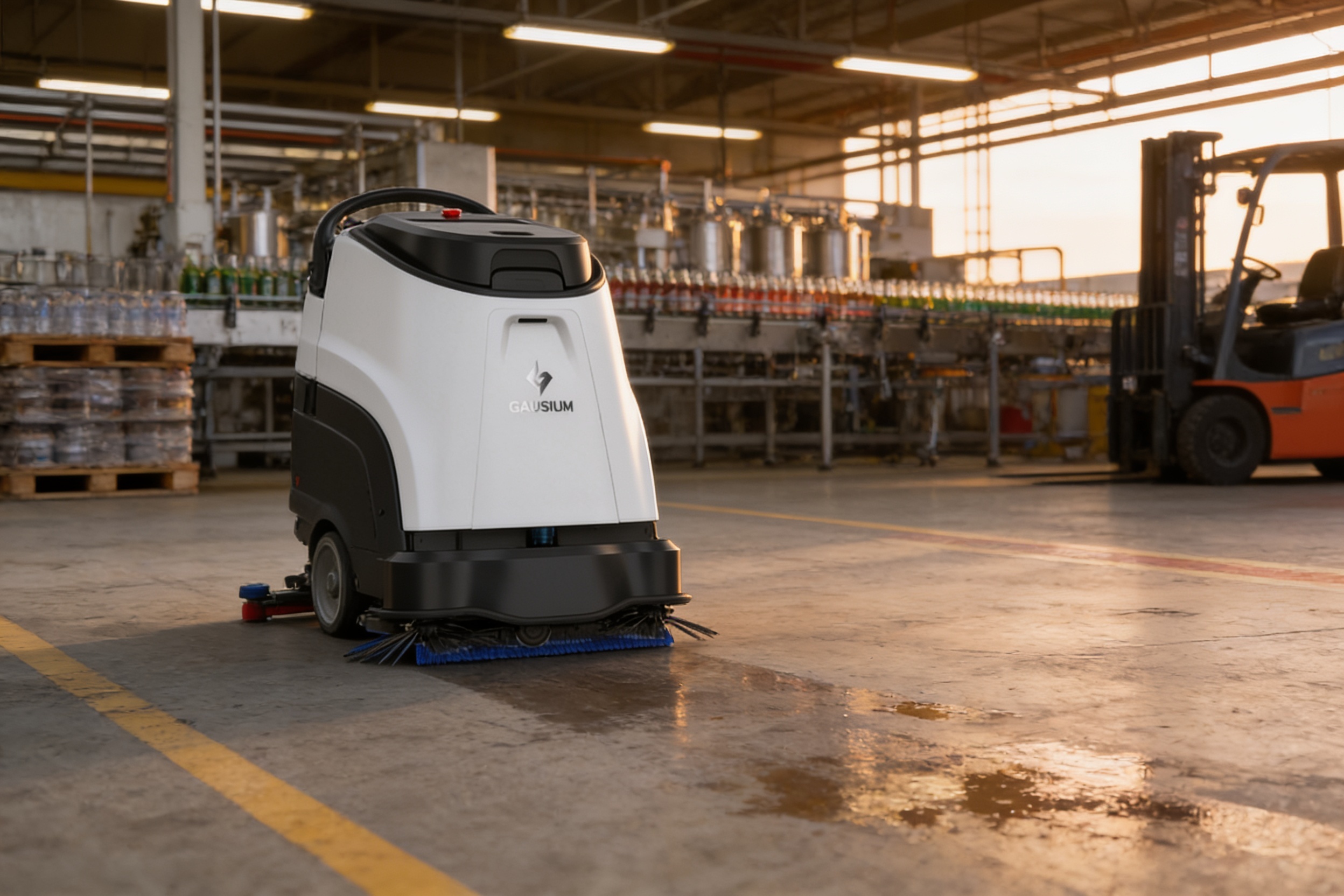
A floor robot is strongest at the repetitive part of the work: the same flat route, the same timing, and running through open hours without a break. People are strongest where judgment and reach matter, such as a spill that needs identifying, a step that needs hand cleaning, or a shopper who needs directions.
The comparison below is deliberately fair to people. In most sites, spills, stairs, escalators and fixture edges stay with staff. Staffing shortfalls are where the robot earns its place, because the route runs whether or not a shift is filled.
- Open-hours coverage
Cleaning Robot
Runs the open floor through trading hours on a set route, without breaks
Staff
Works around customers and adjusts to a changing layout on the spot
- Spills and hazards
Cleaning Robot
Stops for obstacles but does not clean a spill or decide what it means
Staff
Spots the spill or hazard, clears it, and reports it
- Stairs, escalators and edges
Cleaning Robot
Limited to mapped flat floor. Does not do stairs or escalators
Staff
Cleans steps, landings and tight corners by hand
- Route consistency
Cleaning Robot
Repeats the same route the same way on each pass
Staff
Varies by shift and by the person working
- Customer interaction
Cleaning Robot
Minimal. Can signal and move aside
Staff
Answers questions and gives directions
- Filling a shift
Cleaning Robot
Runs when a shift is unfilled, as long as the unit and service are in place
Staff
Hard to fill on some shifts, and turnover is high in this trade
What are the risks to the return and how do you avoid them?
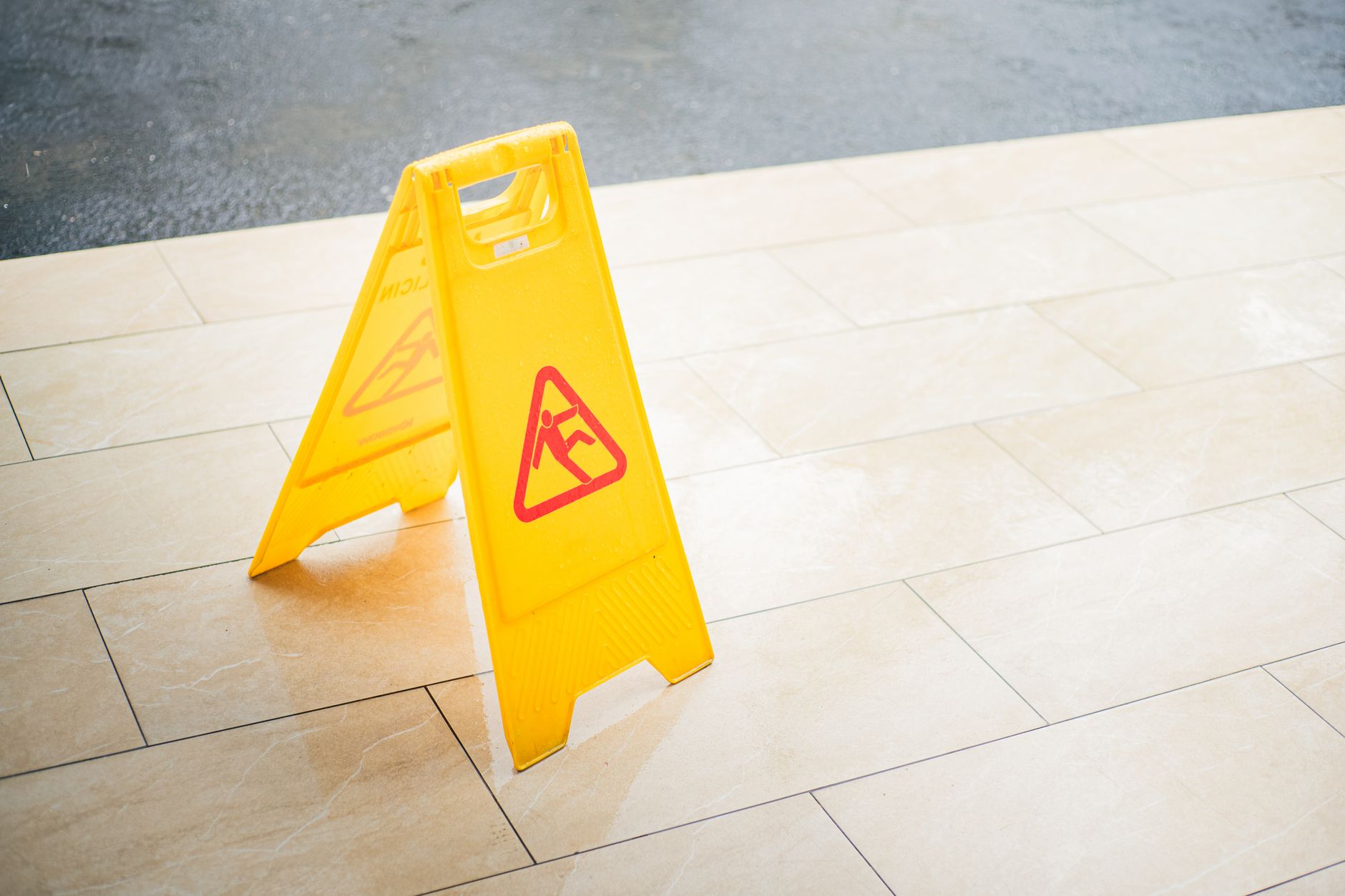
The most common risk is overstating the hours. If the open floor is crowded with customers, kiosks and temporary displays for much of the day, the unit stops and waits more often and takes over fewer hours. Walk the route at the times you plan to run it and count the stops before accepting a range.
Safety is part of the picture. The Bureau of Labor Statistics injury and illness snapshot for janitors and cleaners except maids reports, for 2020, 21,100 nonfatal injury and illness cases with days away from work, and an incidence rate of 191.6 per 10,000 full-time equivalent workers, up from 157.4 in 2019. A safety trade article on BLS 2024 data reports a private industry total recordable incident rate of 2.3 per 100 full-time equivalent workers. The occupation figure is from 2020, the most recent one found, and the 2024 rate covers all of private industry.
Other risks are a route mapped to a layout that later changes, and a gap in service when a unit is down. Each has a fix: re-map after any change to fixtures or displays, put service coverage in the lease quote, and plan for spare unit coverage so a single fault does not stop the floor.
Why are malls adopting floor robots now?
Adoption is early but rising. According to the 2026 BSC Market Study, as reported online, about 32% of building service contractors plan to adopt robotic floor equipment within the next 12 months, about double the 2025 share. An earlier AACEM and ISSA autonomous cleaning survey from 2019 found 69% of facility and property managers had not used autonomous cleaning equipment, and about 26% had used it. That survey predates today's products, so it shows the starting point rather than the present level.
For a mall operator, the cleaning contractor is often the party already making the adoption decision. Ask the contractor how they plan to deploy floor robots, whether the plan covers your centers, and who carries the lease. Those answers decide who signs, who services the unit and who keeps the savings.
Turnover is the staffing context. A staffing cost article cites 150% to 200% annual frontline turnover at multi-site cleaning operators, without naming a primary source. The government data found did not give an occupation-level turnover rate, so treat that range as a claim to check against the operator's own records.
What is the realistic timeline from assessment to payback?
The sequence runs in stages. A site assessment walks the floor, measures the open area, and records the floor hours and layout. The route is then mapped and tested against real traffic. Finally the robot is deployed and integrated, staff are trained, and go-live support runs until the route is stable.
Payback starts from go-live, not from the assessment. How long it takes depends on how many hours the route takes over, how quickly the route stabilizes, and how the lease quote compares with the labor offset. Starting with one unit in one area lets the site test its hour figures before committing to wider coverage.
This page does not give a payback period. The research did not verify one for this setting, and a figure from another site would not transfer. The assessment produces the period for the specific center.
How do you get a precise figure from a free site assessment?
A free site assessment turns the uncertain inputs into measured ones. The team walks the floor, maps the open area, times the floor work in the hours it occurs, and logs the stops and obstacles on the route. The result is the labor offset, the share of work the robot takes over, and a fixed lease quote.
We are a US commercial robot integrator. We pick the robot that fits the site, lease it through financing, deploy and integrate it, train the staff and service it nationwide. One partner covers the lease, the setup and the support, so the quote reflects the whole arrangement and not just the unit. The right unit depends on layout and hours, so the choice comes out of the assessment.
To tighten the range, bring the contractor's hours, the staffing roster, the layout plan and the trading hours. Each one replaces an assumption with a number from your own center.
Frequently asked questions
Want a cleaning robot at your shopping mall?
Tell us about your site. We will recommend the robot, quote the lease, and keep it serviced.
Sources
- US Bureau of Labor Statistics, Occupational Employment and Wage Statistics (OEWS May 2024)
- Central Florida news report on enclosed shopping malls
- Bureau of Labor Statistics Occupational Outlook Handbook, janitors and building cleaners
- Bureau of Labor Statistics injury and illness snapshot, janitors and cleaners except maids
- Safety trade article on BLS 2024 injury data
- 2026 BSC Market Study, as reported online
- AACEM and ISSA autonomous cleaning survey, 2019
- Mall cleaning standards page from a contractor
- Janitorial staffing cost research article, 2026