
The short answer
The cleaning robot cost in Bridgeport depends mainly on how much floor the robot covers, what surfaces and obstacles it meets, how many shifts it runs, and how much mapping, integration and service the site needs. None of these factors can be read from a flat figure, so the lease payment is set after a free site assessment. Compare that quote with the cleaning hours your team works today, not with a generic number.
Key takeaways
- Floor area covered and the shift window do the most to move a Bridgeport lease quote.
- Mapping, door and elevator integration, and staff training are the costs most often missing from a first estimate.
- The Bridgeport metro reported about 8,540 janitors and cleaners in 2016 and about 6,220 in 2025, from different sources, so treat the drop as a local check, not a trend.
- A lease through financing gives you a fixed lease payment, with the service terms written into the quote.
- Measure the hours your staff spend on floor passes each night before you compare any quote.
What does a cleaning robot cost in Bridgeport, CT?
A cleaning robot cost in Bridgeport is set by the site, not by a catalog choice. Two buildings of the same size can land far apart if one has open concrete aisles and the other has carpet, glass partitions and several elevators. The useful questions are what the robot must cover, how often it must run, and what it takes to keep it working at that address.
We quote a robot lease after a free site assessment. The quote states a fixed lease payment over the financing term, along with deployment, training and the service plan agreed for the site. That number is the one to set against the cleaning hours your staff works now, and the rest of this page explains how that comparison is built.
What drives the cleaning robot cost in Bridgeport?
Floor area is the first driver. Route length and run time follow the square footage the robot must cover, so a large open warehouse floor and a small medical suite carry very different work even when the building footprints look similar. A downtown office floor and a single level distribution shed can also differ sharply in obstacles and traffic, which is why the assessment measures routes rather than relying on a square footage figure alone.
Surfaces and obstacles come next. Polished concrete, sealed vinyl, tile and carpet each need their own cleaning setup. Loading docks, floor drains, cable runs, pallets and furniture that moves each week all add mapping and route checks. Each layout change adds time to validation before the robot can run the new route safely.
Shift pattern and foot traffic matter as much as area. A robot that runs after close on an empty floor can work long, uninterrupted routes. A robot that shares a corridor with staff, visitors or deliveries needs slower speeds, more zones and closer monitoring. Winter salt, sand and wet footprints from Connecticut entrances add floor wear and call for more frequent passes, and the assessment should measure those entry zones.
Who runs cleaning robots in Bridgeport, and why labor is the pressure
Cleaning demand in Bridgeport sits in offices, medical and dental practices, schools, retail stores, warehouses and light industrial sites. Many of these operations run cleaning in a fixed nightly or early morning window, and that window is hard to staff when turnover runs high.
The Bureau of Labor Statistics Occupational Employment and Wage Statistics table for the Bridgeport-Stamford-Norwalk metro reported 8,540 employed janitors and cleaners in May 2016. A third-party salary site that cites BLS 2025 data reports about 6,220 jobs for the same occupation in the metro as of May 2025, under the newer name Bridgeport-Stamford-Danbury. The two figures come from separate years, sources and methods, so read the drop as a reason to check your own labor pool, not as a settled trend.
Nationally, the BLS Occupational Outlook Handbook counts about 2.45 million janitors and building cleaners in 2024, with projected growth of 2% from 2024 to 2034, which it describes as slower than average. Local employers are therefore drawing on a workforce that is not expanding quickly. A vendor blog reports commercial cleaning turnover of about 50% to more than 100% a year, but that figure is not tied to an official table, so use it as a warning, not a benchmark.
How many cleaning hours does a robot take over?
The hours a robot takes over depend on the floor you measure today. We do not publish a standard hour count for Bridgeport, because the assessment measures the routes at your site. What matters for the quote is which tasks move to the robot, which stay with staff, and how much setup each night still needs from a person.
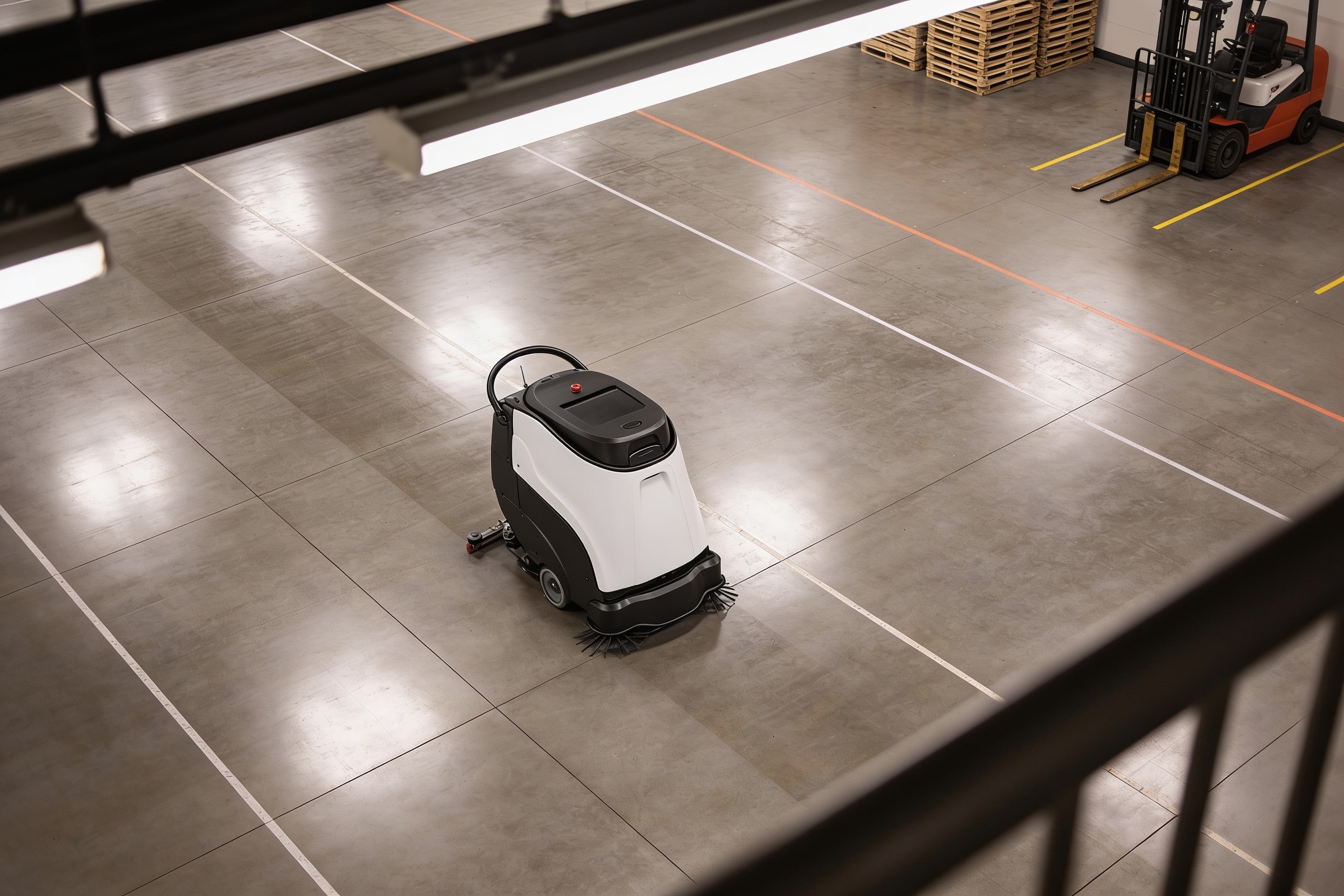
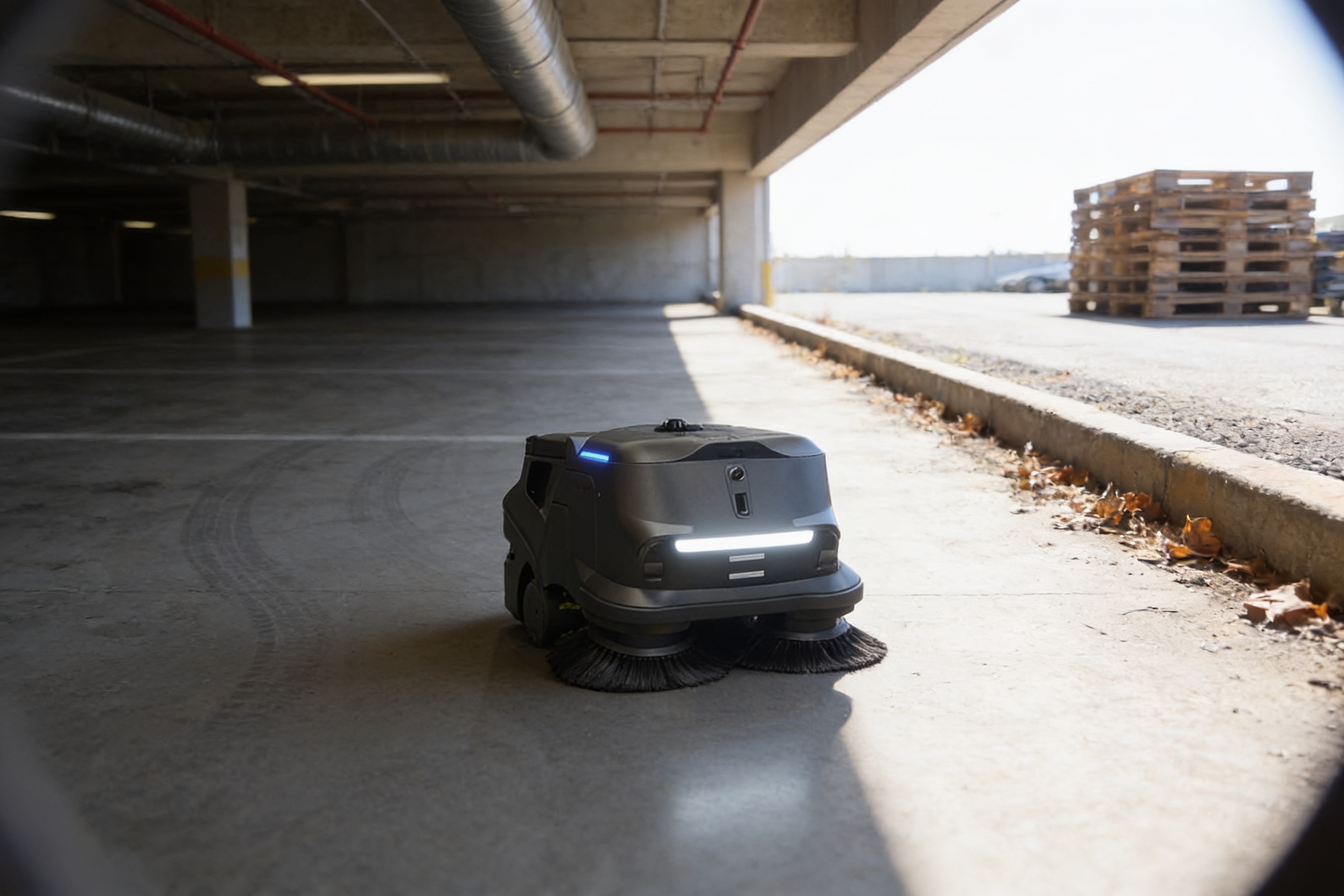
Scrubbing and sweeping open floor areas are the usual candidates, since they follow repeatable routes. Restroom cleaning, glass, high dusting, trash removal and furniture moves stay with people. Staff still do the setup check, clear the route of obstacles, and handle spills the robot flags during a run.
The table below shows the task split in general terms. The hour figures for your building come from the site assessment, and the quote should show them task by task.
How does leasing through financing work, and what does the quote include?

We lease cleaning robots through financing, so you do not take on the full equipment cost at the start. Financing spreads the cost into a fixed lease payment over the term you agree to, and that payment holds for the term rather than shifting with usage. The lease is the only route we offer for a robot.
The quote includes the lease payment, the term length, the deployment and integration plan, training for the staff who work near the route, and the service plan for the site. Service covers on-site dispatch and remote triage when a unit stops. The quote also states what the lease does not cover, so the scope is clear before anyone signs.
The quote is built from the site assessment. Floor area, surfaces, shifts and integration needs set the scope, and the scope sets the payment. A change to the floor plan after signing is handled as a written change to the quote, not as a surprise on a later bill.
What can a cleaning robot not do?
A floor robot scrubs and sweeps mapped floor areas. It does not clean restrooms, wipe high touch surfaces, clean glass, empty trash, or move furniture. It cannot clear a blocked route on its own, and it stops for an obstacle it does not recognize, which means a person has to reset it.
It also struggles where the layout changes faster than the map is updated. A site with frequent moves, temporary barriers or heavy visitor traffic during the cleaning window needs staff on hand to reset routes. Stairs, ramps and uneven thresholds need a site check before any route is approved.
Injury risk does not disappear with a robot. The BLS injury snapshot for janitors and cleaners, covering 2016 to 2020, reports a rate of 191.6 per 10,000 full-time equivalent workers, so the physical load of the work is real. The robot takes over repetitive floor passes, but people still handle lifting and detail work.
Is a cleaning robot worth it compared with hiring more staff?
Compare the lease payment with the cleaning hours your team works each night and the cost of filling those hours. Include overtime, turnover, recruiting and training. A vacancy that stays open costs you coverage, not just wages, and coverage gaps are often what push a site toward automation.
The break-even depends on how many hours the robot takes over, how many shifts it runs, and how long the lease term lasts. A single unit on one large floor often pays back faster than splitting the same route across several part-time staff, because the robot does not need a shift handover. Savings do not appear if the robot sits idle, so the service plan matters as much as the machine.
A pilot on one floor or one building is a reasonable test. Start with one leased unit, measure the hours it takes over for a full month of operation, and then decide whether to add units.
How do I get a quote after a free site assessment?
Send us your floor plan, the square footage, the surface types, the cleaning window you use today, and the number of entrances and elevators. We schedule a free site assessment to measure routes, check doors and elevators, and confirm the surface mix. The visit tells us which tasks the robot can take over and which stay with your staff.
After the assessment, we return a written quote that states the fixed lease payment, the term, the deployment steps, training and service terms. You can compare it with your staffing plan and ask for changes in writing before signing. The quote is the number to compare, and it should be specific to your building.
Frequently asked questions
Put a robot to work in Bridgeport.
We walk your site, learn the job, and recommend the unit that fits. Then we quote the lease, deploy it, and keep it serviced.
Sources
- BLS Occupational Employment and Wage Statistics, Bridgeport-Stamford-Norwalk, janitors and cleaners, May 2016
- Salary data site citing BLS OEWS 2025 for Bridgeport metro janitors and cleaners (third-party, not verified against BLS)
- BLS Occupational Outlook Handbook, Janitors and Building Cleaners
- BLS Injury and Illness Snapshot, Janitors and Cleaners (except Maids and Housekeeping Cleaners), 2016-20
- Netchex, how attrition varies in building services and janitorial companies (vendor blog, not a primary table)